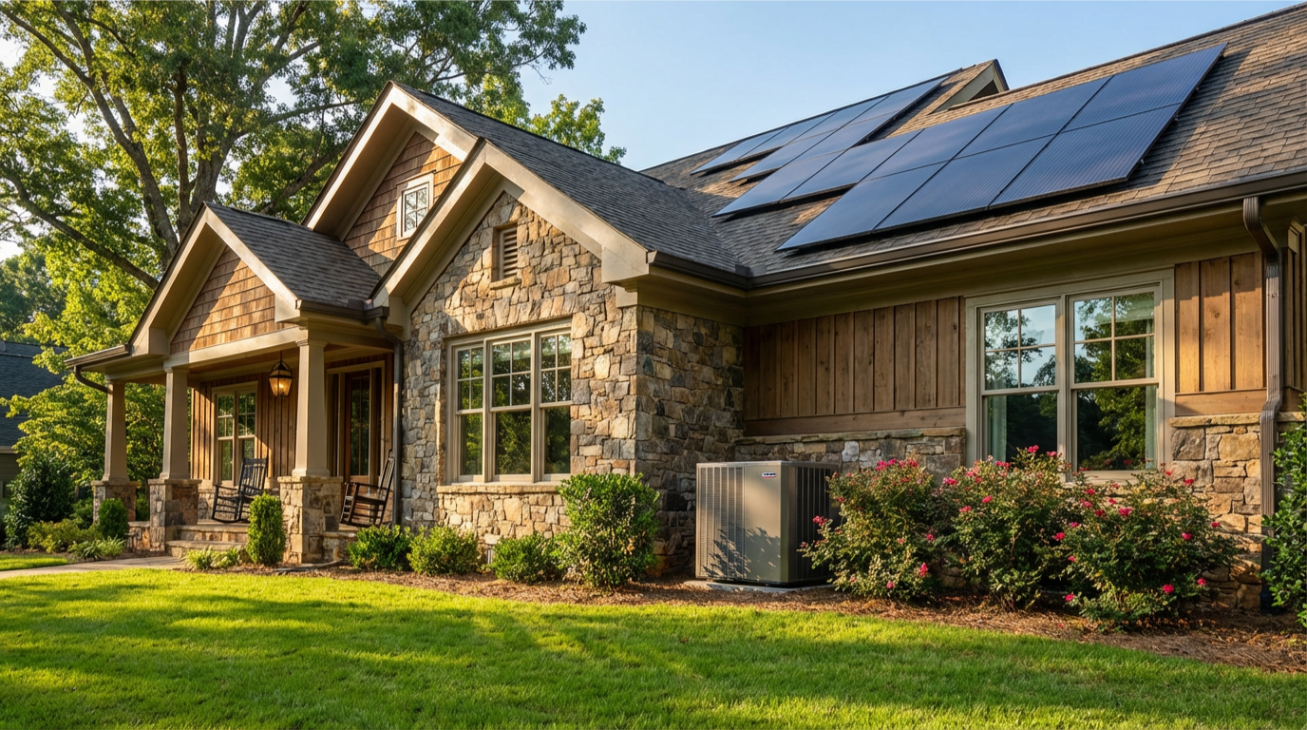
Metro Atlanta homeowners spend $2,100-$2,800 annually on energy, with 60% concentrated in four months of cooling season. Strategic energy-efficient home upgrades can cut those bills by 30-50% while improving year-round comfort. Choosing the right energy saving home improvements makes the difference between projects that pay for themselves in 5 years versus 15.
This guide focuses on what works in Georgia’s Climate Zone 3. We’ll show you which home energy efficiency improvements deliver the best ROI for Atlanta’s hot, humid weather and help you prioritize upgrades whether planning a complete remodel or seeking quick wins.
At Artistic Construction, we’ve helped homeowners in Woodstock, Canton, Roswell, and Alpharetta transform their energy consumption, often during kitchen remodels, basement finishing, or whole-home renovations.
Why North Atlanta Homeowners Are Investing in Energy Efficiency Now
Georgia’s Climate Challenge for Energy Savings
Atlanta’s climate creates unique energy demands. When outdoor temperatures hit 95°F with 80% humidity, your HVAC system works overtime. Heat pumps excel here because our mild winters (average January low of 33°F) allow efficient year-round operation.
Georgia’s Climate Zone 3 designation requires R-49 attic insulation, exceeding the R-38 standard in moderate climates. This reflects the intensity of summer heat transfer through your roof.
Georgia Power Rate Trends Driving Action
The average Georgia Power residential customer now pays 13.2 cents per kilowatt-hour, with summer bills for 2,000+ square foot homes regularly exceeding $250-300 during peak months. That’s $1,500-1,800 annually just for June through September.
Homes built before 2000 (most housing stock in Cherokee and Cobb counties) face higher costs due to inefficient HVAC systems, poor insulation, and air leakage.
Federal Tax Credits for Energy Star Upgrades Through 2032
The Inflation Reduction Act extended federal tax credits through 2032 for qualifying energy-efficient home upgrades. HVAC system replacement with heat pumps qualifies for up to $2,000. Insulation and air sealing projects claim up to $1,200 annually. Energy-efficient windows earn $600 per year. Combined with Georgia Power rebates, these incentives reduce your net investment by 25-40%.
Smart Prioritization System for Energy-Efficient Home Upgrades
Quick Wins for Immediate Savings
These low-cost improvements deliver immediate returns with 12-24 month payback:
Smart Thermostat Installation reduces cooling costs by 10-15% through automatic temperature adjustments. Many Georgia Power customers qualify for instant rebates.
Complete LED Lighting Conversion cuts lighting energy use by 75-80%. LED bulbs also produce less heat, reducing your cooling load. For ideas that pair well with this upgrade, see 2026 lighting trends.
Basic Weatherization with caulk around windows, weatherstripping on doors, and sealing attic access stops conditioned air from escaping.
For more options, see smart home systems.
Mid-Range Investments for Strategic Upgrades
Insulation Upgrades to R-49 dramatically reduce heat transfer from your roof. When summer attic temperatures exceed 140°F, proper insulation ranks among the most important improvements. Professional installation takes 1-2 days and reduces cooling costs by 15-25%.
Professional Duct Sealing recaptures the 20-30% of conditioned air most homes lose through leaky ductwork. Combined with attic insulation, this addresses the two biggest energy loss sources in Georgia homes.
Tankless Water Heaters eliminate standby energy losses from traditional tank heaters. For families with predictable usage patterns, annual savings of $100-200 are common.
Major System Upgrades for Long-Term Savings
High-Efficiency HVAC System Replacement with a modern 16-18 SEER heat pump can cut HVAC operating costs by 40-50%. With federal tax credits up to $2,000 and Georgia Power rebates, payback occurs in 5-8 years.
Energy Efficient Windows dramatically impact solar heat gain during summer. Look for SHGC (Solar Heat Gain Coefficient) ratings of 0.25 or lower for Atlanta installations. Double-pane, Low-E windows reduce cooling loads by 25-30%.
Solar Panel Installation continues improving with 30% federal tax credits and Georgia’s net metering policies. Complete systems can eliminate most electricity costs, with payback periods of 8-12 years.
The Start Here Decision Guide by Home Age
Homes Built Before 1980: Start with insulation upgrades and weatherization. These homes have minimal attic insulation (R-11 to R-19) and significant air leakage.
Homes Built 1980-2000: Focus on HVAC system replacement and duct sealing. Most have adequate insulation but inefficient equipment and leaky ductwork.
Homes Built After 2000: Look for quick wins and technology upgrades. These homes meet modern building codes but benefit from smart thermostats, LED lighting, and system optimization.
Top 12 Energy-Efficient Home Upgrades
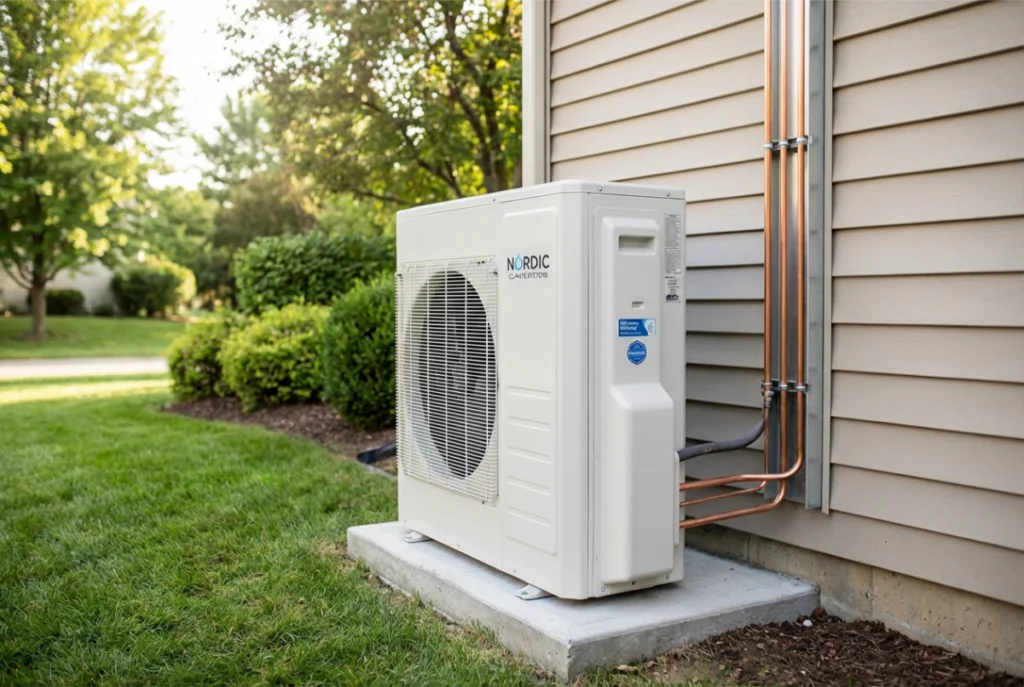
1. High-Efficiency HVAC System Replacement With Heat Pumps
Heat pump systems are the energy efficiency sweet spot for metro Atlanta’s climate. Modern systems use 50% less energy than traditional forced-air furnaces with separate air conditioning. Variable-speed compressors maintain consistent temperatures while providing superior humidity control.
Key Performance Criteria:
- SEER Rating: Target 16-18+ for cooling efficiency
- HSPF Rating: Look for 9.0+ for heating efficiency
- ENERGY STAR Certification: Required for federal tax credit eligibility
Annual savings range from $800-1,400 compared to older systems. With federal tax credits up to $2,000 and Georgia Power rebates, payback occurs in 5-8 years.
Professional installation required. HVAC work in Georgia requires licensed contractors.
Best Installation Timing: Spring (March-May) or fall (September-November) when HVAC contractors have better availability.
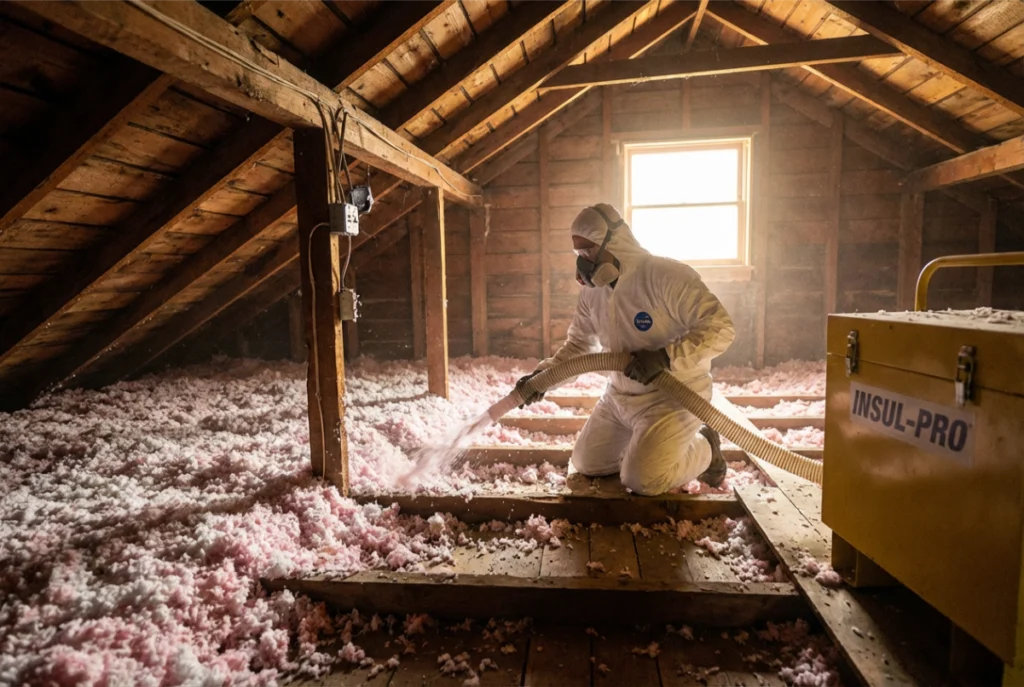
2. Attic Insulation Upgrades to R-49
When outdoor temperatures reach 95°F, attic spaces can reach 140-150°F, turning your ceiling into a massive radiator. Proper insulation creates a thermal barrier that dramatically reduces this heat transfer.
Georgia’s Climate Zone 3 recommends R-49 insulation. Most homes built before 2000 have R-19 to R-30 insulation, leaving substantial room for improvement.
Insulation Material Comparison:
- Blown-in Fiberglass: R-3.2 to R-3.8 per inch, best for most attics
- Cellulose: R-3.5 to R-3.8 per inch, ideal for dense packing
- Closed-Cell Spray Foam: R-6.0 to R-6.5 per inch, perfect for rim joists
Annual cooling cost reductions of 15-25% translate to $250-450 savings. Federal tax credits cover 30% of costs up to $1,200 annually.
DIY is possible for experienced homeowners, but professional installation ensures proper coverage and ventilation maintenance.
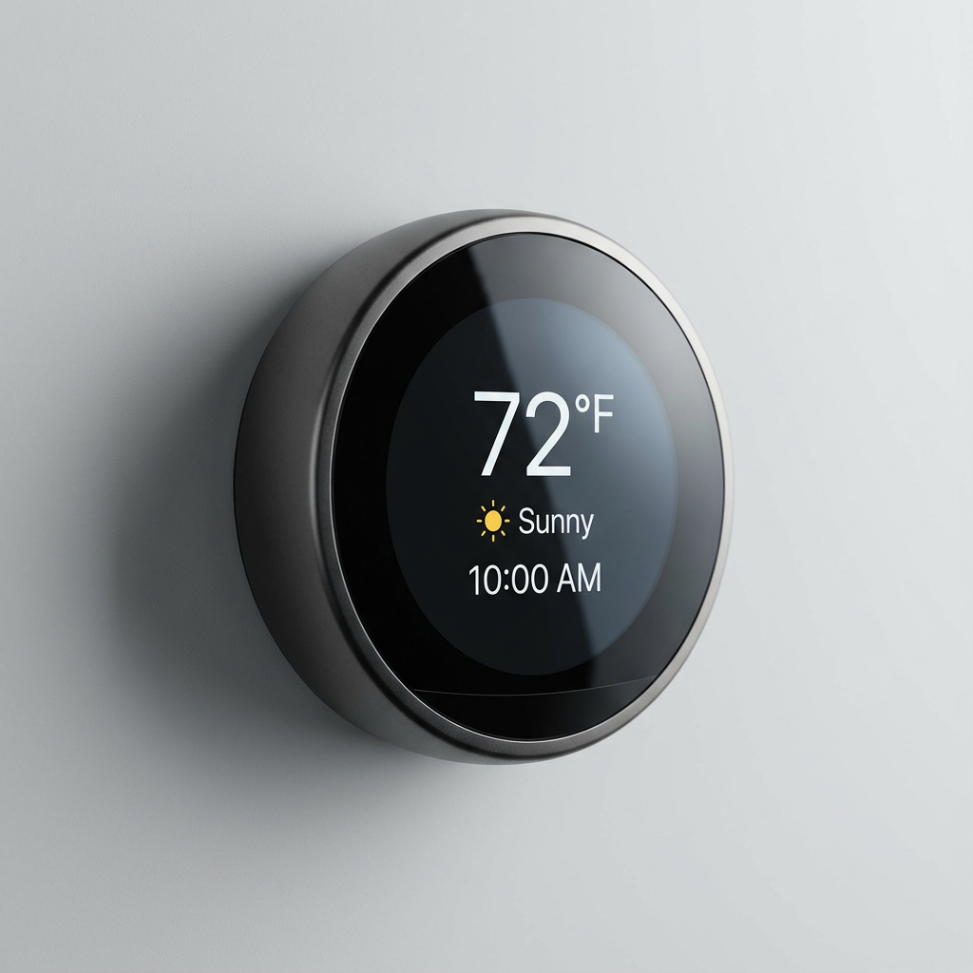
3. Smart Thermostat Installation and Benefits
Smart thermostats represent one of the highest ROI upgrades. These devices learn your schedule, adjust temperatures automatically, and provide remote control via smartphone.
Benefits come from automatic setbacks when you’re away, adaptive learning that optimizes runtime, and remote adjustments. Studies show 10-15% reduction in HVAC costs, $150-300 annually for metro Atlanta homes.
Key Features:
- Learning algorithms track preferences and create automated schedules
- Geofencing triggers adjustments based on smartphone location
- Multi-room sensors address hot or cold spots
- Integration with Georgia Power demand response programs
Georgia Power offers instant $50 rebates. With annual savings of $150-300, payback occurs in 6-18 months.
DIY-friendly if comfortable with basic wiring.
Top Solutions: Ecobee Smart Thermostat Premium (includes remote sensors), Google Nest Learning Thermostat (excellent learning algorithms), Honeywell Home T9 (good value).
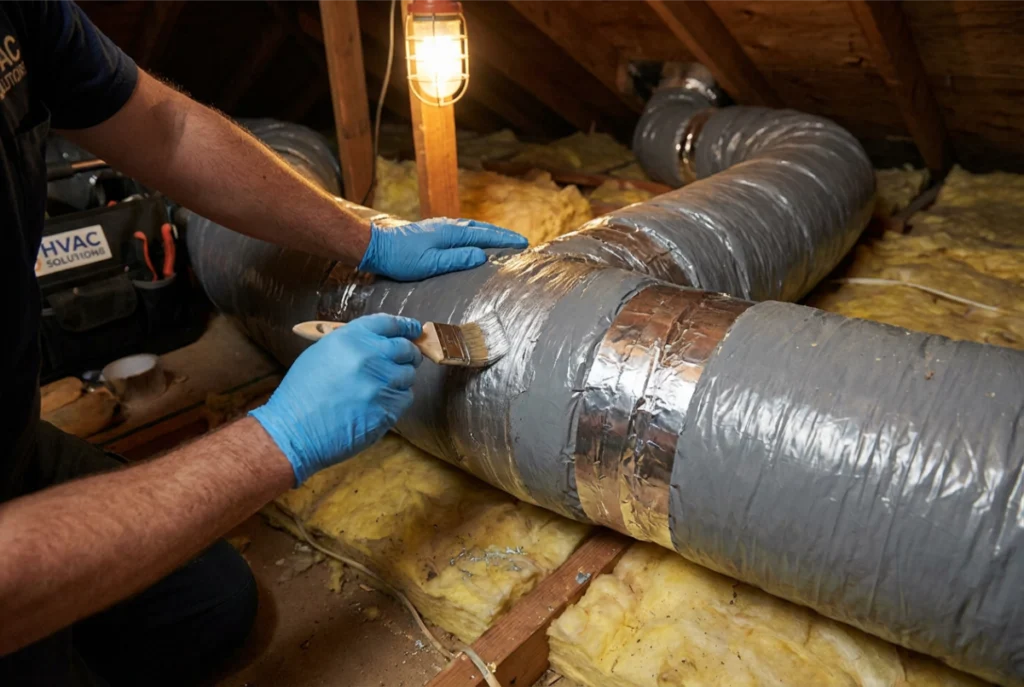
4. Professional Weatherization and Duct Sealing
Air leakage and duct leakage represent two of the biggest energy wasters in Georgia homes. You’re paying to cool air, then watching 20-40% escape through gaps and leaky ductwork.
Air Sealing Process:
Blower door testing quantifies leakage before and after sealing. The test pressurizes your home to 50 Pascals, then measures airflow required to maintain pressure. Infrared cameras reveal hidden leakage paths.
Duct Sealing Standards:
Mastic compound and metal foil tape provide permanent duct sealing. Standard cloth-backed “duct tape” deteriorates rapidly in hot attics and is never appropriate. Proper sealing should reduce duct leakage to below 10% of system capacity.
Combined air sealing and duct sealing reduce cooling costs by 15-30%, $250-500 annually.
Professional recommended for duct sealing to ensure proper testing and verification. Basic air sealing around windows and doors is DIY-friendly.
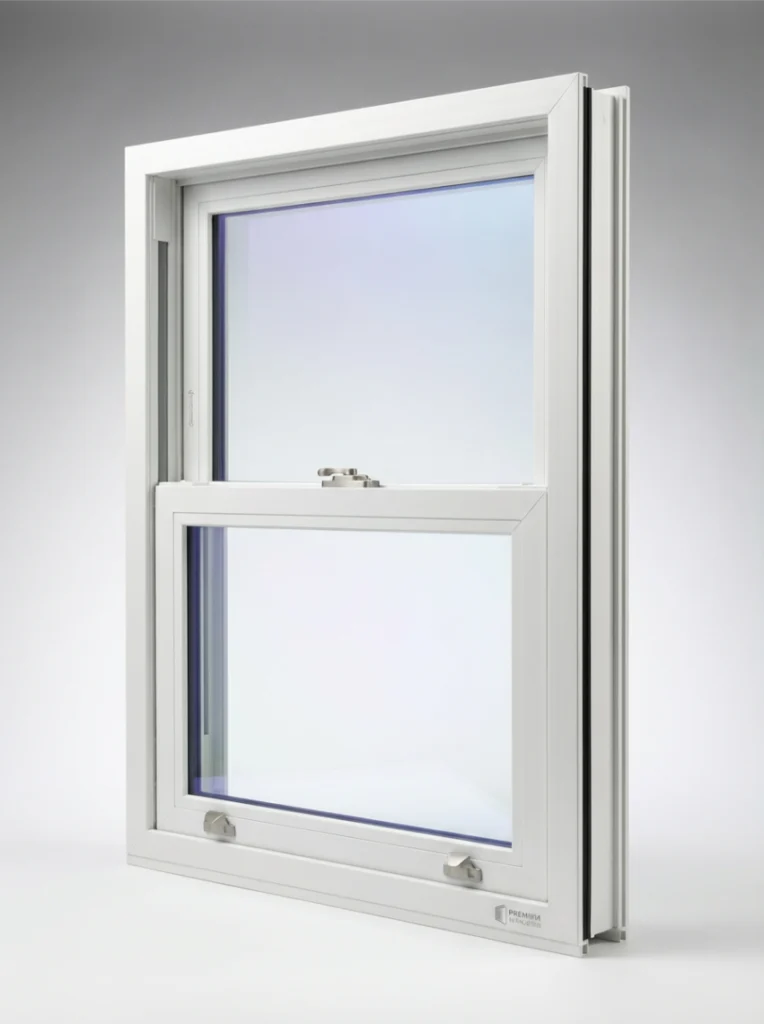
5. Energy Efficient Windows
Windows represent 25-30% of cooling load in Atlanta homes. Modern energy-efficient windows use Low-E coatings that reflect infrared heat while allowing visible light through.
Key Performance Metrics:
- U-Factor: Target 0.30 or lower for heat transfer
- SHGC: Target 0.25 or lower for solar heat gain control
- VT: Target 0.40+ for visible light transmission
For Atlanta installations, look for SHGC ratings of 0.25 or lower to minimize unwanted heat.
Annual energy savings range from $200-400, with payback periods of 15-25 years through energy savings alone. But windows deliver value beyond energy: improved comfort, noise reduction, UV protection, and enhanced curb appeal. To maximize that curb appeal and ensure your Low-E coatings allow the intended amount of natural light into your home, we recommend scheduling professional window washing at least twice a year.
Professional installation is strongly recommended.
Best Value Approach: Replace windows strategically. Start with south and west exposures where solar heat gain is highest.
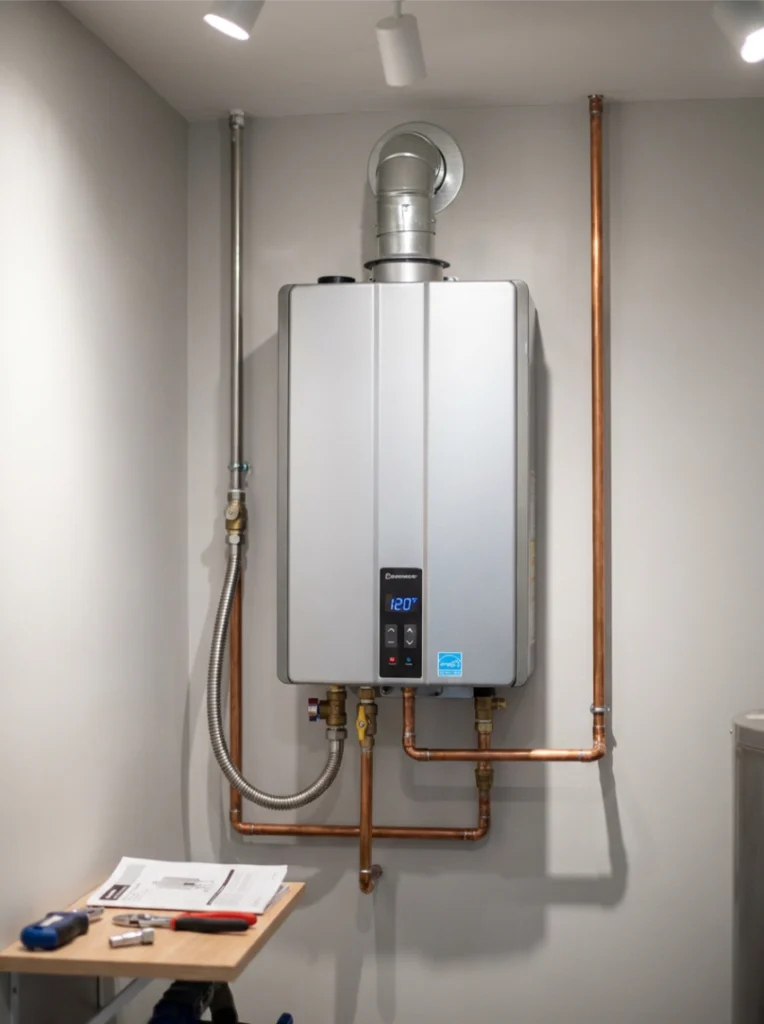
6. Tankless Water Heater Performance
Traditional storage water heaters maintain 40-50 gallons of hot water 24/7, wasting energy continuously. Tankless water heaters eliminate this waste by heating water only when you turn on a tap.
For metro Atlanta homes, tankless water heaters reduce water heating costs by 20-35%, $100-200 annually.
Key Specifications:
Flow rate (GPM) determines simultaneous fixture use. A 5-6 GPM unit handles two showers concurrently. Calculate peak demand by adding GPM for fixtures you might use simultaneously: showers (2.5 GPM), kitchen faucets (1.5 GPM), washing machines (2.0 GPM).
With annual savings of $100-200, payback occurs in 8-15 years. Tankless units last 20+ years versus 10-15 years for traditional tank heaters.
Professional installation required. Gas units need proper venting. Electric units may require upgraded electrical service.
7. Energy Star Certified Appliances
When planning a kitchen remodel, choosing Energy Star certified appliances costs little or no premium while delivering ongoing energy savings. Modern appliances use 10-50% less energy than models from just 10 years ago.
Appliance Savings:
- Refrigerators: 9-10% less energy ($30-50 annually)
- Dishwashers: 12% less energy, 30% less water ($35-50 annually)
- Induction Cooktops: 70-80% less energy than electric resistance
Energy Star appliances cost the same or slightly more than standard models. Annual savings range from $75-150 for a complete kitchen package.
Professional installation for built-in appliances and gas connections.
8. Complete LED Lighting Conversion
LED lighting represents the lowest-cost, highest-return upgrade available. LED bulbs use 75-80% less energy than incandescent bulbs and last 15-25 times longer.
A 60-watt incandescent bulb uses 60 watts. The equivalent LED uses 8-10 watts. At Georgia’s 13.2 cents per kWh, the LED saves roughly $7 per year per bulb. Multiply across 30-40 bulbs and annual savings exceed $200.
LED Technology Considerations:
- Color Temperature: 2700-3000K for “warm white” in living spaces
- CRI Values: 80-90 for good color rendering
- Dimmer Compatibility: Requires specific dimmable LED bulbs
Quality LED bulbs cost $5-15 each. Converting 30 bulbs costs $150-450. With annual savings of $150-250, payback occurs in 1-2 years.
Perfect DIY project.
9. Crawl Space Encapsulation
Vented crawl spaces allow humid outdoor air to enter, creating moisture problems, mold growth, and musty odors. That humid air also infiltrates your living space, forcing your air conditioner to work harder.
Crawl space encapsulation creates a sealed, conditioned space by covering the ground with heavy vapor barriers, sealing vents and gaps, and adding dehumidification.
System Components:
- Heavy-duty vapor barriers (minimum 10-mil, preferably 12-20 mil)
- Sealed foundation vents and gaps
- Rigid foam insulation on foundation walls
- Dehumidification systems maintaining 45-55% humidity
Annual energy savings range from $150-350, with payback periods of 10-15 years. Primary value comes from preventing expensive structural repairs and improving indoor air quality.
Professional installation required.
10. Residential Solar Panel Installation
Solar panels generate your own electricity from Georgia’s abundant sunshine. Metro Atlanta receives 4.5-5 peak sun hours daily on average. Modern systems can eliminate 70-100% of electricity costs.
System Specifications:
- Panel Wattage: 300-400W per panel
- System Size: 6-12 kW residential
- Panel Efficiency: 15-23%
After 30% federal tax credits, payback periods fall between 8-12 years for homes with $150-250 monthly electricity bills.
Professional installation required.
11. Cool Roof Coatings and Reflective Materials
Traditional dark asphalt shingles can reach 150-180°F in direct sunlight. Cool roof technologies reflect more sunlight and emit absorbed heat more efficiently, reducing heat transfer into your home.
Cool roof options include reflective coatings applied to existing roofs, light-colored or reflective shingles, and metal roofing with reflective finishes. These technologies reduce roof surface temperatures by 50-60°F, cutting cooling costs by 7-15%, approximately $100-250 annually.
Annual cooling savings of $100-250 provide payback in 5-12 years.
Professional installation required.
12. Whole-Home Dehumidification Systems
Georgia’s humidity creates comfort challenges that straight air conditioning can’t fully solve. When outdoor humidity exceeds 70-80% (common April through October), indoor humidity remains uncomfortably high even when temperatures are comfortable.
Whole-home dehumidification systems maintain optimal indoor humidity levels (40-50%) regardless of outdoor conditions. This allows you to set your thermostat 2-3°F higher while maintaining the same comfort level, reducing cooling costs by 10-15%.
Whole-home dehumidifiers integrate with existing HVAC ductwork. Homes in humid climates like Atlanta need 70-100 pint capacity. Look for Energy Factor (EF) ratings of 2.0 or higher.
Annual energy savings range from $150-300.
Professional installation required.
Start Your Energy Savings Journey
Ready to lower your Georgia Power bills while making your home more comfortable? Contact Artistic Construction to schedule your free energy consultation and remodeling assessment. We serve Woodstock, Canton, Holly Springs, Ball Ground, Kennesaw, Acworth, Marietta, Roswell, Alpharetta, and Milton.
FAQ
Which energy efficient home upgrade gives the best ROI in Atlanta?
Heat pump HVAC system replacement and insulation upgrades to R-49 offer the best ROI for metro Atlanta homes, with payback periods of 5-8 years. Heat pumps excel in Georgia’s mild winters while dramatically reducing cooling costs.
How much can I realistically save on my Georgia Power bill?
Comprehensive energy upgrades reduce Georgia Power bills by 30-50%, translating to $600-1,200 annually for most metro Atlanta homes.
Do energy efficient home upgrades increase home value?
Yes, energy improvements increase home value by 2-4% in metro Atlanta’s competitive housing market. Buyers particularly value recent HVAC system replacement, proper attic insulation upgrades, and energy efficient windows.
Can I finance energy efficient home upgrades?
Multiple financing options exist specifically for energy improvements. Georgia Power EnergyWise financing offers low-interest loans, while FHA PowerSaver loans provide government-backed financing.
What energy upgrades can I do myself versus what needs a professional?
LED lighting installation, smart thermostat installation, and basic air sealing are DIY-friendly improvements. Always hire licensed professionals for HVAC system replacement, electrical panel upgrades, spray foam insulation, and solar panel installation.
How long do energy efficient home upgrades last?
LED bulbs last 15-25 years, heat pump systems 15-20 years, solar panels 25-30 years. Insulation upgrades have an indefinite lifespan if properly installed.