The Quick Answer: Kitchen Cabinets Dominate Your Remodel Budget
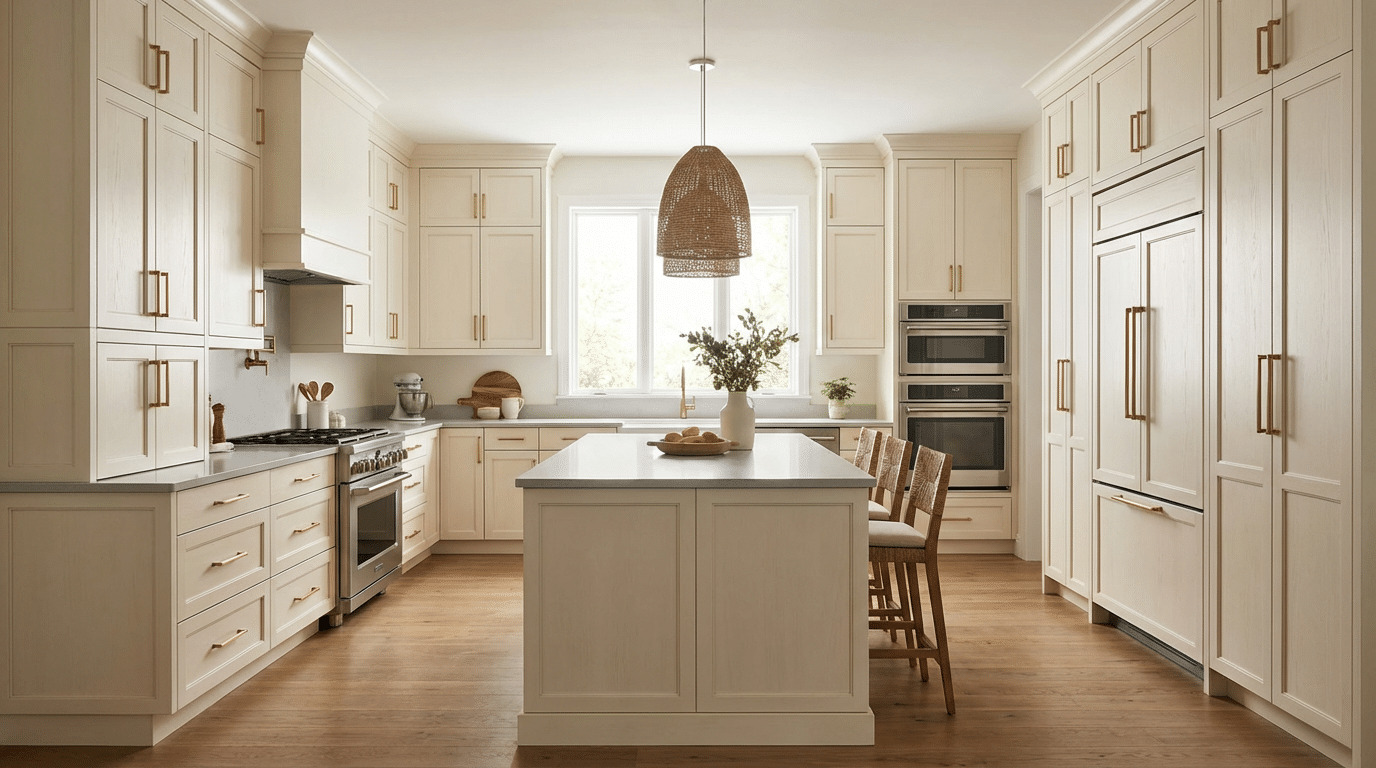
Cabinetry accounts for 28-35% of your total kitchen remodel cost, making it the single most expensive component in any renovation project. For Atlanta metro homeowners, this translates to substantial investments whether you’re choosing mid-grade cabinet solutions or premium custom systems.
Three factors drive cabinet costs: materials, customization level, and skilled installation. Unlike single-surface countertops, cabinetry requires custom sizing, professional-grade construction, high-quality finishes, and complex installation coordinated with plumbing and electrical systems.
Understanding why cabinets represent such a significant investment helps you make strategic decisions about your kitchen remodel to allocate your budget and where to implement savings strategies. The key is knowing which features genuinely improve daily experience versus those serving primarily aesthetic purposes.
Breaking Down the Most Expensive Kitchen Remodel Component
The cabinet industry offers three primary categories with dramatically different price points:
| Cabinet Type | Customization Level | Features & Quality | Best For |
| Stock Cabinets | Standard sizes only | Limited finishes, basic hardware | Budget-conscious projects |
| Semi-Custom Cabinets | Size modifications available | Soft-close hinges, pull-outs, upgraded finishes | Most residential renovations |
| Custom Cabinets | Complete design freedom | Any configuration, unlimited options | High-end remodeling |
Material quality matters more than many homeowners realize. Particleboard boxes with veneer fronts deteriorate quickly around sinks and dishwashers where moisture exposure is constant. Plywood construction offers significantly better longevity, resisting warping and water damage over decades. Solid wood construction provides heirloom quality lasting generations.
Cabinet Construction Standards That Impact Longevity
Industry-grade cabinetry follows specific standards determining durability and warranty coverage:
- Boxes joined with dado or dowel construction (not stapled butt joints)
- Full-depth drawers with dovetail joinery
- Undermount soft-close slides rated for 75-100 pounds
- Full-extension slides allowing complete drawer access
- European-style hinges with six-axis adjustment
- .
Ways to Save on Your Kitchen Remodel: Smart Budget Strategies
How to Reduce Cabinet Expenses
Cabinet refacing provides dramatic transformation at 40-50% less expense than full replacement. This process replaces doors and drawer fronts while applying matching veneer to existing boxes. When box construction remains sound, refacing delivers fresh style without complete cabinetry replacement, one of the most effective savings strategies.
Refacing makes sense when existing boxes maintain structural integrity with solid joints, level installation, and smooth operation. Inspect cabinet interiors for water damage, particularly under sinks and around dishwashers. Refacing won’t correct layout problems or inadequate storage (issues requiring full replacement).
Two-tone kitchens create premium aesthetics while controlling expenses. Use high-quality custom cabinets for highly visible lower cabinets and islands, then select more affordable options for upper cabinets. Since upper cabinets receive less daily wear, quality differences have minimal practical impact.
Open shelving eliminates entire sections of upper cabinetry, reducing both material and installation expenses. This works well for displaying attractive dishware or storing frequently used items. Trade-offs involve less concealed storage and increased visual clutter if not carefully curated.
What You Can DIY in Your Kitchen Remodel (And What Requires Professionals)
Demolition represents the easiest path to significant savings for capable homeowners. Removing old cabinets, countertops, and flooring requires more sweat equity than specialized skills. This work saves several thousand dollars when handled personally rather than hiring professionals.
Kitchen demolition requires proper safety equipment including respirators, safety glasses, and work gloves. Homes built before 1978 may contain lead paint requiring special handling under EPA rules. Asbestos testing should precede demolition in older homes.
Shut off electrical circuits at the breaker panel before beginning. Cap water supply lines after shutting off at valves. Gas lines require professional disconnection; never attempt this yourself.
Cabinet painting attracts DIY enthusiasts but rarely achieves professional-quality results. Professional cabinet painters use spray equipment in controlled settings, achieving smooth, durable finishes that DIY methods struggle to match. The expense difference proves worthwhile for results that last.
Professional finishing begins with complete door and drawer front removal, eliminating masking that compromises DIY results. Painters clean surfaces with industrial degreasers, fill grain imperfections, then sand to perfectly smooth surfaces. HVLP spray guns apply consistent coating thickness, reaching recessed areas brushes miss.
Plumbing and electrical work should never be DIY projects in Atlanta. Beyond safety concerns, all work must meet code requirements and pass inspections. Licensed professionals carry insurance protecting you from liability. Money saved attempting these tasks yourself disappears quickly when correcting mistakes.
How Artistic Construction Manages Kitchen Remodel Budgets
Our Transparent Budget Process
Detailed line-item estimates eliminate ambiguity creating distrust between homeowners and contractors. Every component (from cabinet hardware to electrical outlets) appears as separate entries with associated expenses. This transparency allows you to understand exactly where money goes and make informed decisions.
The “allowance” approach many contractors use creates false affordability. Vague placeholders for fixtures, tile, or countertops look attractive in initial estimates but rarely reflect reality. When selecting actual products, expenses exceed allowances by significant margins. Our approach starts with realistic pricing based on actual preferences, preventing unpleasant surprises.
Where We Help Atlanta Homeowners Save
Established trade relationships provide access to contractor pricing on materials. Over 22 years, we’ve developed partnerships with suppliers who offer competitive rates unavailable to homeowners purchasing retail. These savings get passed directly through lower project expenses.
Long-term supplier relationships deliver advantages beyond pricing. Preferred contractors receive priority delivery scheduling, generous return policies, and warranty support. Account representatives provide technical guidance on product selection, preventing specification errors causing delays.
In-house capabilities eliminate subcontractor markups inflating expenses. When contractors hire specialists for every trade, they add coordination fees and profit margins at each step. Our team handles multiple aspects directly, keeping more budget focused on actual construction rather than administrative overhead.
Project management efficiency prevents costly delays plaguing many remodels. When tile installers arrive but electricians haven’t finished, you pay for wasted time. Our systematic approach to scheduling and coordination keeps work progressing smoothly, completing projects on time and within budget.
From Free Estimate to Final Walkthrough
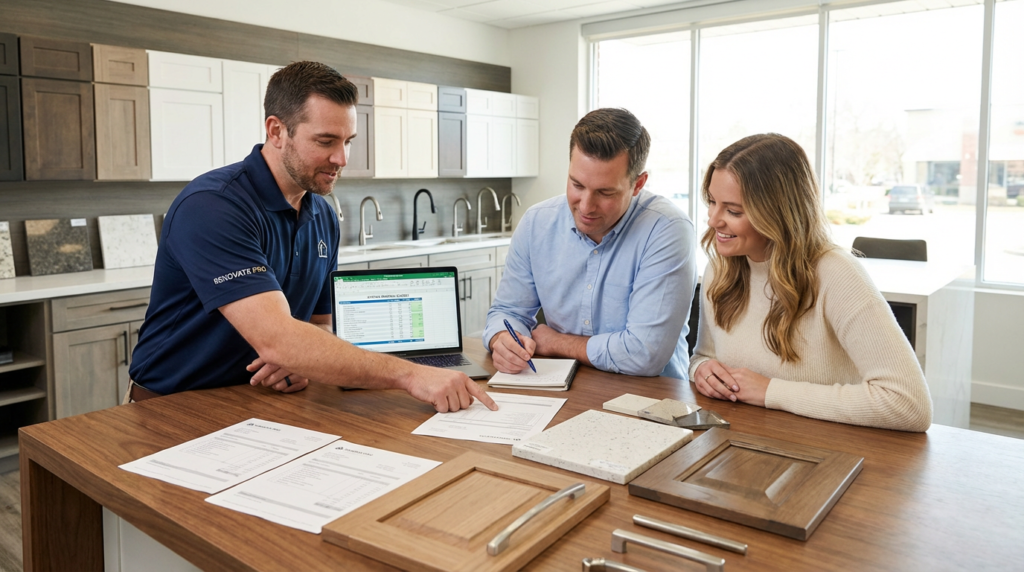
Initial consultations establish realistic expectations about investment levels and possibilities. Many homeowners arrive with Pinterest inspiration that doesn’t align with actual budgets. These conversations explore what’s achievable at various price points, helping you understand trade-offs before investing time in detailed planning.
Budget discussions begin with understanding your priorities, must-haves, and negotiable elements. A homeowner prioritizing cooking functionality may invest more in professional-grade appliances while accepting basic cabinetry. Another focused on aesthetics might select stunning custom cabinets while choosing mid-range appliances.
3D rendering technology visualizes your new kitchen before construction begins. These detailed models show how design decisions affect aesthetics and functionality. You’ll see exactly how your new island relates to the refrigerator, how much space exists between counters, and how natural light interacts with your space.
Get started with kitchen remodel financing options that fit your budget and timeline.
Weekly progress updates document completed work, upcoming tasks, and schedule adherence. We photograph each workday showing progress and identifying issues requiring decisions. Digital platforms provide 24/7 access to project schedules, material selections, and change order history.
Decision points receive advance notice allowing adequate research time. When tile selection becomes relevant three weeks from now, we notify you today to begin exploring options. This proactive approach prevents crews waiting for decisions, maintaining schedule momentum and avoiding costly delays.
Frequently Asked Questions About Kitchen Remodel Expenses
How much does the average kitchen remodel cost in Atlanta?
Most complete kitchen remodels in Atlanta metro require significant investment, with scope dramatically influencing final totals. Cosmetic updates cost substantially less than comprehensive renovations involving structural changes, relocated plumbing, and custom features. Atlanta’s premium housing market and regional labor rates run 10-15% higher than state averages.
What percentage of my kitchen budget should go to cabinets?
Cabinetry consumes 28-35% of total remodeling budgets. This allocation reflects material expenses, customization requirements, and skilled installation labor. Reducing this percentage below 25% means compromising on quality or limiting storage functionality in ways that diminish long-term satisfaction.
Should I choose custom cabinets or stock cabinets for my kitchen renovation?
Stock cabinets work well for standard layouts on tight budgets. Semi-custom cabinets suit most residential renovations, offering size modifications and upgraded features. Custom cabinets provide complete design freedom for high-end projects or non-standard spaces. Your choice depends on budget, timeline, and how much your layout deviates from standard dimensions.
What are the best ways to save without sacrificing quality?
Effective strategies include cabinet refacing instead of replacement, choosing quartz strategically, handling demolition yourself, timing purchases during major sales, and working with contractors who offer transparent pricing. Focus spending on high-impact areas like islands while selecting affordable options for less-visible elements.
How long does a kitchen remodel take in Atlanta?
Project duration depends on scope and complexity. Simple cosmetic updates may complete in 2-3 weeks. Comprehensive renovations involving structural changes, moved plumbing and electrical, custom cabinetry, and high-end finishes require 8-12 weeks. County permitting processes add time variability.
Do I need permits for a kitchen remodel in Atlanta?
Permits are required for electrical work, plumbing modifications, structural changes, and gas line installations throughout Atlanta metro. Requirements vary by county, but all jurisdictions mandate permits for work affecting health, safety, and building systems. Unpermitted work creates liability issues and potential problems during home sales.
What’s included in typical countertop installation?
Installation includes template creation, material cutting, edge finishing, cutouts for sinks and appliances, seam joining, and professional installation. Additional expenses arise from edge profile upgrades, integrated backsplashes, waterfall edges on islands, and special requirements for out-of-square walls or complex layouts.