About 78% of Atlanta homeowners report significant anxiety during home improvement projects. The good news? You can manage renovation stress with strategies for budget control, contractor communication, and keeping your daily routines intact during construction.
This guide covers practical stress relief techniques for Atlanta metro homeowners tackling kitchen remodels, basement renovations, or complete home transformations, helping you handle project anxiety and construction stress.
Why home renovation projects cause stress and overwhelm
Start by identifying your primary stressors. You’re managing financial commitments, living in construction chaos, and making decisions that affect your home’s value for years. Here’s what Atlanta homeowners struggle with most during remodeling projects:
- Financial anxiety and budget stress ranks first, especially as Atlanta material costs increased 23% in two years. Budget uncertainty, hidden problems, and unexpected expenses create constant worry. For ways to reduce budget uncertainty, review our home renovation financing guide.
- Timeline stress and delays stem from Georgia’s weather patterns, Atlanta’s permit processes, and supply chain disruptions. Your quoted 8-week kitchen renovation can stretch to 12+ weeks.
- Contractor communication breakdowns happen when professionals don’t provide updates, can’t be reached, or deliver work that doesn’t match expectations, a leading cause of project stress.
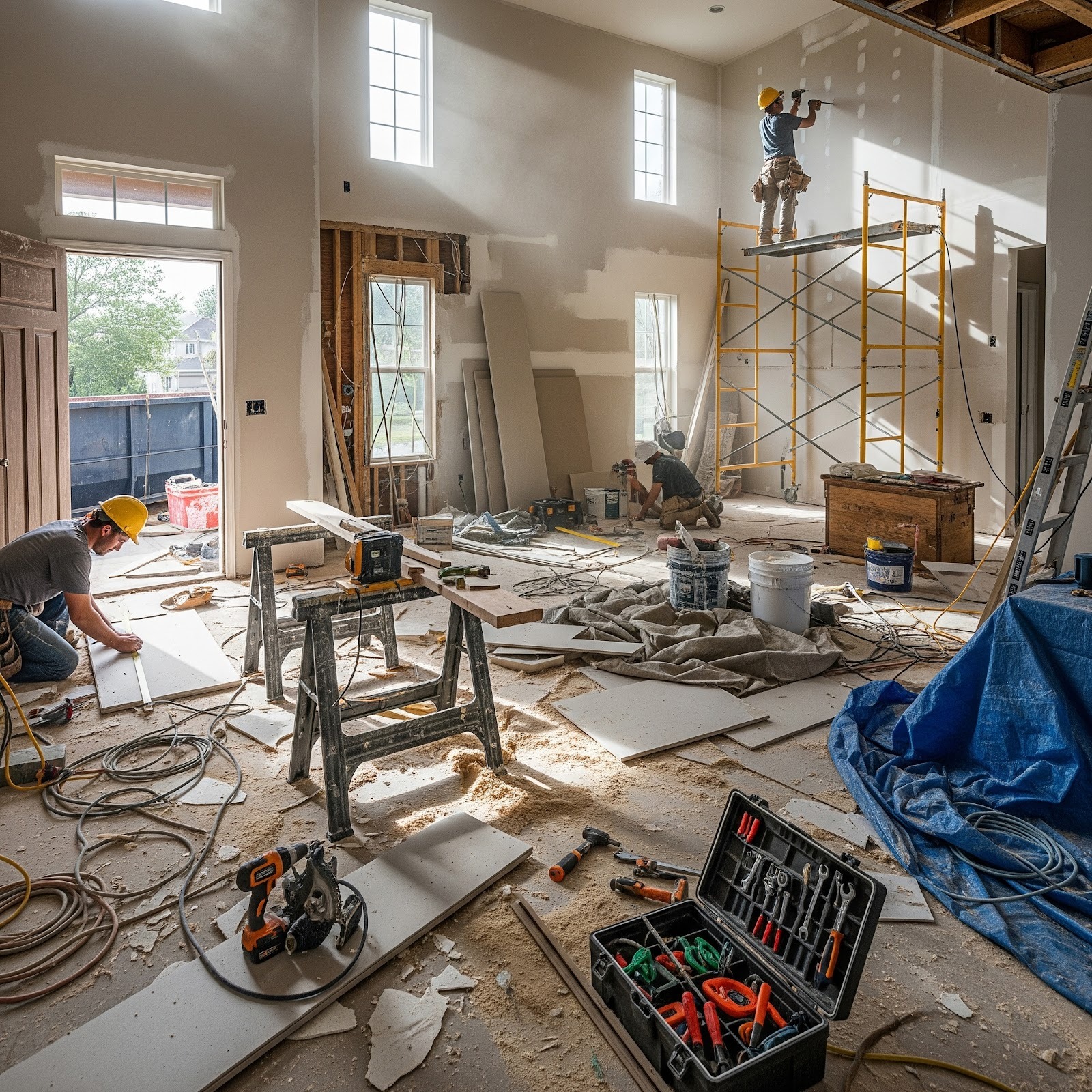
- Living disruptions and construction noise affect everything: losing your kitchen for months, coordinating bathrooms around work schedules, managing dust throughout your home while trying to maintain normalcy.
If you’re deciding between remodeling and building new, working with a custom home builder can help reduce uncertainty around costs and timelines. Comparing both paths early can make the rest of your planning feel more manageable. For a clear expectation-setting resource, see our Atlanta house build timeline guide.
Physical and emotional impact of renovation stress
Project anxiety becomes serious when it causes sleep disruption, strained family relationships, and work productivity declines. Constant construction noise, dust exposure, and privacy invasion prevent you from truly relaxing at home. Headaches, digestive issues, and emotional exhaustion are clear signs that require immediate attention.
Managing home improvement stress by project phase
Different renovation phases create distinct stressors that need specific management strategies.
Pre-project planning and renovation preparation
- Get at least three detailed contractor quotes to understand market rates and eliminate budget anxiety through transparent pricing comparisons. When comparing basement contractor quotes, look beyond the bottom line to understand what’s included.
- Define non-negotiables versus nice-to-haves. This clarity eliminates decision fatigue when budget pressures arise during construction.
- Vet contractors thoroughly by checking Georgia licenses, reviewing Atlanta references, and confirming permit expertise. Use our contractor vetting guide to ask the right questions and minimize contractor stress later.
If design decisions are adding pressure, review modern home style options early so you can narrow choices before construction begins.
During construction phase
- Establish daily communication protocols with your contractor through text updates showing progress. Knowing what’s happening stops catastrophizing and reduces anxiety.
- Designate one sanctuary space that remains construction-free, your bedroom or spare room provides essential psychological relief from project pressure.
- Schedule family stress check-ins to address frustrations before they explode. Ten minutes of acknowledged frustration prevents days of tension and relationship strain.
- Implement the “one decision per day” rule for stress management. Decision fatigue is real, limiting major choices prevents analysis paralysis and mental exhaustion.
- Post-completion adjustment period
Give yourself 2-4 weeks adjustment time after project completion. Everything feels unfamiliar initially, and you’ll second-guess decisions. This normal phase requires patience.
Schedule final walkthroughs when rested, not exhausted, to notice punch list items clearly without stress-induced oversights.
Mid-project crisis management
- Take 24 hours before responding to crisis news. Immediate reactions are emotional rather than strategic.
- Reframe problems as decision points to reduce anxiety. Instead of “This is a disaster,” try “This needs a solution.”
- Demand solutions, not just problems. Reputable contractors present issues alongside 2-3 solutions with cost/timeline implications, helping you stay calm during challenges.
Managing changing costs
Demand detailed change orders explaining what was discovered, why additional work is needed, alternative options, and cost/timeline impact.
Never approve change orders under pressure. For expensive changes, get second opinions from independent inspectors to ensure fair pricing.
Track changes in a shared document to eliminate end-of-project shock and make informed decisions without overwhelm.
Living through construction without losing your mind
Creating temporary living spaces
For kitchen renovations, create a functional temporary kitchen in your garage or dining room with microwave, electric kettle, mini-fridge, slow cooker, utility table, and paper products. This $200-$400 investment reduces meal preparation stress dramatically.
For bathroom projects, establish clear bathroom schedules if down to one functional bathroom. Stagger morning routines by 30 minutes per person. Consider gym memberships ($30-$50/month) for shower access and stress relief through exercise.
Protect belongings by moving valuables, photos, and documents to sealed plastic containers. Cover furniture with canvas drop cloths to minimize cleaning stress and damage concerns.
If you are planning upgrades during your remodel, review smart home systems early so you can make decisions before construction begins. This can reduce decision fatigue and help you avoid last-minute changes during the build.
If your remodel includes new doors, patios, or a screened porch, plan those transitions early so you can keep daily routines intact during construction. Use our indoor-outdoor living guide to narrow options before work begins and reduce last-minute changes.
Managing kids, pets, and remote work
Maintain children’s routines to minimize pressure on young family members, regular bedtimes, meals, and school schedules provide stability. Establish construction-free times for important activities. Most Atlanta contractors accommodate requests like “no jackhammering before 9 AM.”
Pets need safe spaces away from construction to prevent anxiety. Create secure areas with litter boxes away from dust and noise. Consider boarding anxious pets during loud demolition phases. Inform contractors about pet hiding spots to check before sealing walls.
Remote workers should create dedicated work sanctuaries far from construction with noise-canceling headphones. Communicate meeting schedules, contractors will pause loud work during important calls if they know in advance.
When to relocate temporarily
Consider temporary relocation when:
- Without functional bathroom for 3+ days
- Without functional kitchen for 2+ weeks
- Major dust-producing work affects bedrooms
- Managing disruptive foundation work
Protecting Your Mental State
Maintain morning and evening rituals that remain constant despite construction. These consistency anchors reduce stress.
Document your home with photos before construction to protect against damage claims and minimize contractor disputes later.
Secure valuables in locked areas. Multiple workers access your home, remove temptation by securing jewelry, electronics, and documents.
Communicating with your contractor
Communication failures generate more stress than any other factor during construction projects.
Recognizing red flags vs. healthy communication
Watch for these warning signs versus positive patterns:
Red flags include: Taking 48+ hours to return calls, vague responses to questions, defensive reactions when questioned, surprising you with decisions, and updating only when you initiate contact.
Healthy patterns include: Responding within 24 business hours, clear explanations with advance notice, open discussion of challenges, asking your preference before deciding, and proactive updates at agreed intervals.
If experiencing consistent red flags, schedule an in-person meeting to reset expectations. If communication doesn’t improve within one week, consider whether continuing serves your project goals.
Setting communication expectations before signing
Establish communication protocols in your contract like:
- Daily progress updates provide brief text or photo updates showing progress. “Completed drywall in master bath, starting mudding tomorrow” takes 30 seconds but eliminates hours of anxiety.
- Weekly walkthroughs offer 30-minute check-ins at consistent times, providing dedicated question time.
- Decision turnaround times clarify how quickly you must respond and how much notice you need. Clear timeframes prevent pressure.
- Emergency protocols define what constitutes an emergency versus what can wait. Definitions prevent 11 PM panic texts.
- Change order procedures require written change orders with pricing before additional work begins to maintain budget control.
Progress tracking systems
Create a shared project document covering:
- Completed tasks this week
- Planned tasks next week
- Delays or challenges
- Upcoming decisions needed
- Current budget versus estimate
- Updated timeline
Request end-of-day photos to see progress when you can’t be home, reducing pressure through transparency.
Resolving conflicts effectively
Apply the 24-hour rule: If something bothers you for 24+ hours, address it directly using this framework:
- State concern: “I’m concerned we’re three weeks behind schedule”
- Express impact: “This causes stress because we scheduled inspection next week”
- Ask for solutions: “What options get us back on schedule?”
- Document agreement: “To confirm, you’ll add a second crew to finish by Friday?”
How Artistic Construction eliminates renovation stress
After 5,000+ Atlanta projects, we’ve systematized stress prevention through proven management systems:
- Daily progress communication through your preferred method, text, photos, or calls. You always know what’s happening.
- Detailed project timelines show every phase with realistic dates based on Atlanta-specific factors. Weekly updates maintain accurate completion expectations.
- Dedicated project managers serve as your single contact, eliminating coordination stress with multiple subcontractors.
- End-of-day summary texts show completed work, tomorrow’s plan, and needed decisions, 30 seconds that provide complete peace of mind.
- Proactive problem-solving means we present problems with 2-3 solutions including cost/timeline implications.
- Detailed, itemized estimates show exactly what’s included and excluded.
- 1-year warranty means you’re not stressed about calling if something isn’t right after completion.
- Living situation support includes flexible scheduling around your family, extensive dust protection, and respectful work environments to minimize disruption.
Schedule your worry-free consultation
Call (678) 613-3424 or visit our contact page for no-pressure consultations covering your project vision, Atlanta-market budgets, timeline expectations, and disruption minimization strategies.
We serve the entire Atlanta metro: Buckhead, Virginia-Highland, Decatur, Marietta, Alpharetta, Johns Creek, and Sandy Springs.
Check out our home building & renovation services.
Frequently asked questions about renovation stress
How long does renovation stress last?
Minor projects create 4-8 weeks of elevated stress. Major renovations create 3-6 months of construction stress, with peaks during demolition and mid-project phases. Add 2-4 weeks for post-completion adjustment. Total stress for major kitchen remodels averages 10-14 weeks from planning through adjustment.
Homeowners who implement clear communication systems, maintain sanctuary spaces, and plan for surprises report 40-60% lower stress levels.
Is renovation regret normal during projects?
Absolutely. Regret happens most often 3-4 weeks into construction when excitement fades and your home looks worse than when you started. Demolition takes 2 days but rebuilding takes 6-8 weeks, you’re living in maximum chaos with minimal visible progress.
If you’re still deciding where to build, see building on your own property.
What if my contractor stresses me out?
For fixable problems (poor communication, minor quality issues), schedule an in-person meeting. State specific concerns, explain impacts, ask for solutions, document agreements.
For fundamental problems (consistent unresponsiveness, major quality issues, safety concerns), document everything and consult a construction attorney about options including stopping payment or terminating the contract to protect your interests, and review hard vs soft costs.