 Est. 2003

Most contractor checklists were written by people who have never held a license, and they all ask the same surface questions. Basement finishing is below-grade construction with its own failure modes, so the questions that protect you are different. Here is how to check a basement contractor in Georgia, in the order the checks matter.
Start with the license, because it is verifiable
Georgia requires a license for residential contracting work over $2,500 in labor and materials, issued through the State Licensing Board for Residential and General Contractors. You can verify one yourself at sos.ga.gov in about thirty seconds, and it is the only claim on a contractor's website you can confirm without taking anyone's word for it.
Check the name on the license against the name on the contract. A licensed company sending an unlicensed crew is a different arrangement from a licensed contractor doing the work, and the distinction matters most when something has to be corrected two years later.
Insurance is the second verifiable claim, and the way to check it is to call the carrier listed on the certificate rather than reading the certificate. Ask whether the policy is active and what it covers. General liability protects your house if the work damages it. Workers' compensation protects you if someone is injured in your basement, which without that coverage can become your problem.
Ask the questions only a basement contractor can answer
A general remodeler and a basement specialist give noticeably different answers to the same question, and the fastest way to tell them apart is to ask something local and specific.
Ask how the clay soil here changes the approach compared with sandy soil. A contractor who works below grade in this area will talk about how red clay holds water against a foundation wall instead of draining through it, where water collects on a sloping lot, and what happens at the low corner after a hard rain. A contractor reciting general waterproofing advice that would apply anywhere in the country is telling you something useful about their experience.
Ask what they would do before framing on a basement that has shown moisture. The answer you want involves following downspouts to where they discharge and looking at the site after rain, because finishing over an active water path is the one basement mistake that cannot be fixed without taking the work apart.
Ask which office issues the permit for your address. In this area that answer depends on whether your parcel sits inside the city limits, and a contractor who files here regularly will know that a Woodstock or Canton mailing address can belong to either the city or unincorporated Cherokee County. Our Canton basement finishing page names the department that reviews plans on each side of that line.
What a legal basement bedroom requires
This is the detail that separates contractors more reliably than any other, because it is expensive to do properly and invisible to a homeowner who does not know to ask.
A basement bedroom needs an emergency escape opening: 5.7 square feet of net clear opening, at least 24 inches high and 20 inches wide, with the sill no more than 44 inches above the finished floor. In a daylight or walkout basement you may already have that. In a fully buried corner it means cutting the foundation wall and building a window well, which is excavation and structural work priced on its own line.
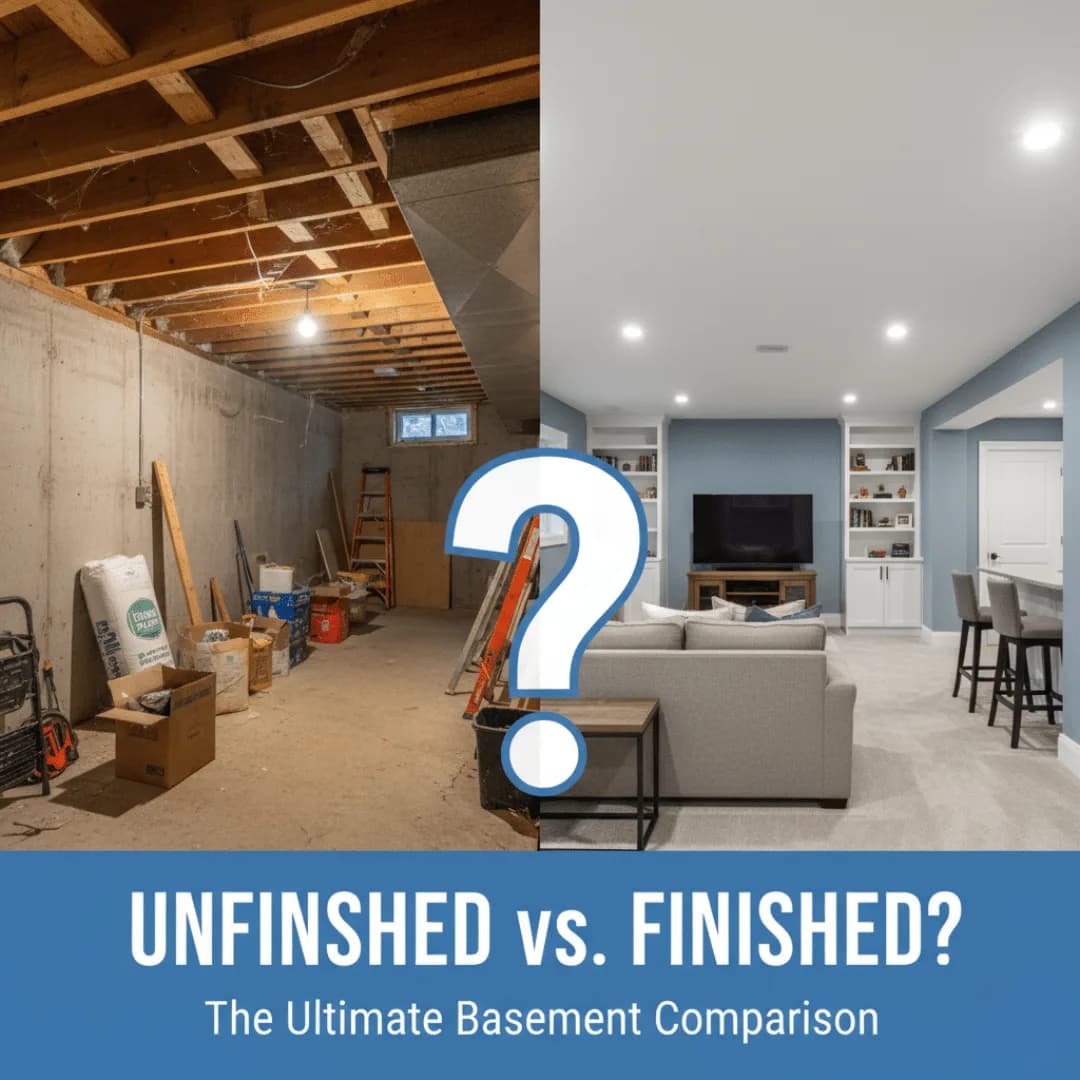
So ask directly: is the bedroom on this plan a legal bedroom, and what does the escape opening cost? A contractor who answers precisely has priced it. One who says it will be fine has not, and the room you paid for is a finished basement room that cannot be advertised as a bedroom when you sell. Our guide to the difference between a finished and unfinished basement covers what else changes when space becomes living area.
Check experience the way it can be checked
Portfolios are the easiest thing on a contractor's website to fake, and a reverse image search on two or three photos takes a minute and occasionally settles the question immediately.
References are better, but only if you ask for the right ones. Request three basement clients from the last eighteen months, not a general list of happy customers, and not work from five years ago with a crew that has since turned over. Then call them, which most homeowners skip.
One question is worth more than the rest: what should I know that they probably would not tell me upfront? It gives a satisfied client permission to mention the thing that went sideways, and every project has one. How the contractor handled it is the information you are buying.
Ask references about the parts of the job you cannot inspect. Did the schedule hold. Did change orders arrive in writing before the work. Was the site left clean. Was anyone there daily, or did the job go quiet for a week at a time.
Who is actually in your basement
Ask who performs the work and who supervises it. Some contractors carry crews, others coordinate subcontractors, and both models produce good work, but they fail differently. A subcontractor model depends on the general contractor's scheduling and on subs who answer their calls. A crew model depends on the crew's depth when someone is sick.
The question that matters either way is who your single point of contact is, by name, and how often you should expect to hear from them. Communication failures cause more remodeling complaints than workmanship does, and they are the easiest thing to settle before work starts.
The financial terms that protect you
Payment structure is where a contract either protects you or does not. Common practice in this market is a deposit of 10% to 15%, progress payments tied to completed milestones, and a final portion held back until the punch list is closed. That is practice rather than law in Georgia, so it is a term to negotiate instead of a rule to cite.
Three things belong in writing before you sign. A scope detailed enough that someone else could price it. A change-order process stating that changes are priced and approved in writing before the work happens. And warranty terms with a stated duration, so a callback is a defined obligation instead of a favor.
Lien waivers are the protection most homeowners have never heard of. A subcontractor or supplier who goes unpaid by your contractor can place a lien on your house even though you paid in full. Signed lien waivers from subs and suppliers at each payment are what close that exposure, and a professional contractor will not be surprised by the request.
How many contractors to talk to
Three, and no more than five. Three gives you enough comparison to recognize an outlier. Past five, the bids blur together and people start choosing on gut feel, which is the outcome the whole process is designed to avoid.
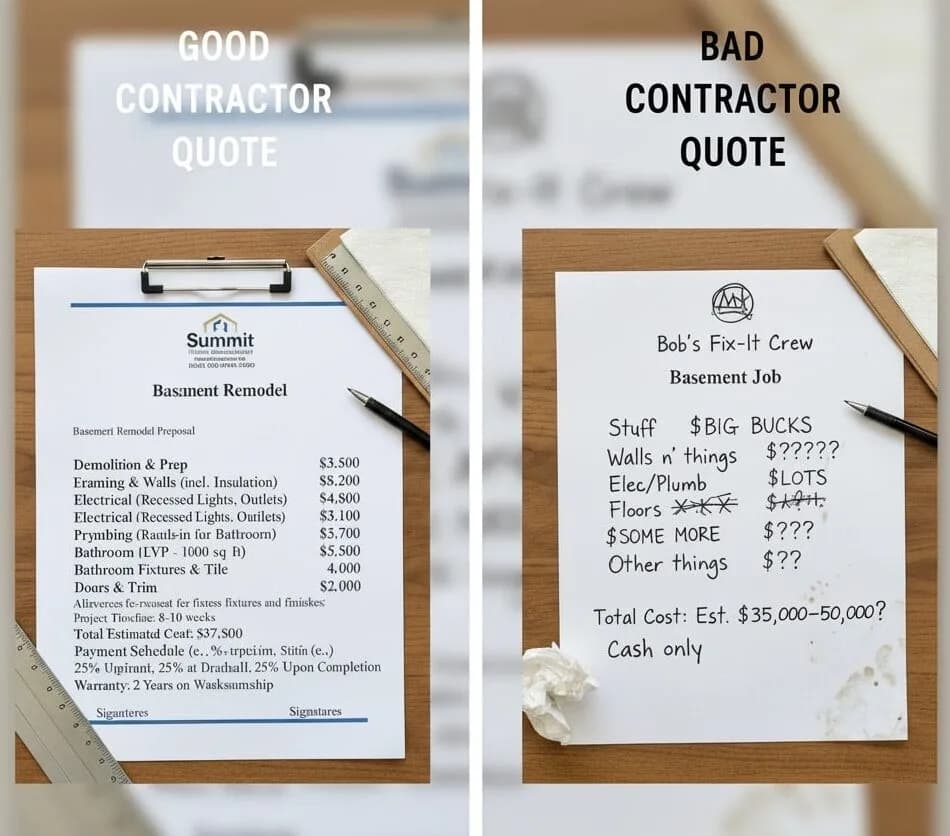
Once the bids arrive, the comparison itself is a separate skill, because two quotes on the same basement can differ by twenty thousand dollars and both be honest. Our guide to comparing basement remodel quotes walks through the line items where the difference usually hides, and the Alpharetta basement planning guide covers costs, permits and timelines if you are still at the planning stage. Our Alpharetta basement finishing page covers the same ground for homeowners already ready to hire.
Frequently asked questions
How do I check if a contractor is licensed in Georgia?
Look them up through the State Licensing Board for Residential and General Contractors at sos.ga.gov. Residential contracting work over $2,500 in labor and materials requires a license, and verifying one takes under a minute. Confirm the licensed name matches the name that will appear on your contract.
What questions should I ask a basement contractor before signing?
Ask how the local clay soil changes their waterproofing approach, what they would do before framing on a basement that has shown moisture, which office issues the permit for your address, whether the bedroom on the plan has a compliant escape opening and what it costs, and who your single point of contact is by name.
How much deposit is normal for a basement remodel?
Common practice here is 10% to 15%, with the remainder paid at milestones and a final portion held until the punch list is done. This is industry practice rather than Georgia law, so treat it as a negotiating position. A request for half the contract value before materials arrive is worth declining.
What if a contractor will not provide references?
Remove them from consideration. Contractors with recent, satisfied basement clients supply them readily, and the ones who hesitate are usually managing something they would rather you did not hear about.
Do I need a permit to finish my basement?
Yes. Finishing a basement is permitted work, and adding a bedroom brings the escape opening and alarm placement into the review as well. Which office issues it depends on whether your parcel sits inside the city limits, which is worth confirming before drawings start rather than at the counter.

Planning a project?
Skip the guesswork, get real numbers.
Reading is great. A clear, itemized estimate is better. Tell us what you have in mind.