Is your commercial concrete creating dangerous trip hazards for customers or employees? Settled concrete slabs expose your property to serious liability risks and progressive structural damage. Most uneven concrete problems can be fixed permanently in 1-2 days without the disruption and expense of full replacement.
Artistic Construction specializes in commercial and residential concrete leveling services across Metro Atlanta, bringing 22 years of construction expertise to solve concrete settlement problems. We use advanced polyurethane foam injection technology to lift and level sunken slabs, providing permanent solutions that are ready to use in 15 minutes.
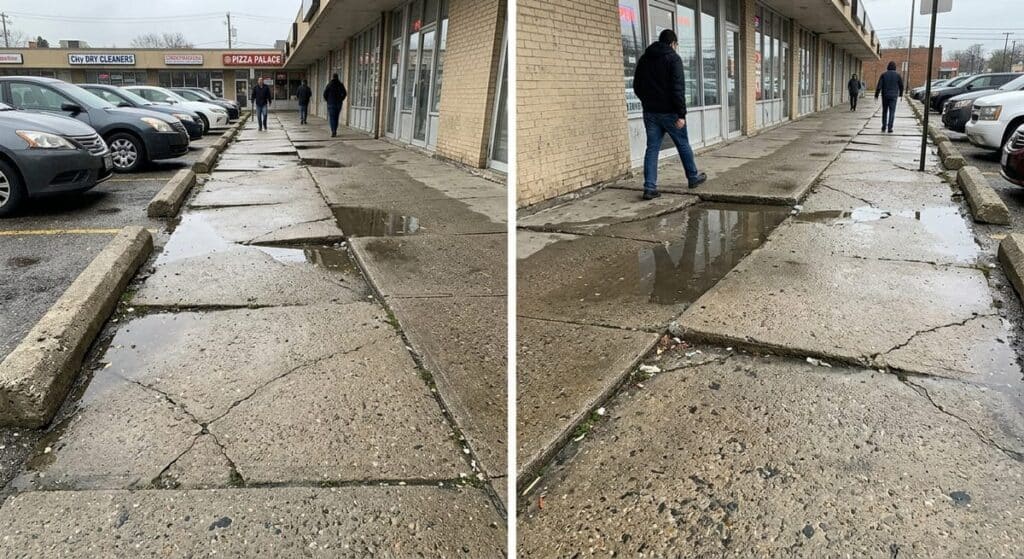
Commercial Concrete Safety Hazards You Can’t Ignore
Uneven concrete slabs don’t improve on their own. What starts as a minor nuisance quickly becomes a costly problem threatening your property value, customer safety, and legal liability.
Warning Signs Requiring Immediate Attention
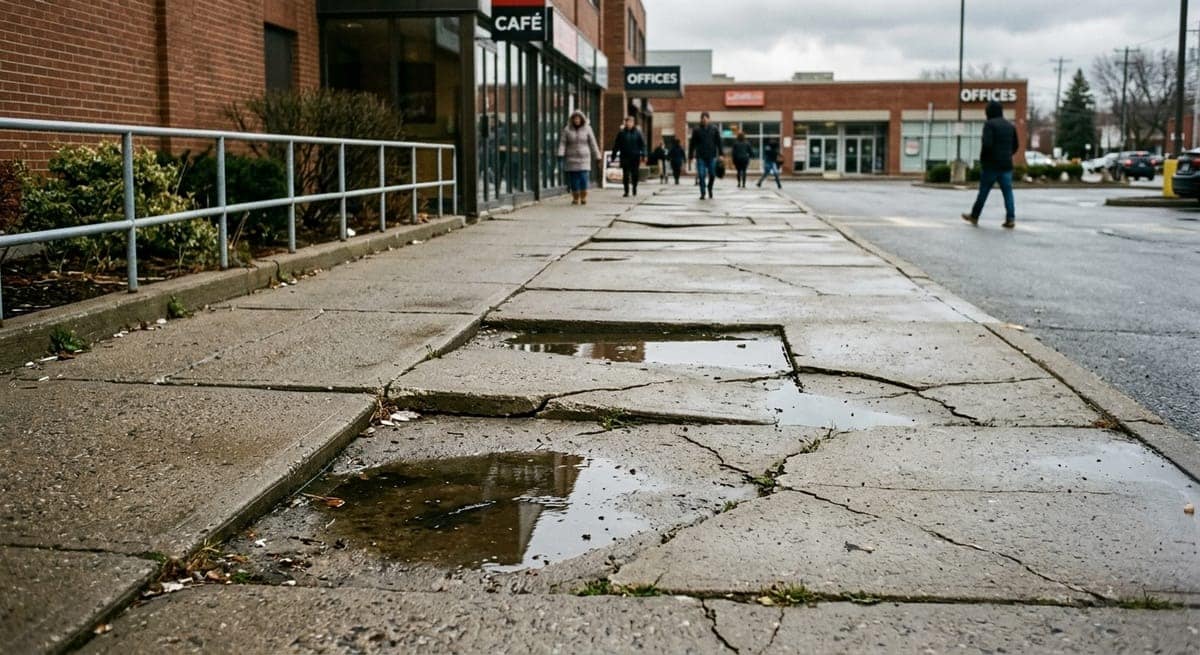
Separation gaps wider than 1/4 inch between slabs or at building foundations indicate soil erosion beneath. These gaps meet ADA’s legal threshold for trip hazard removal requirements and allow water infiltration that accelerates settlement.
Pooling water after rain means improper drainage. Standing water erodes supporting soil, causing progressive settlement with every heavy rain while creating slip hazards that increase liability exposure.
Radiating cracks from corners or edges show your slab is under stress from uneven support. Cracks exceeding 1/4 inch signal serious structural movement requiring professional assessment.
Height differences of 1/4 inch or more create trip hazards under ADA standards and OSHA workplace safety regulations. A 1/2 inch difference creates a 4% grade change, enough to cause stumbling, especially for elderly visitors or those with mobility challenges.
Rocking or hollow sounds when walking indicate voids beneath the surface. When concrete loses contact with underlying soil, it flexes under load, creating stress that leads to cracking..
If your inspection reveals broader structural concerns beyond slab settlement, we can also help coordinate related upgrades like steel beam installation as part of your renovation planning.
The Hidden Costs of Delaying Repair
Liability exposure tops the list for commercial properties. A single slip-and-fall lawsuit can result in significant legal fees, settlements, and increased insurance premiums. OSHA workplace safety violations for trip hazards carry substantial penalties.
Progressive structural damage compounds over time. Settlement starting under a walkway spreads to adjacent slabs, foundations, or building structures. What could be a straightforward concrete leveling project becomes a major problem as soil voids grow larger with each rain event.
Property value decline affects both commercial and residential owners. Prospective buyers and tenants see uneven concrete as deferred maintenance. Real estate appraisers deduct from property values when significant concrete settlement is present.
Accelerated deterioration occurs once settlement begins. Uneven slabs collect water that freeze-thaw cycles during winter, causing surface spalling and cracking. What starts as simple settlement evolves into comprehensive concrete failure requiring full replacement if left unaddressed for 5-10 years.
North Georgia’s red clay soil makes concrete settlement particularly common in Metro Atlanta. The soil expands dramatically when saturated during heavy spring rains, then contracts during summer drought, creating voids beneath concrete that cause slabs to sink.
How We Fix Uneven Concrete Without Replacement
Most property owners assume uneven concrete means expensive demolition and replacement. That’s rarely necessary. Modern polyurethane foam injection lifts and levels settled concrete slabs permanently using the existing slab.
If your slab supports heavy loads, it helps to confirm the concrete is designed for that use before deciding between leveling and replacement. See our minimum concrete slab thickness guide for planning considerations.

Polyurethane Foam Injection vs. Traditional Mudjacking
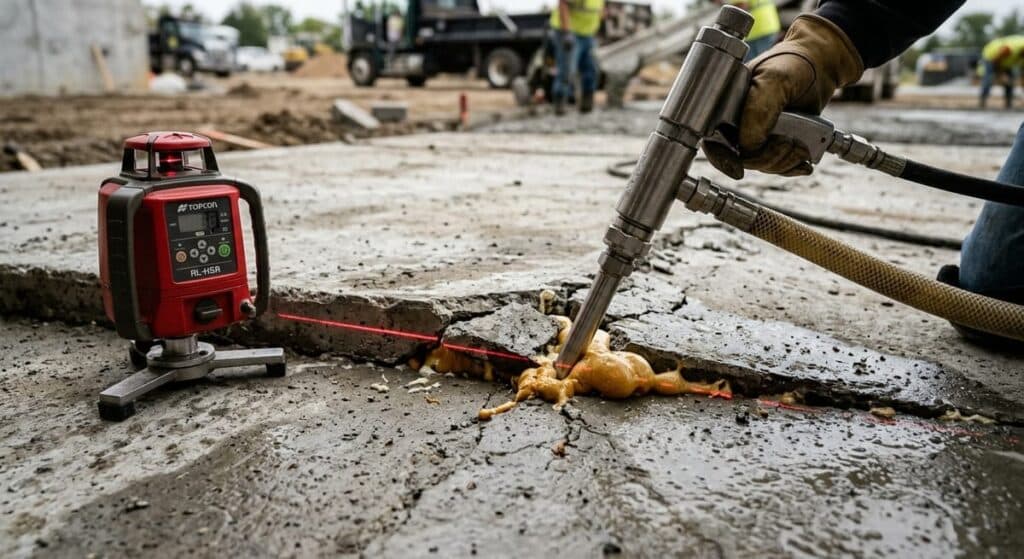
Polyurethane foam injection (also called polyjacking) fills voids beneath your concrete and lifts it back to its original position. We drill penny-sized holes through the settled concrete, insert injection ports, then pump expanding polyurethane foam beneath the slab. The foam fills empty spaces, compacts loose soil, and exerts upward pressure that raises the concrete.
Unlike traditional mudjacking that pumps heavy sand-cement slurry, polyurethane foam injection is lightweight, waterproof, and won’t wash out or decompose. The foam expands in seconds, cures in minutes, and creates a stable support layer with excellent compressive strength.
The foam’s expansion ratio provides precise control over lift amounts, preventing over-lifting that can damage adjacent structures. Its hydrophobic properties mean it won’t absorb water or lose volume over time. The curing process completes in about 15 minutes, allowing immediate traffic on repaired surfaces.
Our Proven Commercial Concrete Repair Process
Step 1: Professional Inspection and Measurement – We assess settlement severity, identify the cause, and measure exact elevation differences using laser levels. This inspection is free and includes a written estimate with no-obligation pricing. We also evaluate drainage patterns to prevent future settlement.
Step 2: Strategic Hole Placement – We drill 5/8-inch diameter holes in a grid pattern based on slab size and settlement. These small holes are placed in low-visibility areas when possible: along joints, in corners, or near edges.
Step 3: Polyurethane Foam Injection – We insert injection ports and pump polyurethane foam beneath the slab in controlled stages. Using laser levels, we monitor the lift in real-time and stop when concrete reaches target elevation. You’ll see the concrete rise within 5-15 seconds of foam injection at each port.
Step 4: Port Sealing and Cleanup – Once the slab is level and foam has cured (about 15 minutes), we remove injection ports and seal holes with color-matched concrete patch. The patching material is high-strength polymer-modified cement that bonds permanently to existing concrete, creating a waterproof seal. Your concrete is ready for full traffic immediately.
Most residential repairs take 4-6 hours. Commercial concrete leveling projects spanning larger square footage complete in 1-2 days. For businesses that can’t afford daytime disruption, we schedule work after hours or on weekends.
Choosing the Best Concrete Leveling Method
| Choose Polyurethane Foam Leveling When: | Choose Replacement When: |
| Concrete slab is structurally sound | Severely cracked throughout entire slab |
| Settlement ranges 1/2 inch to 6 inches | Concrete is crumbling or spalling extensively |
| Need surface usable immediately | Planning to change slab size or configuration |
| Time limited (operations can’t pause) | Concrete is 40+ years old with multiple failure modes |
We’ll give you an honest assessment during your free inspection. About 80% of settled concrete we evaluate is repairable with foam injection, saving property owners significantly compared to replacement.
Timeline comparison: Polyurethane foam injection repairs complete in hours to two days maximum with immediate usability. Replacement requires demolition, haul-away, site prep, new concrete placement, and 7-day cure time, totaling 10 days minimum from start to normal use.
Commercial and Residential Concrete Leveling Applications
Concrete settlement affects all property types. Whether you manage commercial real estate or own a residential property, the underlying causes are identical: soil movement beneath the slab.
Commercial Properties Requiring Industrial Floor Leveling
Retail storefronts and shopping centers face customer safety challenges where trip hazards at entrances create immediate liability exposure. ADA compliance requires level transitions between surfaces. We’ve leveled settling sidewalks, entrance ramps, and parking areas for retail properties throughout Metro Atlanta, working overnight to avoid disrupting business hours.
Office buildings and professional complexes need maintained curb appeal and accessibility. We repair settling walkways, ADA ramps, and parking garage slabs that develop settlement from soil erosion or failed subgrade compaction.
Warehouses and distribution centers operate on thin margins where equipment damage from uneven floors directly impacts profitability. Forklift traffic requires flat, level surfaces. Settlement exceeding tolerance specifications causes forklift instability, pallet handling problems, and equipment wear. For new warehouse construction, we also provide commercial concrete slab installation services throughout Metro Atlanta.
Apartment complexes and multi-family properties deal with liability across numerous units and common areas. Pool deck settlement creates trip hazards where residents gather.
Residential Concrete Lifting Solutions
Driveways represent the most common residential concrete repair request. Settlement near garage aprons creates dangerous lips where the driveway meets the garage floor. Settlement exceeding 1 inch can scrape low-clearance vehicles and damage undercarriages. Settled driveways also reduce property curb appeal and complicate real estate transactions.
Patios and outdoor living spaces suffer settlement from tree root growth, erosion from downspouts, and Georgia’s clay soil movement. Pooling water damages furniture and creates mosquito breeding grounds.
Pool decks require special attention because settlement around pools can indicate water leakage or plumbing issues. We evaluate the settlement cause before recommending repair to ensure we’re not covering up a bigger problem.
Sidewalks and walkways settle due to tree root intrusion, poor initial soil compaction, and erosion from lawn irrigation. Front entry walkways carry particular liability risk because postal carriers, delivery personnel, and guests use these paths regularly.
Why North Georgia Concrete Settles
Georgia’s red clay soil is the primary culprit behind concrete settlement across Metro Atlanta. This expansive clay absorbs water and swells significantly during wet seasons, then shrinks dramatically during drought.
Seasonal weather patterns intensify the problem. North Georgia experiences heavy spring rainfall followed by hot, dry summers, a dramatic swing that cycles soil between saturation and desiccation.
Tree root growth in wooded suburbs like Alpharetta, Roswell, and Milton creates another settlement vector. Mature oak, pine, and poplar trees extend root systems 2-3 times their canopy diameter, reaching beneath driveways and patios 30-40 feet from the trunk.
Poor initial soil compaction in newer developments leaves long-term settlement risks. When builders skip compaction testing or use inadequate equipment, loose fill soil compresses under the concrete’s weight, causing settlement months to years after construction.
Polyurethane foam injection addresses all these causes by filling voids regardless of how they formed, stabilizing loose soil through compaction pressure, and creating a waterproof barrier that prevents future washout.
Why Metro Atlanta Property Owners Choose Artistic Construction
Most concrete contractors specialize in either new construction or repair work. We handle both because our core expertise is construction: understanding how structures work together, how loads transfer through materials, and how to solve problems rather than just apply techniques.
Construction Expertise Applied to Concrete Repair
Twenty-two years of building and remodeling experience gives us a different perspective on concrete problems. We don’t just see a settled slab; we evaluate the drainage patterns directing water toward the failure point and identify systemic issues requiring correction.
This matters because fixing symptoms without addressing causes wastes money. If downspouts channel thousands of gallons onto the area where your concrete settled, lifting the slab without redirecting that water means you’ll need another repair in 3-5 years.
Our structural knowledge also informs when concrete leveling makes sense versus replacement. We understand concrete’s compressive strength, how reinforcement distributes loads, and when existing slabs have enough remaining structural integrity to justify repair.
For projects requiring structural work beyond concrete repair, our team handles commercial concrete services including foundations, slabs, and structural repairs.
Transparent Pricing and Free Concrete Leveling Inspections
Every project starts with a free on-site inspection where we measure settlement, identify causes, and provide written estimates before you commit to anything. No high-pressure sales tactics, no bait-and-switch pricing, no hidden fees discovered mid-project.
We also tell you honestly when repair doesn’t make financial sense. If your concrete is so deteriorated that repair approaches replacement cost, we’ll recommend replacement and explain why.
We warranty our work to give you confidence in the repair’s longevity. Residential projects carry warranties covering re-settlement under normal conditions. Commercial projects receive warranties depending on traffic loads and usage patterns.
Fast Turnaround With Minimal Disruption
Commercial clients need concrete repairs completed without shutting down operations. Residential clients want their property back to normal quickly. We deliver both.
Most residential concrete projects complete in a single day, often in 4-6 hours for driveways and patios. Your concrete is usable immediately after we finish.
Commercial concrete leveling projects are scheduled around your operational needs. Retail locations get overnight or Sunday work. Warehouses get repairs during second shift.
After-hours availability sets us apart from competitors who only work standard business hours. We’ve completed warehouse floor repairs during overnight shifts and retail entrance repairs on Sunday mornings before Monday openings.
The minimal disruption factor matters enormously for businesses. Unlike replacement projects requiring large fenced-off areas for days, our polyurethane foam injection equipment occupies minimal space.
Serving Woodstock, Canton, Alpharetta and Surrounding Communities
Artistic Construction has served Metro Atlanta and North Georgia for over two decades. We’re local contractors who’ve built our business on repeat clients and referrals throughout these communities.
Local Projects and Local Expertise in Commercial Concrete Leveling
We’ve completed concrete repairs across Cherokee County, North Fulton, and surrounding areas: warehouse floor leveling in Canton industrial parks, settling driveway repairs in Alpharetta’s luxury subdivisions, commercial sidewalk repairs in downtown Woodstock, and pool deck leveling in Roswell neighborhoods.
That local experience matters because we understand regional patterns. We know which subdivisions have chronic settlement issues from poor lot grading and recognize tree species whose root systems commonly disrupt concrete in wooded lots.
Service area coverage extends throughout Metro Atlanta, including Marietta, Kennesaw, Acworth, Holly Springs, Ball Ground, Cumming, Johns Creek, and surrounding communities.
Understanding Metro Atlanta’s Unique Soil Challenges
North Georgia sits on the Piedmont geological region characterized by red clay soils with high plasticity indexes. Our soil expands and contracts more dramatically with moisture changes than most other regions.
This creates predictable concrete settlement patterns. Slabs on the south and west sides of buildings settle more frequently due to greater sun exposure and soil drying. Areas near downspouts experience accelerated erosion-related settlement.
Soil moisture management is critical to long-term repair success in North Georgia. We educate property owners about maintaining consistent soil moisture through proper irrigation practices, ensuring downspouts discharge at least 6-10 feet from slabs, and maintaining positive drainage grades that direct water away from structures.
Frequently Asked Questions
How much does commercial concrete leveling cost in Metro Atlanta?
Concrete repair costs vary depending on project size, settlement severity, and site conditions. Polyurethane foam injection is more cost-effective than full replacement. We provide free inspections and written estimates.
Can uneven concrete be fixed without replacement?
Yes, in about 80% of cases. Polyurethane foam injection lifts and levels settled concrete by filling voids underneath and raising the slab back to its original position.
How long does concrete slab lifting take?
Most residential concrete leveling projects are completed in 4-6 hours. Larger commercial projects may take 1-2 days. The concrete is usable within 15 minutes after repair.
What causes commercial concrete settlement in North Georgia?
Georgia’s red clay soil expands when wet and contracts when dry, creating voids beneath concrete. Heavy seasonal rains followed by summer drought accelerate this cycle. Tree roots growing beneath slabs displace soil, and poor initial soil compaction leaves weak zones that compress over time.
How long does polyurethane foam concrete leveling last?
Polyurethane foam injection lasts 10-15+ years or longer. Unlike organic materials that decompose, the foam is inert and waterproof. It won’t wash out, compress further, or degrade over time.
Is polyurethane foam injection safe for the environment and groundwater?
Yes, the polyurethane foam is environmentally inert once cured and poses no threat to groundwater or soil. The material is NSF-certified for use in contact with potable water systems.
What’s the difference between slabjacking and mudjacking?
Slabjacking (also called polyjacking) uses lightweight polyurethane foam that expands to fill voids and lift concrete. Traditional mudjacking pumps heavy sand-cement slurry beneath slabs. Polyurethane foam injection is lighter, cures faster (15 minutes vs. days), won’t wash out, and provides more precise control.
Ready to fix your uneven concrete?
Call **(678) 613-3424** for a free inspection and written estimate, or request a quote online. Most residential projects complete in one day with concrete ready to use immediately. Serving Woodstock, Canton, Alpharetta, Roswell, Marietta, and all of Metro Atlanta with professional concrete leveling services.