 Est. 2003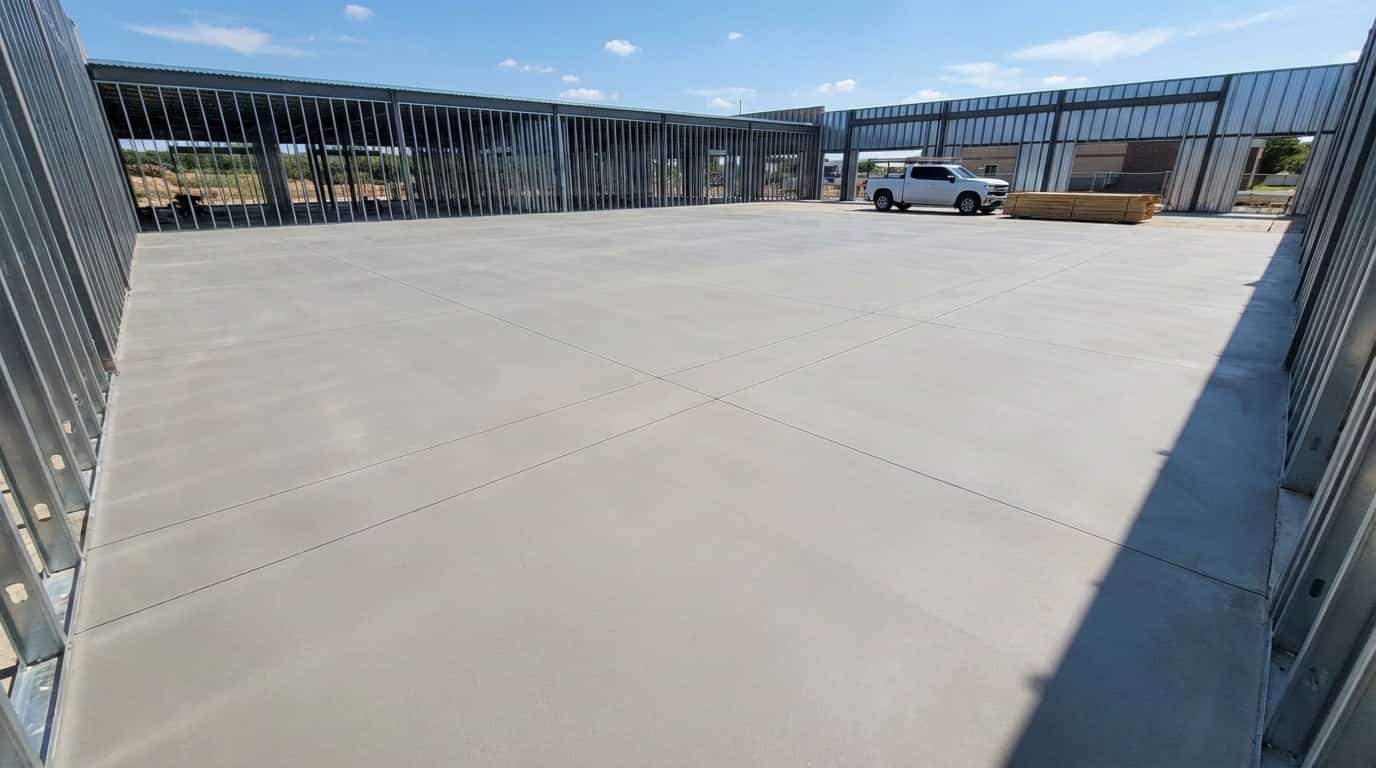
Slabs poured to the load.
Commercial concrete slabs across North Georgia: slab-on-grade, thickened-edge, warehouse floors and shop slabs, poured to the load and finish your project actually demands. Proper mix design, reinforcement and subgrade prep from a crew that has been doing this for decades.
Commercial concrete slabs
A slab is a structural element.
A commercial slab isn’t just a flat surface. It has to support the building above it, carry the traffic and equipment on it, and perform for decades. Whether it lasts or cracks inside the first year is decided before and during the pour, not after.
We size every slab to the loads it will actually carry, compact the subgrade, install the right base material, place reinforcement to spec, and finish to the tolerances the application requires. Retail buildout, warehouse floor or a shop slab for heavy equipment, we build it to perform.
Artistic Construction has been pouring commercial slabs across Cherokee County and the North Georgia area for 23 years. We handle the full scope from subgrade to finish, so you’re working with one crew that owns the outcome.
- ✓Sized to the real load, underspec’d slabs crack and cost 3 to 5 times more to replace than to pour right
- ✓Compacted subgrade, so the floor doesn’t settle uneven and damage your equipment
- ✓FF/FL flatness where forklift traffic and pallet racking demand it
- ✓Joint placement and cut timing that keep random cracking out of the slab
- ✓Mix design for Georgia’s climate, freeze-thaw and summer heat both
Where slab performance starts
The work under the finish.
The difference between a slab that lasts and one that fails comes down to four things, and every one of them happens before the surface is ever troweled.
Mix Design
The right strength and mix for the load and for Georgia’s climate, so freeze-thaw and summer heat don’t take the surface.
Subgrade Prep
Graded, compacted base with vapor barrier where the spec calls for it, so the slab bears evenly and doesn’t settle.
Reinforcement
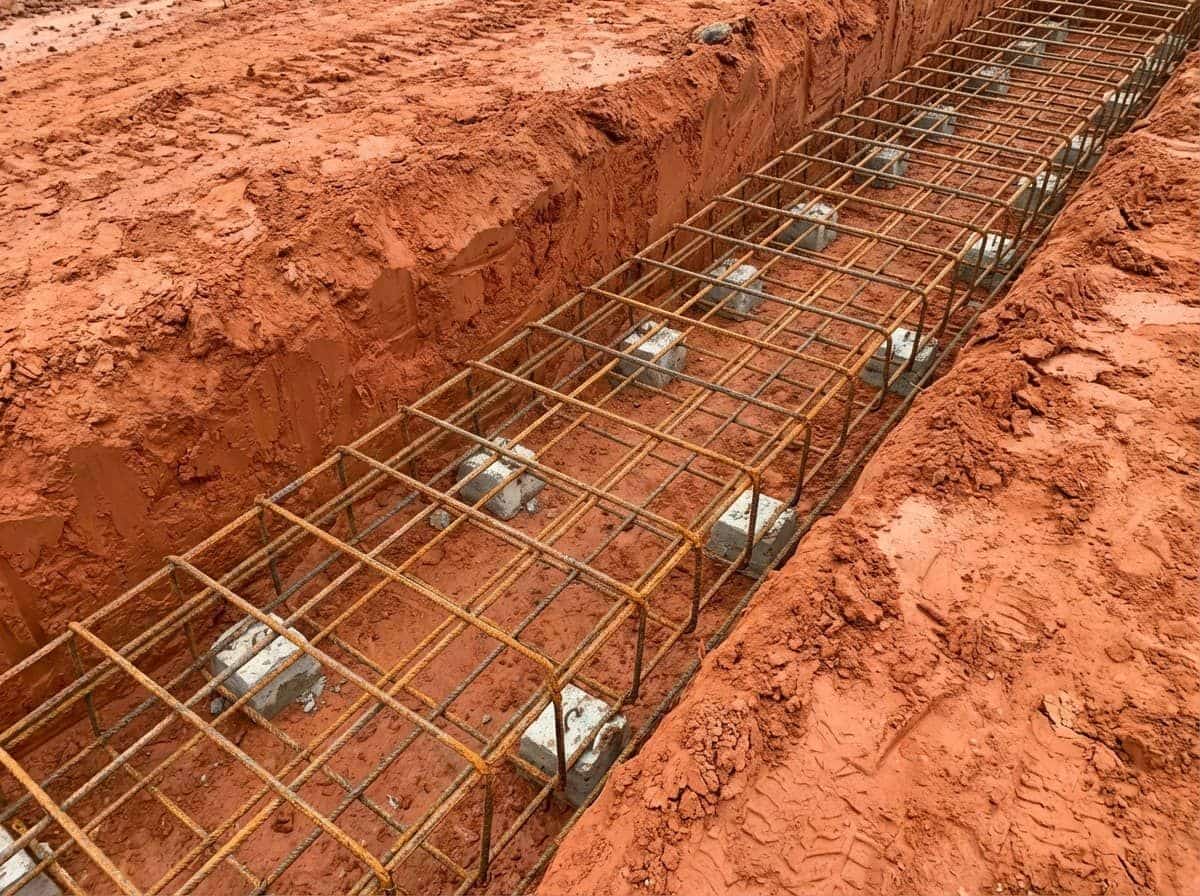
Rebar and mesh sized, placed and tied exactly where the engineering calls for it.
Joint Placement
Control joints laid out and cut on time, so cracking lands in the joint instead of across your floor.
Types of commercial slabs
Slabs we pour for commercial properties.
Every commercial building has different slab requirements based on the loads it carries, the operations it supports, and the finish the application demands.
Slab-on-Grade
The most common commercial slab type. Poured directly on compacted ground over a gravel base, reinforced with rebar or mesh, and finished to the spec your building requires. Used for retail, office and light commercial buildings.
Thickened Edge Slabs
The perimeter is poured deeper so it acts as an integrated footing, carrying the load of the exterior walls without a separate footing pour. Common on single-story commercial buildings where the soil conditions allow it.
Warehouse & Industrial Floors
Thicker slabs finished to tight FF/FL tolerances for forklift traffic, pallet racking and heavy equipment. These floors need joint layout, reinforcement sizing and finishing precision that a standard slab never asks for.
Shop Slabs & Equipment Pads
Heavy-duty slabs for mechanic shops, fabrication facilities and equipment mounting. Usually thicker cross-sections, heavier rebar schedules and embedded anchor points designed around the specific equipment going in.
Our process
How we pour a commercial slab.
Site Evaluation
We assess soil conditions, drainage and access, review the engineered plans to confirm the slab spec, and return an itemized bid.
Subgrade & Base
Grade, compact, install base material and place vapor barriers as the spec requires.
Form & Reinforce
Forms set to grade, rebar or mesh placed to the engineering plan, everything prepped for the pour.
Pour & Finish
Place, screed, float and finish to the required tolerances, then cut control joints at the right time.
Cure & Inspect
Curing protocols for the conditions, then a final walkthrough to confirm the slab meets the scope.
Where we pour
Commercial concrete slabs across North Georgia.
We pour commercial slabs throughout Cherokee County and the surrounding metro area.
Common questions
Concrete slab FAQ.
What is a slab-on-grade?+
A slab-on-grade is poured directly on the ground surface. It is both the foundation and the floor of the building. For commercial applications these slabs are typically 4 to 8 inches thick depending on the load requirements, with reinforcement placed to spec over properly compacted subgrade.
What thickness do commercial concrete slabs need to be?+
It depends on the application. A retail or office floor might be 4 to 5 inches. A warehouse handling forklift traffic and heavy racking typically needs 6 to 8 inches. Equipment pads and loading areas can require thicker slabs still. We size every slab to the loads it actually has to carry, and we tell you what that is up front.
What’s the difference between a thickened edge slab and a standard slab?+
A thickened edge slab has a deeper perimeter section where the slab meets the ground, usually 12 to 24 inches deep. That thickened edge acts like an integrated footing and carries the load of the exterior walls, so the slab and the footing go in as one pour instead of two.
How do you ensure a flat, level warehouse floor?+
Warehouse floors are finished to FF/FL specifications, which measure flatness and levelness. We use laser screeds and experienced finishing crews to hit the tolerances that forklift operations and racking systems require. Poor floor flatness causes equipment issues and racking instability, so we take the spec seriously.
Will the slab crack?+
All concrete moves. The goal is to control where. With the right mix, proper reinforcement and saw-cut control joints placed and timed correctly, cracking is directed into the joints instead of showing up across the floor.
Can you pour slabs in Georgia’s summer heat?+
Yes, but it takes extra precautions. We schedule pours early in the morning, use mix designs with set-retarding admixtures when temperatures are extreme, and follow strict curing protocols to prevent rapid moisture loss and surface cracking. Our crews have been managing Georgia heat on concrete pours for 23 years.
How long does a commercial slab take to cure?+
Concrete reaches about 70% of its design strength within 7 days and full strength at 28 days. Light foot traffic is usually fine after 24 to 48 hours. Heavy equipment and full loading should wait at least 7 to 14 days depending on conditions and the slab spec. We give you a clear timeline for your project.
Do you handle the subgrade prep or just the pour?+
We handle the full scope: grading, compaction, base material installation, vapor barriers when needed, reinforcement placement, the pour, finishing, joint cutting and curing. You get one contractor responsible for the entire slab, not multiple subs pointing fingers.
Can you match an existing floor elevation?+
Yes. We shoot grades before we form so a new slab ties cleanly into existing slabs, dock heights and drains.
Related scope
Related commercial concrete services.
Have a spec & a timeline?
Send the drawings for a bid.
Tell us about the slab, square footage, loads and schedule, and we’ll come back with clear numbers you can plan around.