 Est. 2003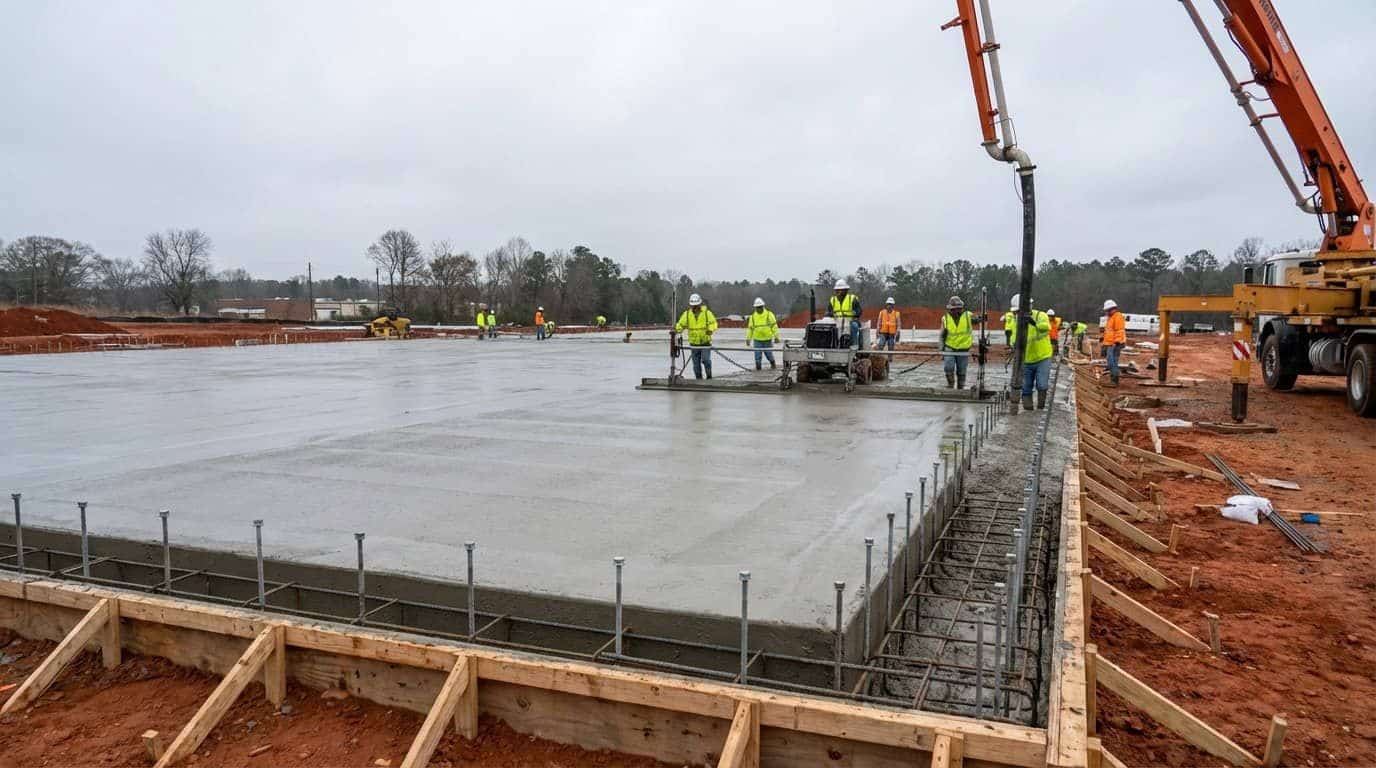
Slab and footing, one pour.
Single-pour monolithic foundations that combine the floor slab and the perimeter footing into one placement. No cold joints, faster schedules and solid structural performance for commercial buildings across North Georgia.
Monolithic slab foundations
One pour. Slab and footing together.
A monolithic slab foundation places the floor slab and the perimeter footing in a single concrete pour. The edges of the slab are thickened to carry the load of the exterior walls, and the entire foundation is formed and poured in one shot. No cold joints between separate pours. No waiting days between the footing and the slab.
The method works well for single-story commercial buildings, shops, warehouses and similar structures on stable soil. It saves time on the schedule and eliminates the weak point where a separately poured slab meets a separately poured footing.
It is not the right solution for every project. Multi-story buildings, sites with poor soil, steep grades, or buildings that need crawl spaces call for a different foundation approach. We evaluate your site and give you a straight recommendation on which method makes sense.
Advantages of a monolithic pour
One pour, done right.
No Cold Joint
Slab and footing go down together, so there is no cold joint between them to become a crack point.
Faster Schedule
You skip the wait between the footing pour and the slab pour, which pulls days out of the build.
Single Mobilization
One placement means one crew and one equipment mobilization, which reduces labor and equipment cost.
Thickened Edges
The deepened perimeter is the footing, giving integrated bearing support under the exterior walls.
Applications
Where monolithic slabs work best.
Monolithic foundations are not for every building. When the conditions line up they are one of the most efficient commercial foundation methods available, and they suit shops, warehouses and single-story commercial buildings especially well.
Commercial Shop Buildings
Auto shops, fabrication facilities and trade shops that need a solid floor slab and foundation in one pour. The thickened edges carry the metal building or block walls above while the interior slab handles equipment and vehicle traffic.
Warehouse Foundations
Single-story warehouse and storage buildings on stable ground. The monolithic pour gives you a clean floor slab and an integrated perimeter footing without the schedule hit of separate pours. Interior grade beams can be added for heavy rack loads.
Retail & Office Buildouts
Single-story retail and small office buildings where the soil conditions support a monolithic approach. Faster to pour than a traditional footing-and-slab system, which helps keep the overall construction schedule on track.
Grade Beam Integration
For buildings with interior load-bearing walls or concentrated point loads, we integrate grade beams into the monolithic pour. These reinforced beams within the slab distribute loads to specific bearing points without separate foundation elements.
Our process
How a monolithic pour works.
Site Evaluation
Assess soil, drainage and grade, confirm monolithic is the right approach for the conditions, then bid it.
Grade & Compact
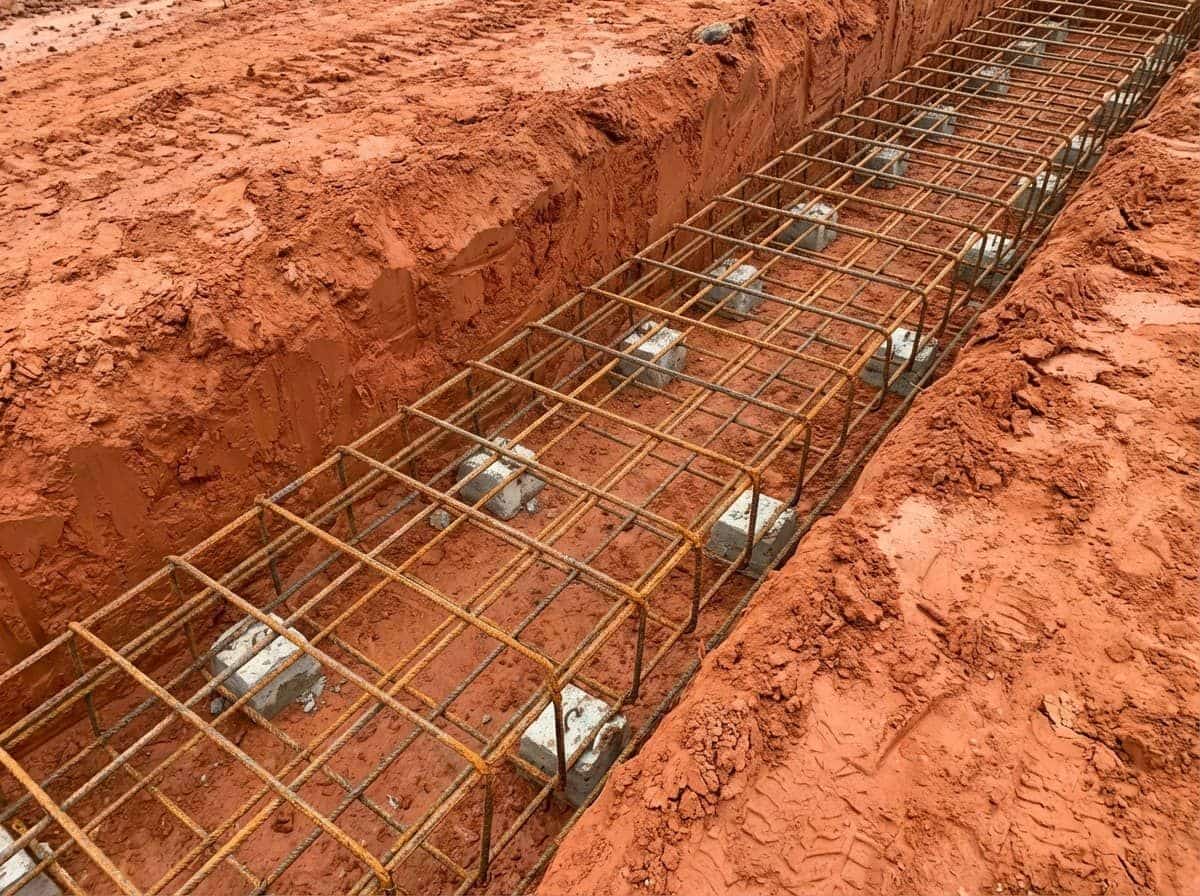
Shape the subgrade with thickened edge trenches at the perimeter. Compact and install base material.
Form & Reinforce
Set perimeter forms, place rebar in the thickened edges and mesh in the slab field. Prep for the single pour.
Single Pour
Place concrete for the entire foundation in one operation. Screed, float and finish to spec.
Cure & Walkthrough
Follow curing protocols. Cut control joints. Final inspection with you to confirm the spec is met.
Where we pour
Monolithic slab foundations across North Georgia.
We pour monolithic foundations for commercial buildings throughout Cherokee County and the surrounding metro area.
Common questions
Monolithic slab FAQ.
What is a monolithic slab foundation?+
A monolithic slab foundation combines the floor slab and the perimeter footing into a single concrete pour. The edges of the slab are thickened to act as the footing, which carries the load of the exterior walls. The entire foundation is placed in one operation with no cold joints between the slab and the footing.
When is a monolithic slab the right choice?+
Monolithic slabs work well for single-story commercial buildings, shops and warehouses on relatively flat sites with stable, well-compacted soil. They are not the right fit for multi-story buildings, sites with poor soil, steep grades, or projects that need a crawl space or basement. We evaluate the site conditions and tell you straight whether it is a good fit.
What are the advantages over separate footings and a slab?+
The main advantages are speed and the elimination of cold joints. Since everything is poured at once, you skip the waiting period between the footing and slab pours. There is also no cold joint between the two elements, which means fewer potential crack points and better structural integrity at the perimeter.
Is a monolithic slab cheaper than a stem-wall foundation?+
Often, yes. One pour means less forming, less labor and a faster schedule, and a single mobilization instead of two. The savings depend on the soil and the structure, so we price both approaches when a site could go either way.
How thick are the edges on a monolithic slab?+
The thickened edges typically range from 12 to 24 inches deep depending on the structural loads and what the engineer specifies. The interior slab section is usually 4 to 6 inches thick for commercial applications. The transition from the thickened edge to the standard slab thickness is gradual to prevent stress cracking.
Can a monolithic slab handle heavy commercial loads?+
For single-story commercial buildings, yes. The slab thickness, reinforcement and thickened edge dimensions are all engineered for the specific loads the building will carry. For heavier multi-story structures or buildings with concentrated point loads, a traditional footing and slab system is usually more appropriate.
What soil conditions does a monolithic slab require?+
Monolithic slabs need stable, well-compacted soil with adequate bearing capacity. Sites with expansive clay, fill dirt, high water tables or steep grade changes are generally not good candidates. A geotechnical evaluation helps determine whether the soil conditions will support a monolithic pour.
What is a grade beam and how does it relate to a monolithic slab?+
A grade beam is a reinforced concrete beam poured at ground level that spans between pier footings or load points. In some monolithic slab designs, grade beams are integrated into the slab to provide additional support at specific locations, like under interior load-bearing walls or at points where concentrated loads need to be distributed.
Related scope
Related commercial concrete services.
Building a pad or shop?
Send the plan for a bid.
Tell us the footprint, loads and soil and we’ll come back with numbers and a schedule.