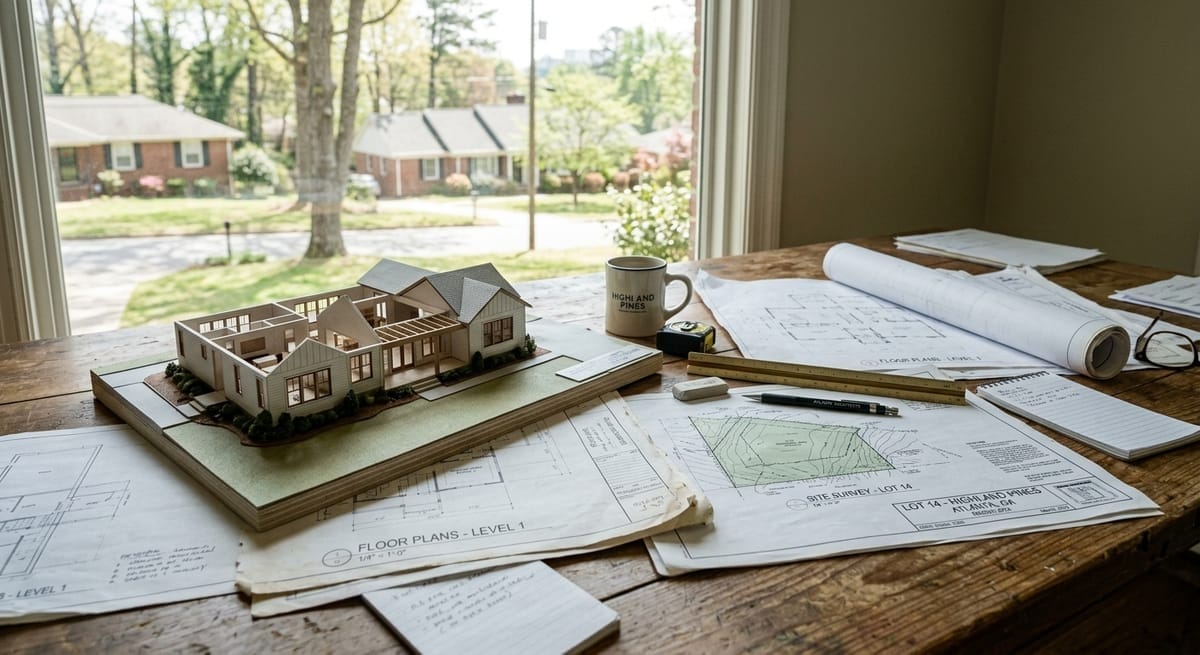
=Building a custom home in metro Atlanta starts long before breaking ground. The pre-construction phase is the critical 8-16 weeks between deciding to build and starting construction that determines whether your project stays on schedule, within budget, and true to your vision.
Understanding what happens during this phase means knowing when to make decisions, what those decisions involve, and how requirements differ across Cherokee, Cobb, and North Fulton counties.
What Happens During the Custom Home Pre-Construction Phase?
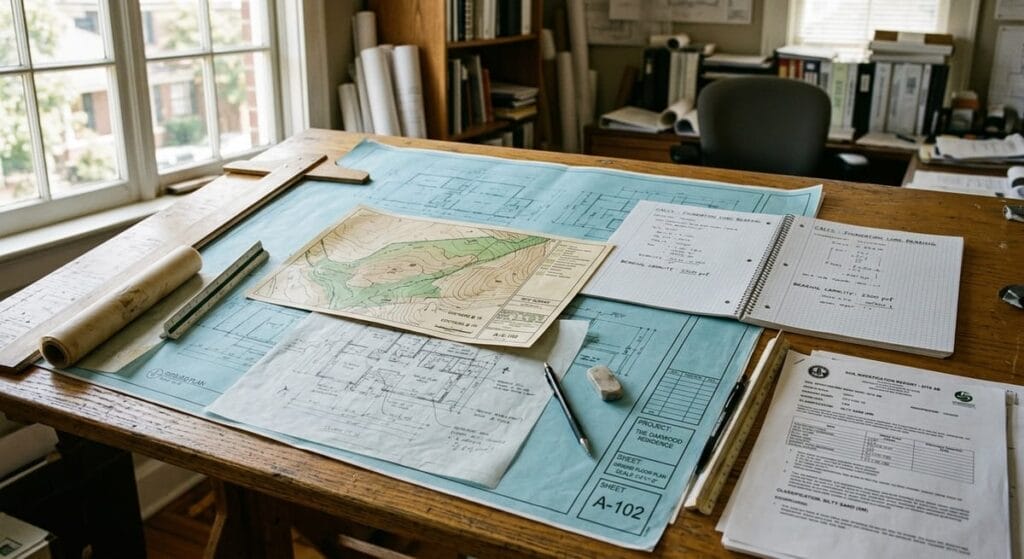
Pre-construction transforms your vision into a buildable plan through site feasibility analysis, engineering development, regulatory approvals, and detailed custom home budget planning. Skip steps here, and you’ll face costly problems during construction.
Pre-Construction vs. Design Phase: Understanding the Difference
The architectural design phase focuses on aesthetics: floor plans, exterior style, room layouts. Pre-construction includes design but also addresses technical and regulatory requirements like engineering calculations, permit documentation, site preparation, and county coordination.
You might love your floor plan, but if the site won’t support your preferred foundation type, or county setback requirements force you to relocate the home, design alone doesn’t solve those problems. Pre-construction does.
The 4 Core Custom Home Planning Goals
- Verify site feasibility to confirm your lot can support your vision without prohibitive costs. Soil conditions, topography, utility access, and zoning restrictions all impact what you can build.
- Develop construction-ready plans with detailed architectural and engineering documents showing structural systems, mechanical layouts, and energy code compliance.
- Establish accurate budgets by moving from rough estimates to detailed cost breakdowns based on actual site conditions, material selections, and labor requirements.
- Secure building permits and approvals by navigating county permitting, HOA architectural reviews, and utility connection agreements.
Custom Home Timeline: 8-16 Weeks in Metro Atlanta
Your timeline depends on site complexity, county permitting efficiency, and decision speed:
- Cherokee County: 10-12 weeks (3-4 week permits)
- Cobb County: 8-10 weeks (2-3 week permits)
- North Fulton County: 12-16 weeks (4-6 week permits, stricter tree preservation)
Sites requiring septic design, geotechnical analysis, or HOA review add 2-4 weeks. Lots with rock, steep slopes, or wetland buffers push to the longer end of the custom home building process.
The 8 Essential Pre-Construction Steps
Step 1: Vision and Goals: Defining Your Requirements
Custom home planning starts with clarifying actual needs versus wants. Your builder should walk through detailed programming covering lifestyle requirements, must-have features, nice-to-have elements, and deal-breakers.
Budget reality meets expectations here. If your vision requires 4,000 square feet with high-end finishes but your budget supports 3,200 square feet, you need to know now.
If you don’t yet own land, this phase includes lot selection criteria: understanding what makes a lot suitable and identifying potential challenges before purchase.
Step 2: Site Evaluation and Analysis
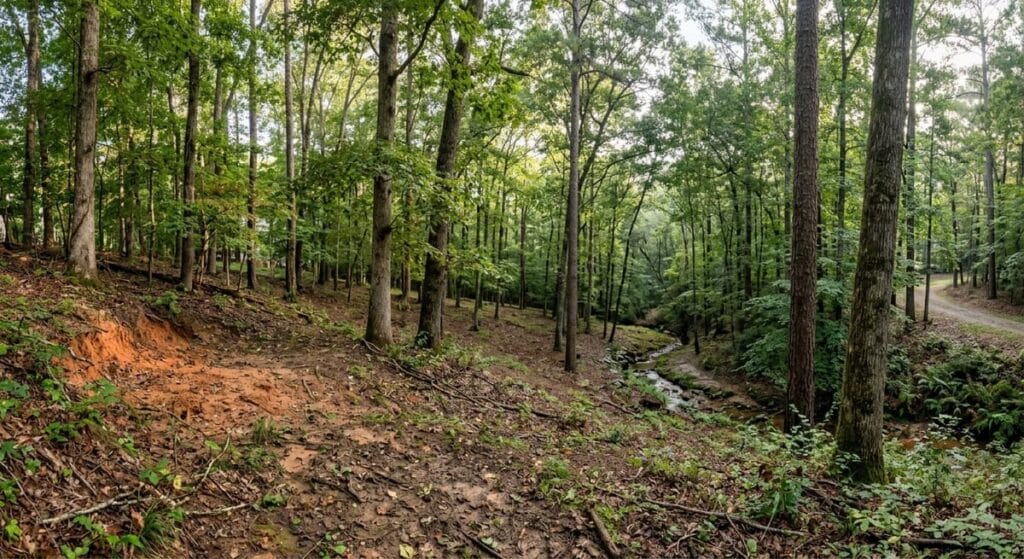
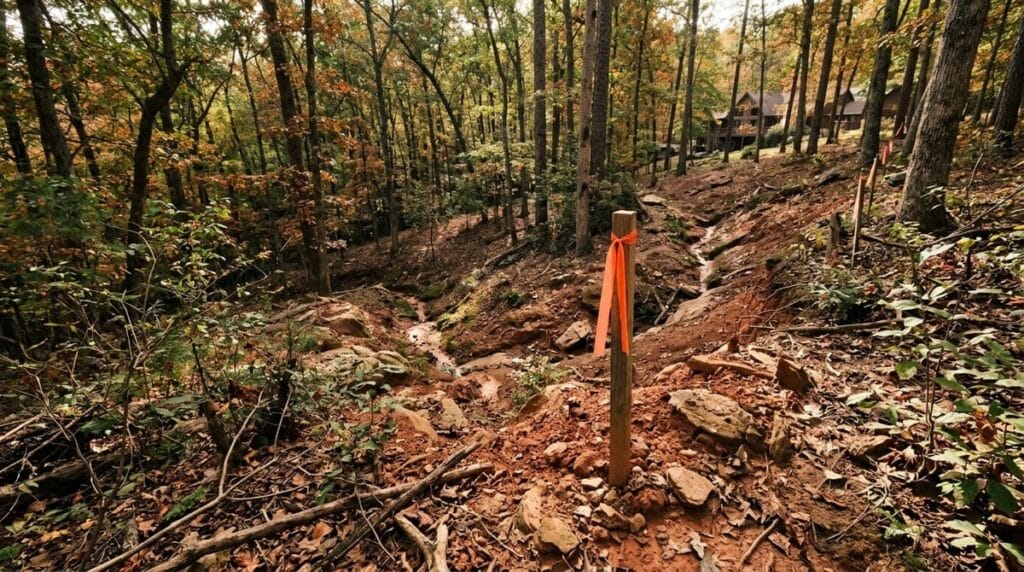
Your lot dictates what happens next. Site evaluation examines topography, drainage patterns, soil composition, tree coverage, utility availability, and access. In North Georgia, this means understanding Rocky Piedmont geology affecting foundation options and excavation costs.
Topographic site analysis reveals slope percentages, elevation changes, and natural drainage patterns. Your builder identifies where water flows during heavy rain and how to direct it away from your foundation.
Tree surveys and preservation planning map existing trees, noting species, size, and health. County ordinances require preservation of certain trees, particularly in North Fulton. Understanding which trees must stay affects home placement, driveway routing, and site preparation costs.
Utility availability assessment determines whether your site has public sewer or requires septic, a critical distinction affecting your timeline and budget. This is common in rural Cherokee County areas like Ball Ground, Holly Springs, and parts of Canton.
Step 3: Professional Soil Testing and Surveys
Boundary and topographic surveys establish exact property lines, easements, setback requirements, and elevation contours. Your architect needs this to position the home correctly, and the county requires it for permit approval.
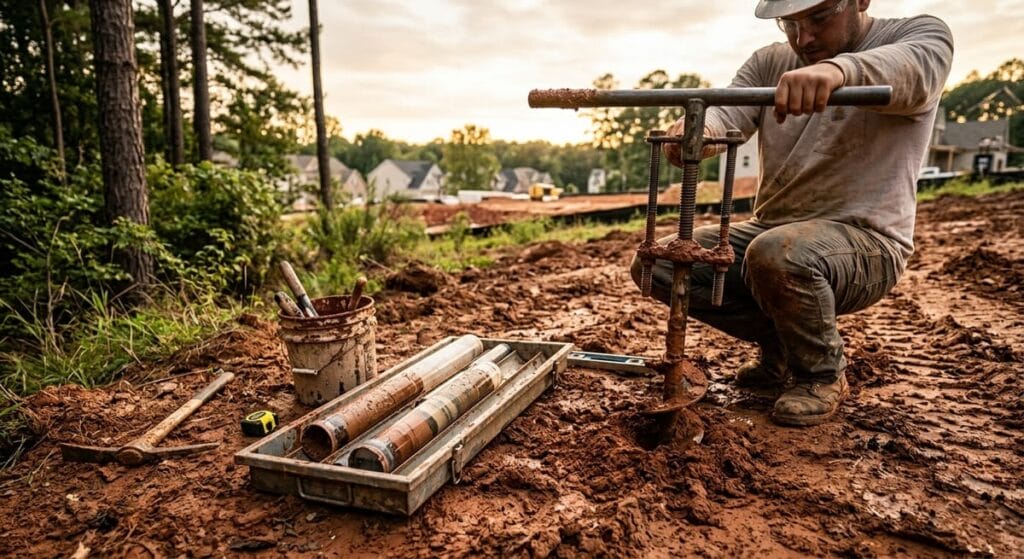
Soil testing and percolation tests become critical for septic design. Percolation tests measure drainage speed. Too fast or slow, and you may need an engineered septic system.
Geotechnical analysis tests soil bearing capacity and identifies subsurface conditions. If standard tests reveal concerns, or you’re building on a sloped lot, this investment identifies rock requiring blasting, high water tables requiring foundation drainage, or poor soil requiring engineered fill.
Step 4: Preliminary Architectural Design
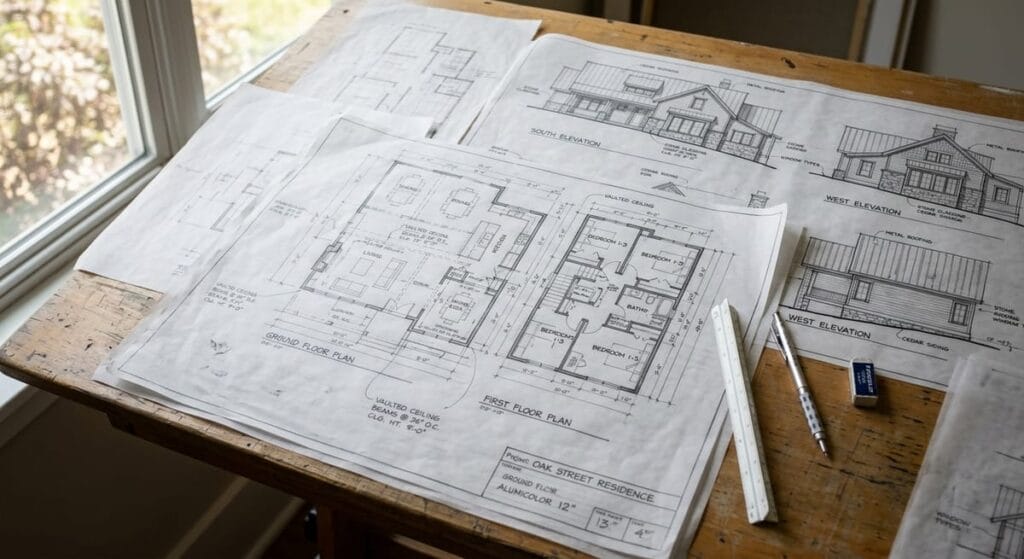
Schematic design development translates your vision into preliminary floor plans and elevations. You’re establishing room sizes, layout flow, ceiling heights, and architectural style, and whether you need 2,500 or 3,500 square feet.
Site plans show home placement considering setbacks, orientation for natural light, views, and privacy. Your architect positions the home to comply with county requirements while optimizing sun exposure and street appeal.
Floor plan layouts and space planning establish room relationships and traffic flow. Changes made during the architectural design phase cost nothing. Changes during construction cost thousands.
Step 5: Engineering and Technical Planning
Structural engineering design ensures your home’s frame, foundation, and roof systems meet code and handle expected loads. Engineers calculate beam sizes for open floor plans, determine foundation depths based on soil, and specify roof framing.
MEP preliminary design (mechanical, electrical, plumbing) establishes where HVAC equipment locates, how many electrical panels you need, and how plumbing routes through your home.
Septic system engineering and design applies to rural areas without public sewer. Engineers design systems sized for your bedroom count, matching soil test results.
Grading and stormwater management plans show how your lot’s final elevations direct water away from your home. Counties require documentation proving your site won’t increase runoff to neighbors.
Step 6: Budget Planning and Cost Estimating
Detailed quantity takeoffs and material estimates count every board, window, door, fixture, and finish material. This moves you from rough square footage pricing to actual project costs.
Site preparation and development cost assessment examines grading requirements, utility installation, driveway construction, and lot-specific challenges. Rock requiring blasting, steep slopes needing retaining walls, or long driveways all affect total investment.
Material allowances and finish budgets establish budgets for finish selections you haven’t yet chosen: flooring, cabinets, countertops, lighting, plumbing fixtures. Understanding allowances prevents surprises when your preferred quartz exceeds the granite allowance.
Contingency planning and reserves allocate reserves for unforeseen conditions. You might discover rock where soil tests predicted none or need additional structural support.
Step 7: Building Permits and Approvals: County-Specific Requirements
| County | Permit Timeline | Key Requirements |
| Cherokee | 3-4 weeks | Structural calculations, energy code compliance, erosion control; septic systems add 2-3 weeks |
| Cobb | 2-3 weeks | Well-organized online submission, strict stormwater management |
| North Fulton | 4-6 weeks | Detailed tree surveys and protection plans, thorough plan reviews |
HOA architectural review processes apply to most planned communities and add 2-6 weeks. HOAs review exterior design (architectural style, materials, colors, landscaping) to ensure community compliance.
Step 8: Contract Finalization and Construction Preparation
Final scope agreement and specifications document exactly what your builder will construct, including specifications, confirmed material selections, and allowance amounts.
Payment schedules and financial terms establish when deposits and progress payments are due. Most builders require an initial deposit to secure their schedule, with additional payments tied to construction milestones.
Change order processes and procedures define how modifications during construction get priced and approved.
Construction timeline confirmation and scheduling sets your expected start and completion dates. Your builder should provide a detailed schedule showing when major home construction stages occur, when you need to make finish selections, and your move-in date.
Your Pre-Construction Decision Timeline and Checklist
Weeks 1-4: Critical Initial Decisions
Construction financing pre-approval must be complete before meaningful planning begins. Construction loans differ from traditional mortgages, requiring larger down payments and detailed project documentation.
Budget range confirmation establishes your realistic number. This is a critical part of the pre-construction checklist and helps you understand what your budget purchases in size, finishes, and features.
Preliminary style and size direction gives your design team parameters. Communicate whether you prefer modern farmhouse or craftsman, whether you need 2,500 or 3,500 square feet, and which features are non-negotiable.
What to prepare: Collect inspiration photos, create a prioritized must-have list, document daily routines to help your designer understand traffic patterns.
Weeks 5-10: Site Planning and Design Development
Site plan approval and home placement requires your input on home placement, driveway location, and tree preservation. Your builder presents options based on setbacks, orientation, and site conditions.
Floor plan conceptual approval establishes room sizes, layout flow, and special features. You’ll provide feedback on whether the master suite needs to be larger, whether the kitchen island works for your cooking style, and whether the office location suits work-from-home needs.
Exterior style selection and materials determines roof pitch, siding materials, window styles, and architectural details. You’re deciding between board and batten or brick, traditional double-hung or craftsman casement windows.
Major systems decisions include HVAC approach, water heating, and structural systems affecting both initial costs and long-term operating expenses.
Weeks 11-16: Final Pre-Construction Approvals
Material category selections and specifications establish quality levels. You’re choosing between vinyl, fiberglass, or wood windows; laminate, granite, or quartz countertops; luxury vinyl plank, engineered hardwood, or solid hardwood flooring.
Preliminary interior finish direction guides allowance budgets. Communicate whether you prefer traditional raised panel or modern shaker cabinets, oil-rubbed bronze or brushed nickel fixtures.
Landscape preservation decisions determine which trees stay and which must be removed. In Fulton County especially, removing protected trees without permits results in substantial fines.
Contract terms negotiation addresses payment schedules, change order procedures, warranty coverage, and dispute resolution.
County-Specific Pre-Construction Requirements
Metro Atlanta isn’t one market. Cherokee, Cobb, and North Fulton counties each have distinct requirements affecting your custom home project.
Cherokee County: Rural Character Meets Growth
Permit processing averages 3-4 weeks with thorough plan reviews. The building department focuses heavily on soil erosion control.
Septic system requirements apply outside city limits in Ball Ground, Hickory Flat, and rural Canton and Holly Springs. The health department conducts separate reviews, adding 2-3 weeks.
Rock and terrain challenges are common. Granite outcroppings can appear where surface conditions suggest otherwise.
Cobb County: Urban Infrastructure Advantages
Streamlined permitting clears in 2-3 weeks. The county has invested in online submission systems and maintains adequate staffing.
Infrastructure advantages reduce site work costs. Sewer availability throughout much of the county eliminates septic expenses and soil testing.
East Cobb lots tend to be smaller with stricter covenants. West Cobb offers larger lots, newer developments, and fewer restrictions.
North Fulton County: Premium Standards and Strict Preservation
Longer permit timelines of 4-6 weeks reflect thorough municipal reviews in Roswell, Alpharetta, and Milton. These cities maintain high standards for construction quality and environmental protection.
Strict tree ordinances protect existing canopy aggressively. Your site plan must show how construction will preserve significant trees, potentially limiting home placement.
Premium lot challenges include larger parcels featuring significant slopes, creek buffers, or wetland areas.
Start Your Pre-Construction Phase with Confidence
Pre-construction determines whether your project succeeds or struggles. Understanding what happens during these 8-16 weeks, when you need to make key decisions, and how requirements differ across metro Atlanta helps you prepare for your journey.
With over 20 years building custom homes across Cherokee, Cobb, and North Fulton counties, Artistic Construction has managed pre-construction for hundreds of projects. We know how to navigate each county’s requirements efficiently and guide you through critical decisions.
Schedule a free consultation to discuss your vision, evaluate your lot, and get transparent answers to all your questions.
Frequently Asked Questions About Custom Home Pre-Construction
How long does the pre-construction phase take for a custom home in Georgia?
Pre-construction takes 8-16 weeks in metro Atlanta. Cherokee County averages 10-12 weeks, Cobb County 8-10 weeks, and Fulton County 12-16 weeks due to stricter tree preservation. Sites requiring septic design, geotechnical analysis, or HOA review add 2-4 weeks.
Do I need to own land before starting pre-construction?
You don’t need ownership before initial discussions, but land should be under contract before significant planning begins. Site evaluation, surveys, and soil testing require land access. Many builders offer preliminary consultations to evaluate lot suitability before purchase.
What decisions do I need to make during pre-construction?
Critical decisions include budget confirmation and financing (weeks 1-2), home placement and tree preservation (weeks 3-6), floor plan layout and square footage (weeks 4-8), exterior style and major materials (weeks 6-10), structural systems and mechanicals (weeks 8-12), and preliminary interior finishes (weeks 10-14).
Can I back out during pre-construction, and what would I lose?
You can exit before construction begins, but costs already incurred are non-refundable: surveys, testing, engineering, design, and permits. After weeks 6-8 of significant design investment, you may forfeit your entire deposit.
What’s the difference between pre-construction and the design phase?
The architectural design phase focuses on aesthetics and functionality. Pre-construction encompasses design but also includes site feasibility, engineering, regulatory approvals, and budget planning. You might love your design, but pre-construction determines if your site can support it and what it will actually cost to build.
What happens if my lot has challenging conditions discovered during pre-construction?
Soil testing and surveys identify challenges before you invest heavily. If rock, poor drainage, or other issues surface, your builder presents options: alternative foundation systems, additional site preparation, or design modifications. Discovering these issues during pre-construction prevents costly surprises during construction.