If you’re an Atlanta homeowner confused about the underground space beneath your home, understanding the difference between cellars and basements matters when you’re planning renovations, calculating home value, or dealing with Georgia’s tricky climate. This guide covers basement and cellar differences, renovation costs, and how to choose the right solution for your property.
Make me an image that’s a photo of. A basement and a photo of a cellar, but they’re side by side. I don’t want any tax. This is going to be used to show the differences in a side by side picture
The basic difference between cellars and basements
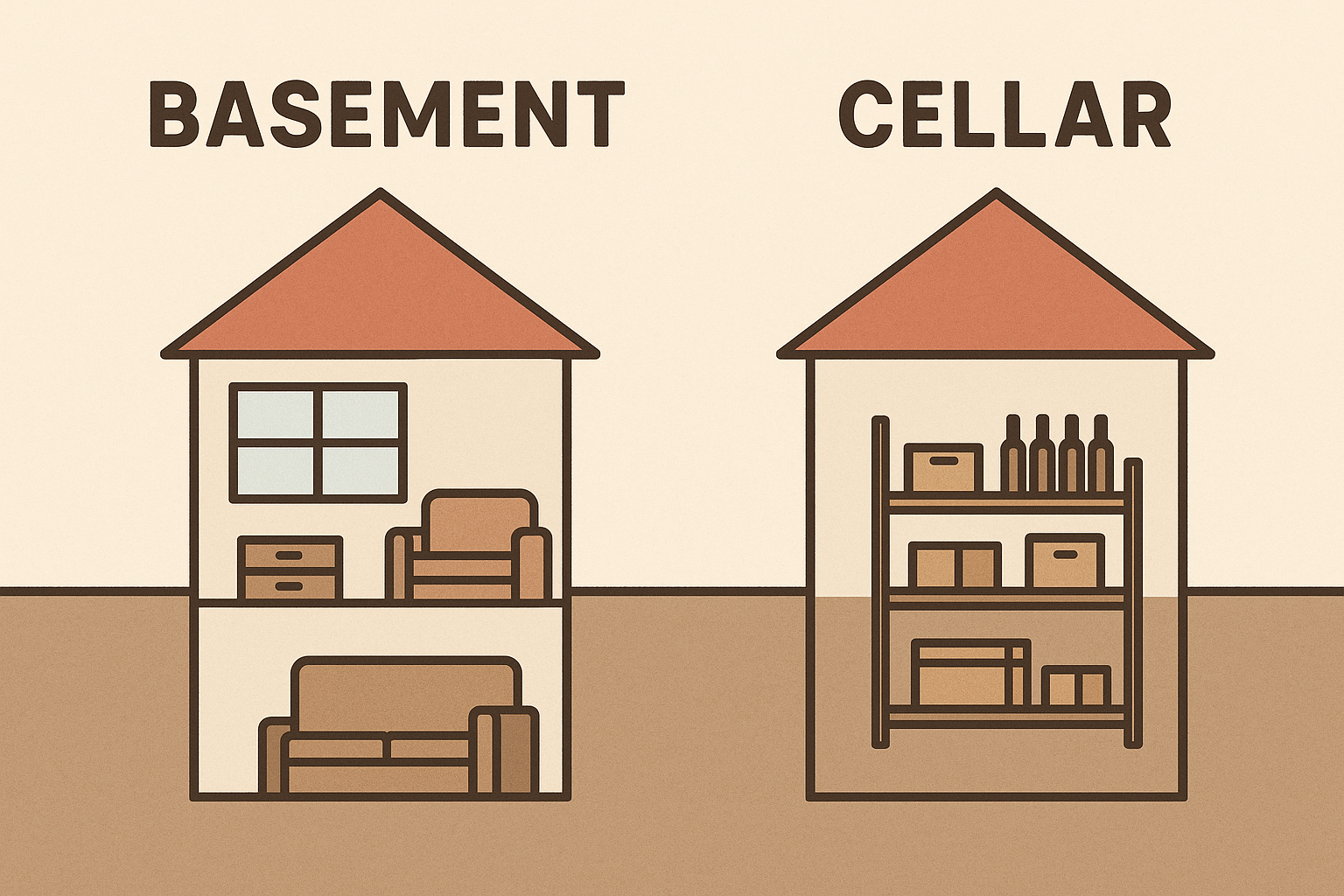
A basement has at least half its height above ground level, with full-height ceilings (7-8 feet) and natural light from above-ground windows. You can actually live in a basement since it has proper exits, climate control, and finished surfaces.
A cellar sits almost entirely below ground with less than half its height above grade. Cellars have lower ceilings (usually 6-7 feet or less), limited natural light through small openings, and work for storage, utilities, or wine, not a living space.
Differences in Construction
Construction methods
Basement construction creates a full-story foundation below the main floor with concrete walls extending above ground for windows. In Atlanta, many basement renovation projects take advantage of natural slopes for walkout or daylight configurations, especially valuable in East Cobb, Roswell, and Alpharetta’s rolling hills.
Cellar construction digs below the frost line (6-12 inches in Georgia) with walls staying almost entirely below ground, creating those characteristic low ceilings. Historic Atlanta cellars often used stone or brick walls rather than modern poured concrete.

Georgia clay soil problems
Georgia’s red clay is expansive, it swells when wet and shrinks when dry. This constant movement puts tremendous pressure on foundation walls. Clay also drains poorly, so water pools and creates hydrostatic pressure against foundations. Waterproofing isn’t optional here.
What you need for waterproofing in Atlanta:
- Robust waterproofing systems (exterior membranes, interior drainage, sump pumps)
- Foundation walls engineered for lateral pressure from expanding soil
- Proper grading and drainage to keep water away
- Footer drains and French drain systems
Cellars face worse moisture problems since more of the structure sits below grade, exposing more surface area to soil pressure and moisture. Old cellars often lack modern waterproofing, making moisture control difficult without major renovation work.
How basements and cellars affect home value in Metro Atlanta
Returns by neighborhood
Finished basements add consistent value across metro Atlanta.
In North Atlanta suburbs (East Cobb, Roswell, Alpharetta), well-done basement projects add $40,000-$70,000 to resale value. Homes in the $400,000-$600,000 range see the strongest returns as buyers seek space for growing families.
In Brookhaven, Sandy Springs, and Dunwoody where lots are smaller, finished basements come at premium prices compared to unfinished basements . A basement bedroom with bathroom and proper egress can significantly improve your competitive position.
Historic neighborhoods (Virginia Highland, Druid Hills, Decatur) see more modest returns (50-60% of project cost) because buyers prioritize main-level space and historic character.
Cellars add minimal market value unless converted to true finished basement quality.
Ready to transform your Atlanta below-grade space?
Whether you have an unfinished basement ready to become living space or a traditional cellar needing moisture solutions, Artistic Construction brings 22 years of Atlanta-specific expertise to every project.
Free Atlanta basement assessment
We offer complimentary assessments where we’ll evaluate your condition, test moisture levels, discuss your vision, provide realistic options and budget ranges, and give honest recommendations about choices that make sense for your home.
Why choose us?
- Local expertise: Experience in every metro Atlanta county, understanding regional challenges and requirements
- Comprehensive approach: Everything from permits through final inspection
- Moisture control mastery: Waterproofing and humidity control that works in Atlanta’s climate
- Transparent communication: Detailed estimates, clear timelines, regular updates
- Quality craftsmanship: Work that meets codes, passes inspections, and protects your investment
Schedule your free estimate
Contact us for your free estimate and let’s discuss transforming your below-grade space with expert renovation, proven waterproofing, and quality construction.
Call (678) 613-3424 or complete our online form. We schedule assessments within 3-5 business days and provide detailed written estimates within one week.
Your unfinished basement or traditional cellar has potential, let’s unlock it with expert design, proven moisture solutions, basement flooring options, and construction that adds value to your Atlanta home for years to come!
Common questions about cellars and basements
Can I convert my cellar to a legal basement?
Technically yes, but cellar conversion costs $80,000-$150,000+ because you’re rebuilding the foundation. Major expenses include lowering the floor (underpinning) for ceiling height ($20,000-$50,000+), installing egress openings ($5,000-$15,000 each), comprehensive waterproofing ($10,000-$25,000), and structural modifications ($15,000-$40,000).
For many homes, this investment exceeds the value added. We recommend a cost-benefit analysis before committing, often main-level renovations provide better returns.
What financing options are available for basement renovation?
Several financing options work well for Atlanta basement projects.
What’s the difference between a wine cellar and a regular cellar?
A wine cellar is designed specifically for wine storage with precise temperature control (55-65°F), humidity regulation (50-70%), vibration-free environment, and darkness. Wine cellar construction requires dedicated cooling systems, insulated walls, vapor barriers, and often custom racking, investment ranges from $5,000-$50,000+ depending on size and features.
A traditional cellar is general storage without climate control precision, used for vegetables, canned goods, or basic storage with naturally cool temperatures but no active environmental management. The cellar vs basement difference extends to wine cellars, where basement renovation may include dedicated wine cellar space within the larger finished design.
How does Georgia’s clay soil affect basement construction?
Georgia’s expansive red clay swells when wet and shrinks when dry, creating lateral pressure on walls (30-60 PSF when saturated) and poor drainage that lets water pool against structures.