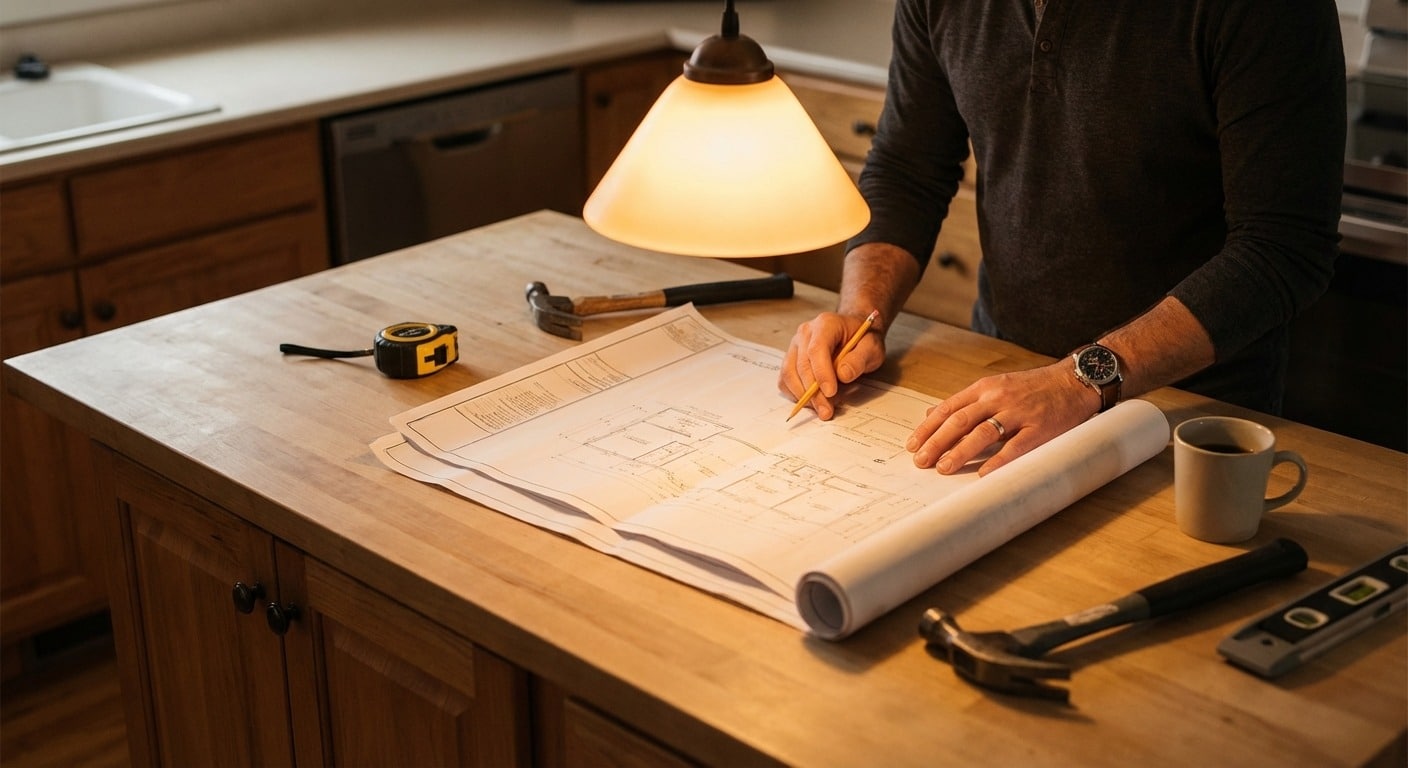
Planning a home renovation in metro Atlanta? You’ve probably heard the horror stories: remodeling projects that doubled in cost, contractors who vanished mid-job, permits that halted construction for months.
After completing over 500 home improvement projects across Cherokee, Cobb, and Fulton Counties, we’ve identified patterns that separate successful renovations from disasters. Most Atlanta remodeling projects exceed budget by 20-30%, and nearly half face unexpected delays. This guide reveals the 10 most common remodeling mistakes and specific solutions for homeowners in Woodstock, Canton, Alpharetta, Marietta, Roswell, and surrounding communities.
Mistake #1: Starting Your Remodeling Project Without a Detailed Scope
“We’ll figure it out as we go” creates budget disasters. Scope creep (when a kitchen update morphs into whole-home remodeling) adds 20-40% to final costs in metro Atlanta renovation projects.
The problem starts when homeowners don’t identify all work upfront. You plan to replace cabinets, but once walls open, you discover outdated wiring that doesn’t meet current code. In older North Atlanta homes, particularly 1970s-1980s construction common in East Cobb, Roswell, and Canton, hidden issues are practically guaranteed.
The solution: Work with remodeling contractors who conduct thorough pre-construction assessments. Opening walls strategically before finalizing budgets identifies structural issues, outdated systems, and code violations. This discovery phase adds 1-2 weeks upfront but prevents costly mid-project surprises.
Document everything in writing. Your remodeling contract should specify exact materials, finishes, fixtures, and complete scope of work. When changes arise, follow a formal change order process detailing cost and timeline impacts before proceeding.
Mistake #2: Skipping Professional Design Services for Your Renovation
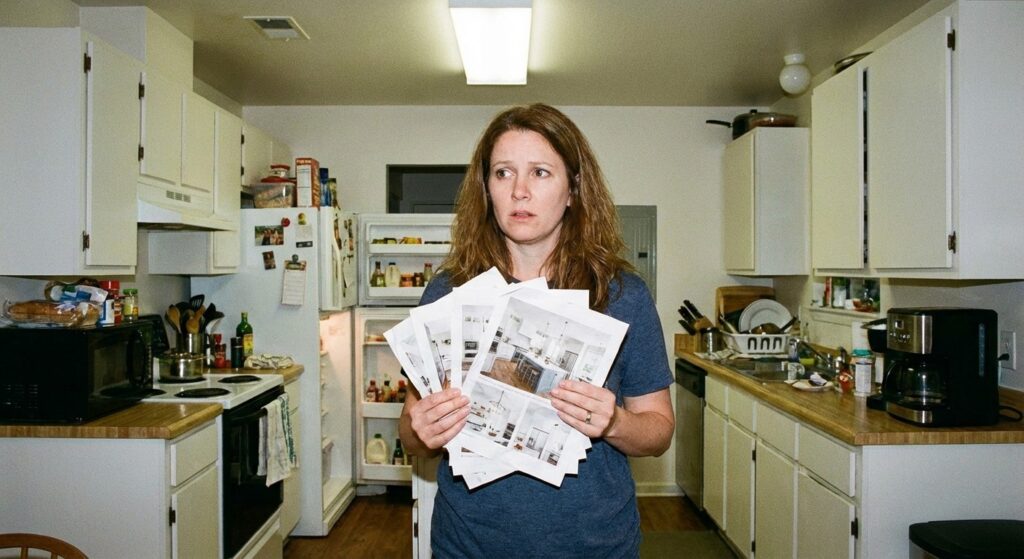
Many homeowners view design services as unnecessary, preferring to piece together ideas from Pinterest. This approach costs significantly more when mistakes materialize in three dimensions.
Poor space planning is expensive to fix. Kitchen islands positioned too close to appliances create bottlenecks. Bathroom layouts that seemed logical on paper become awkward in reality. Basements designed without proper egress violate code and require reconstruction.
The solution: Design services represent 5-10% of renovation budgets but deliver returns exceeding the investment. 3D renderings reveal problems before construction begins. Detailed drawings ensure accurate contractor bids. Permit-ready plans speed approvals and prevent rejections.
Professional designers understand Atlanta building codes, spatial relationships, and how Georgia’s climate impacts material performance. They prevent costly mistakes like inadequate lighting (especially in basements), poor ventilation (critical in Georgia’s humidity), and layouts reducing resale value.
Learn more about our basement remodeling design process.
Mistake #3: Underestimating Your Home Remodeling Budget
Most homeowners research average remodeling costs online, then base budgets on the low end of those ranges. This creates unrealistic expectations from day one.
Metro Atlanta renovation costs vary significantly by location, home age, and project complexity. A mid-range kitchen remodel in Alpharetta costs more than comparable Canton projects due to differences in labor rates, material availability, and permit fees.
Hidden costs that catch homeowners off-guard:
- Permit and inspection fees (vary by county and scope)
- Temporary living arrangements during kitchen or bathroom renovations
- Material price fluctuations during multi-month projects
- Code upgrade requirements discovered during renovation
- Disposal fees for demolition debris
- Appliance delivery delays (currently 6-8 months for some brands)
The 20-30% contingency rule: Reserve 20-30% of your base budget for unforeseen issues. In North Georgia’s older housing stock, surprises aren’t possibilities, they’re certainties. Basement remodeling projects in pre-1990 homes should include 30% contingency for hidden moisture issues, outdated electrical, and structural surprises.
Mistake #4: Ignoring Atlanta-Specific Remodeling Cost Factors
Generic national estimates don’t reflect metro Atlanta’s unique renovation factors.
County-Specific Permit Processing:
| County | Processing Time | Special Requirements |
| Cherokee (Canton, Woodstock) | 2-3 weeks | Electrical work requires separate permits |
| Cobb (Marietta, Kennesaw) | 3-4 weeks | Engineering stamps for structural changes |
| Fulton (Alpharetta, Milton, Roswell) | 2-4 weeks | City-specific standards, historical restrictions |
Material delivery challenges: Supply chain disruptions continue affecting remodeling timelines. High-end appliances show 6-8 month lead times. Custom cabinetry requires 8-12 weeks. Specialty tile and fixtures can delay renovation projects by months if not ordered early.
Labor market conditions: North Atlanta’s strong economy drives competition for skilled tradespeople. Quality remodeling contractors stay booked 2-3 months ahead. Rush projects command premium pricing. Spring and fall represent peak seasons with longest waits.
If you are also planning new construction, see how long to build a house in Atlanta.
Mistake #5: Over-Improving for Your Neighborhood Market
Not all remodeling investments return equal value. Understanding your neighborhood’s price ceiling prevents over-improving that reduces ROI.
| Market Area | Smart Investment Level |
| Alpharetta/Milton/Roswell | Match or exceed local standards with high-end finishes |
| Marietta/East Cobb | Know your specific area’s norms (varies by subdivision) |
| Woodstock/Canton/Acworth | Focus on durability and function over ultra-premium |
Talk to local real estate agents about what sells in your specific neighborhood. If comparable homes feature laminate countertops, premium materials likely won’t return investment. Focus improvements on renovations with broad appeal: functional layouts, modern aesthetics, quality materials, and features addressing storage and lighting.
Explore how to maximize your home’s value through strategic improvements.
Mistake #6: Choosing Your Remodeling Contractor Based on Price Alone
The lowest bid almost always costs most in the long run. Contractors price low for specific reasons, none good for homeowners.
Why lowball bids backfire:
- Incomplete scope: Missing critical items added as expensive change orders
- Inferior materials: Cheaper alternatives that fail prematurely
- Unlicensed labor: Uninsured subcontractors creating liability risks
- Cash flow problems: Financially unstable contractors who abandon projects
- Corner-cutting: Skipping permits, code requirements, or quality standards
Red flags in contractor proposals:
- Pressure to sign immediately or “lose this price”
- Large upfront deposits (over 30%)
- Cash-only payment demands
- Vague scope descriptions without specifics
- No mention of permits or inspections
- Missing license or insurance information
Fair pricing: Competitive bids for similar renovation scope should cluster within 15-20%. Variations reflect differences in material quality, labor experience, or included services.
Industry-standard payment schedules tie compensation to milestones: initial deposit (10-20%), progress payments at defined stages (30-40% at rough-in, 30-40% at substantial completion), and final payment (10-15%) after walkthrough and punch list completion.
Mistake #7: Not Verifying Remodeling Contractor Credentials and References
Georgia law requires contractors to be licensed for remodeling projects over $2,500. Many operate without proper licensing, insurance, or workers’ compensation coverage, creating massive liability for homeowners.
Essential verification steps:
- License verification: Check Georgia Secretary of State business registrations and verify contractor licensing through your local building department
- Insurance confirmation: Request certificates showing general liability coverage (minimum $1 million), workers’ compensation (protects you if workers get injured), and current policy dates (not expired coverage)
- Reference checks: Ask these critical questions: How did actual cost compare to estimate? Were there surprise charges or unexpected delays? How did they handle problems when they arose? Would you hire them again? Can I see the completed work?
Visit completed renovation projects when possible. Quality shows in details: clean caulk lines, level tile, smooth drywall, properly functioning fixtures.
Download our comprehensive contractor vetting scorecard to evaluate potential partners systematically.
Mistake #8: Poor Communication and Documentation During Renovation

“He said she said” disputes destroy remodeling relationships. Without proper documentation, you have no recourse when problems arise.
Essential documentation includes:
Detailed contract specifying:
- Complete scope of work (room by room)
- Exact materials, brands, and finishes
- Timeline with milestone dates
- Payment schedule tied to completion stages
- Change order procedures
- Warranty terms
- Permit responsibilities
Communication schedule establishing:
- Daily or weekly progress updates
- Decision deadlines
- Point person for questions
- Problem reporting procedures
Change order process ensuring:
- All changes in writing before work proceeds
- Clear cost and timeline impacts
- Updated contract reflecting new scope
- Signed agreement from both parties
Photo documentation: Take before, during, and after photos. Document pre-existing conditions, work progress, and completed results.
Mistake #9: Skipping Required Permits for Your Atlanta Renovation
Some contractors suggest avoiding permits to save money and time. This creates problems that far exceed any short-term savings.
Consequences of unpermitted remodeling work:
- Financial penalties: Fines double original permit costs plus retroactive fees
- Insurance complications: Homeowner’s insurance may deny claims related to unpermitted work
- Resale problems: Title companies require permit verification, causing delays or killing sales
- Safety risks: Unpermitted electrical work causes fires; inadequate structural support creates collapse risks
- Legal liability: You’re liable for injuries or damages from unpermitted work
What always requires permits in metro Atlanta:
- Structural changes (removing walls, adding beams)
- Electrical work beyond simple fixture replacement
- Plumbing relocations or new fixtures
- HVAC system changes
- Additions to home’s footprint
- Finished basements with bedrooms
- Window and door relocations
What doesn’t require permits:
- Painting and wallpaper
- Flooring replacement (same materials)
- Cabinet refacing (not relocation)
- Countertop replacement
- Light fixture replacement (existing locations)
Standard remodeling projects require multiple inspections: framing inspection (before closing walls), rough-in inspections for electrical/plumbing/HVAC (before insulation), insulation inspection (before drywall), and final inspection (after completion).
Get our free North Georgia permit quick-reference guide with county-by-county requirements.
Mistake #10: Choosing Wrong Materials for Atlanta’s Climate
Atlanta’s humid subtropical climate, with 70% average humidity and temperature swings from 30°F to 95°F, demands specific material considerations for home renovations.
Ventilation is non-negotiable: Poor ventilation in bathrooms and kitchens causes mold growth, wood rot, and finish degradation. Every bathroom needs properly sized exhaust fans (minimum 50 CFM) vented directly outside. Kitchen range hoods should vent externally with minimum 400 CFM.
Material Performance in Georgia’s Climate:
| Material Type | Poor Choice | Better Choice | Why |
| Flooring | Solid hardwood | Engineered hardwood | Dimensional stability with humidity changes |
| Cabinets | MDF construction | Plywood construction | MDF swells with moisture exposure |
| Countertops | Unsealed natural stone | Quartz | Non-porous, doesn’t require sealing |
| Grout | Unsealed cement grout | Epoxy or sealed cement | Resists moisture and mold |
| Paint | Standard paint | Mildew-resistant formulas | Essential for bathrooms and kitchens |
Room-Specific Remodeling Mistakes to Avoid
Kitchen Remodeling Mistakes Atlanta Homeowners Make
Electrical capacity issues: Many North Atlanta homes built before 2000 have 100-amp electrical service. Modern kitchens with high-end appliances (double ovens, commercial ranges, multiple refrigerators) overwhelm outdated systems. Identify electrical capacity during planning, not after ordering appliances.
Island sizing mistakes: Proper clearances matter. You need 42 inches minimum between island and perimeter cabinets, 48 inches preferred for multiple cooks, and 36 inches minimum for walkways.
Appliance delivery delays: Order appliances before demolition begins. Having cabinets ready but appliances backordered for months leaves kitchens incomplete and unusable.
Poor lighting planning: Kitchens need layered lighting: ambient (overall illumination), task (countertop work areas), and accent (display areas). Plan under-cabinet lighting, pendant lights over islands, and recessed fixtures positioned to illuminate sinks and ranges.
Bathroom Renovation Pitfalls Atlanta Homeowners Face
Inadequate waterproofing: Water damage and mold result from missing shower pan liners, inadequate tile backer board (use cement board, not green board), unsealed joints and penetrations, and poor slope on shower floors.
Ventilation failures: Every bathroom needs mechanical ventilation rated for bathroom size, vented directly outside (not into attics), with humidity sensors that activate automatically.
Plumbing surprises: Homes built before 1980 have cast iron drain pipes that corrode from inside out. Opening walls during bathroom remodels reveals failing cast iron requiring replacement.
Learn more about bathroom remodeling considerations for North Atlanta homes.
Basement Finishing Mistakes
Moisture management failures: North Georgia’s clay soil retains water, creating hydrostatic pressure against basement walls. Without proper management, finished basements develop efflorescence, mold, musty odors, peeling paint, and damaged flooring.
Essential moisture prevention:
- Interior or exterior French drains around foundation
- Properly functioning gutters and downspouts
- Grade sloping away from foundation
- Waterproof coatings on concrete walls
- Vapor barriers under flooring
- Dehumidification systems
Egress code violations: Building code requires bedrooms to have emergency escape routes (windows meeting minimum size requirements: 5.7 square feet opening, no dimension less than 24 inches, maximum 44-inch sill height). Plan egress windows from the beginning; retrofit installations cost significantly more.
HVAC capacity miscalculations: Existing systems lack capacity to adequately heat and cool added basement square footage. HVAC assessment should happen during planning.
Start Your Mistake-Free Atlanta Remodel
Artistic Construction has completed over 500 North Atlanta remodeling projects across Cherokee, Cobb, and Fulton Counties. We’ve built our reputation on preventing the costly mistakes that plague homeowner-managed renovation projects.
Why clients choose our remodeling services:
- Complete project management: From initial design through final inspections
- Transparent pricing: Detailed estimates break down every cost
- Permit expertise: We manage all permitting and inspections across local counties
- Daily updates: Online tracking systems keep you informed
- Quality guarantees: Comprehensive warranties on materials and workmanship
Get Your Free Remodeling Project Consultation
Schedule a free consultation where we’ll tour your space, discuss goals, provide preliminary timeline and budget guidance, answer questions about permits and materials, and deliver a detailed written estimate with no obligation.
Call us today at (770) 720-5994 or request your free estimate online.
Serving Metro Atlanta Communities: Woodstock, Canton, Holly Springs, Ball Ground, Marietta, Kennesaw, Acworth, Alpharetta, Milton, Roswell, East Cobb, and surrounding areas.
Frequently Asked Questions About Atlanta Home Remodeling
How do I choose the best remodeling contractor for my Atlanta renovation?
Verify Georgia contractor licensing through the Secretary of State website, confirm active liability and workers’ compensation insurance, and check online reviews for patterns. Request detailed written estimates itemizing labor, materials, and permits. Interview at least three contractors, ask for recent references, and visit completed work to assess quality.
What’s included in a quality remodeling warranty?
Comprehensive warranties cover workmanship for one to two years minimum, material defects per manufacturer terms, and structural modifications for five to ten years. The warranty should specify coverage scope, exclusions, claim procedures with response timelines, and transferability if you sell.
How long should I expect my kitchen remodeling project to take in metro Atlanta?
Full kitchen remodels require six to eight weeks from demolition to completion, including permit processing, demolition, rough-in work, inspections, cabinet installation, countertop fabrication, and finish work. Factor additional time for custom cabinetry (eight to twelve weeks lead time) and appliance delivery.
What permits do I need for bathroom renovation in Cherokee County?
Cherokee County requires permits for plumbing modifications, electrical changes beyond simple fixture replacement, structural alterations, or ventilation system installation. Simple cosmetic updates like painting or replacing toilets in existing locations don’t require permits. Contact Cherokee County Building Inspections at 770-479-0474 to verify requirements.