Frequently Asked Questions
How long before I can walk on new concrete?
Light foot traffic with soft-soled shoes is safe after 24-48 hours once the initial set is complete. Avoid edges and corners where the concrete is more vulnerable, and keep heavy objects off the surface entirely.
When can I drive on concrete after pouring?
Standard passenger vehicles—cars, pickups, and SUVs—are safe on properly cured concrete after 7 days when it reaches about 70% of design strength. Wait the full 28 days for heavy trucks, commercial vehicles, or equipment exceeding standard vehicle weights.
What happens if it rains during concrete curing?
Light rain after the initial 24-hour set is actually beneficial because it adds moisture supporting hydration. Heavy rainfall during the first few hours after placement requires protective covering to prevent surface damage and cement washout.
How long does a commercial concrete slab take to cure in Georgia’s climate?
The 28-day timeline to reach full design strength applies universally, including in Georgia. Atlanta’s favorable humidity levels may slightly accelerate early strength development, but the industry-standard 28-day period remains the benchmark for achieving 100% of engineered strength capacity.
What’s the difference between commercial and residential concrete slabs?
Commercial-grade concrete features higher PSI ratings (4,000-5,000+ vs. 2,500-3,500), thicker cross-sections (6-8″ vs. 4″), and stricter quality control standards. These same specifications apply to large residential projects like workshops, equipment garages, and barn foundations where homeowners need professional-level performance and durability.
Can accelerated concrete curing shorten the 28-day timeline?
Concrete accelerators can reduce time to reach specific strength milestones—for example, reaching 70% strength in 3-5 days instead of 7 days. But even with accelerators, achieving full 100% design strength still requires about 28 days.
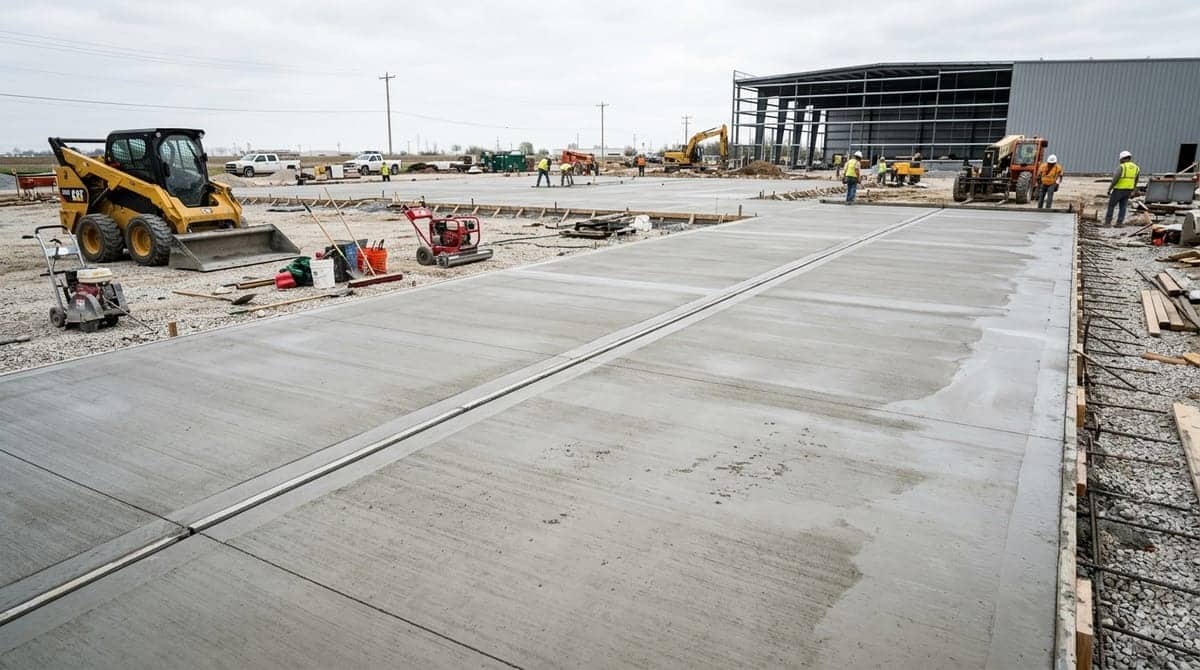
When planning a substantial concrete project, whether it’s a detached garage, workshop, or barn foundation, understanding concrete curing time is critical. Commercial concrete slab curing requires 28 days to reach 100% design strength, though you can walk on the surface within 24-48 hours and park standard vehicles after 7 days. Understanding this timeline helps you coordinate contractors, schedule construction phases, and avoid costly mistakes that compromise your investment.
What Is Concrete Curing and Why Your Timeline Matters
Concrete Cure vs Dry: The Critical Difference
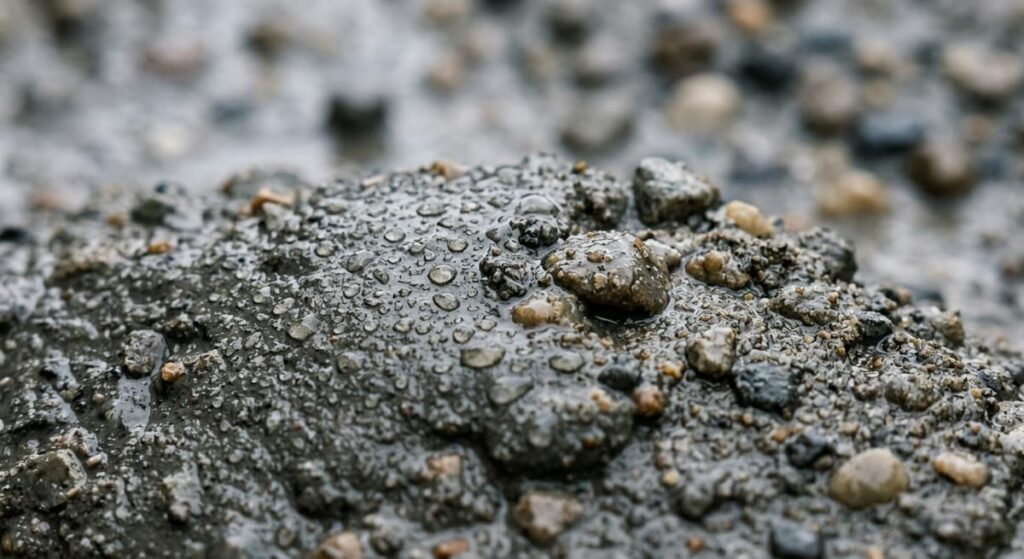
Concrete curing isn’t simply drying, it’s a chemical reaction called hydration where water and cement bond to create the crystalline structure that gives concrete its strength. This transformation requires moisture to continue, not evaporation.
When concrete dries too quickly, hydration stops prematurely. The result? Weaker concrete prone to cracking, surface damage, and structural failure. Proper curing maintains adequate moisture content so the chemical reaction progresses completely, developing the full strength your slab was designed to achieve.
The hydration process generates heat as calcium silicate compounds react with water to form calcium silicate hydrate crystals, the primary component giving concrete its compressive strength. This reaction continues for weeks, creating progressively denser crystalline bonds.
Why Rushing Curing Time Compromises Your Investment
The 28-day cure standard exists for good reason. At 7 days, concrete reaches about 70% of design strength, adequate for light use but not maximum loads. By 28 days, hydration has advanced to deliver essentially 100% of intended strength capacity.
Loading concrete prematurely causes microscopic cracking that permanently weakens the structure. These cracks expand over time, allowing water infiltration that leads to spalling and surface deterioration. Industry testing shows concrete loaded to capacity at 7 days instead of 28 days can experience up to 30% reduction in long-term durability.
For commercial-grade residential projects like workshops or equipment garages where you’re investing significant resources for professional-level performance, respecting the proper timeline protects that investment.
Complete Concrete Drying Time: When You Can Use Your Slab
Initial Set and Form Removal (0-48 Hours)
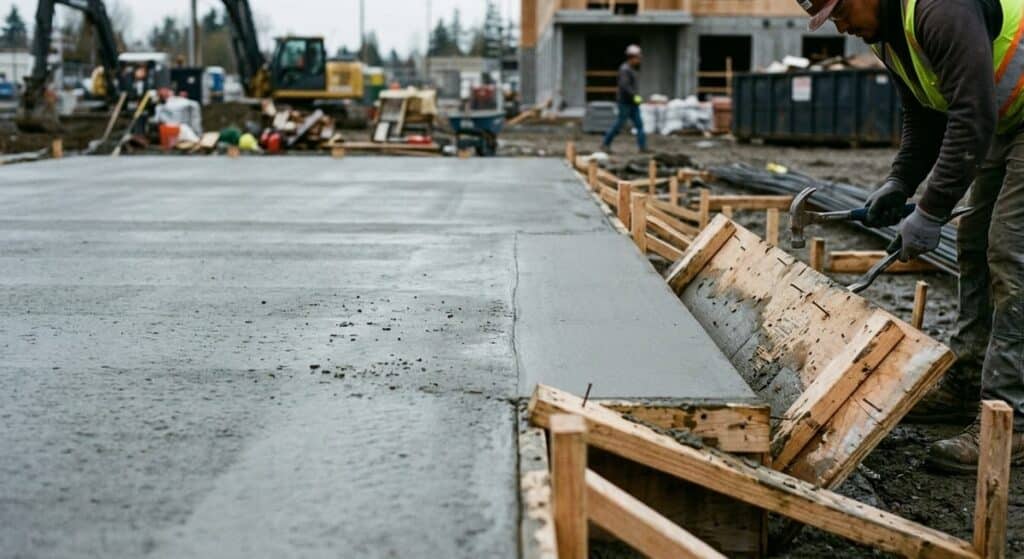
Within 24 hours, concrete undergoes initial set, hardening enough to support its own weight and light foot traffic. This doesn’t mean it’s strong; it simply means the material has transitioned from liquid to semi-solid form. During this critical window, protect fresh concrete from rain, direct sunlight, and temperature extremes.
Forms come off around 24-48 hours after pouring, depending on conditions. Walking with soft-soled shoes is safe after 24 hours, but avoid edges and keep heavy items completely off the surface. This is when proper curing protocols begin, applying curing compounds, setting up wet blankets, or establishing water-misting schedules.
During the first 48 hours, concrete is vulnerable to plastic shrinkage cracking caused by rapid surface moisture evaporation. Professional contractors monitor ambient temperature conditions closely and adjust protection measures accordingly.
Early Strength Development Phase: 70% Cure (3-7 Days)
The first week represents rapid strength development. By day 3, concrete has gained enough strength for light equipment and careful material storage. By day 7, the slab reaches that crucial 70% strength threshold, making it safe for standard vehicles and moderate foot traffic.
This is when homeowners grow impatient, the concrete looks finished, feels hard, and seems ready for anything. But that remaining 30% strength development matters for long-term durability, especially for commercial-grade applications requiring full design strength.
Concrete Curing Timeline Usage Guide:
| Activity | Safe Timeline | Load Bearing Notes |
| Light foot traffic | 24-48 hours | Soft-soled shoes; avoid edges |
| Material storage (light) | 3-5 days | Distribute weight evenly |
| Standard vehicles | 7 days | Cars, pickups, SUVs only |
| Light equipment | 7-10 days | Avoid repeated concentrated loads |
| Heavy trucks/equipment | 14 days minimum | Better to wait full 28 days |
| Full design capacity | 28 days | Maximum loads now safe |
Progressive Strength Development to Full Capacity (7-28 Days)
Between weeks two and four, concrete continues strengthening more gradually. The hydration process slows but never completely stops, even decades later, concrete continues gaining marginal strength. This phase is critical for commercial concrete slab applications because the slab develops durability to handle sustained heavy use.
After 14 days, heavier vehicles and equipment become acceptable for most applications, though waiting the full 28 days provides an extra safety margin. This is important for workshop slabs supporting machinery, equipment garages housing heavy vehicles, or barn foundations bearing significant structural loads.
The strength gain between 7 and 28 days involves continued formation of calcium silicate hydrate gel, which fills microscopic voids in the concrete matrix. This densification improves compressive strength, tensile strength, abrasion resistance, and impermeability, all critical for long-term performance.
Maximum Strength and Sealing Window (28-90 Days)
At 28 days, concrete has achieved its design strength rating, 3,000 to 4,000 PSI for residential applications, or 4,000 to 5,000+ PSI for commercial-grade slabs. This is the strength engineers calculated your structure to carry, and it’s now fully available.
The 28-90 day window is also optimal for applying concrete sealers or coatings. The surface needs full curing to accept sealers properly. Most contractors recommend sealing between 30-60 days after pouring.
For decorative applications or epoxy coatings, verify that internal moisture content has dropped below 4-5% using a calcium chloride test or moisture meter before sealing. Trapping moisture under an impermeable coating can cause delamination, bubbling, or coating failure.
How Georgia’s Climate Affects Your Concrete Curing Time
Atlanta’s Humidity Advantage for Concrete Curing
Metro Atlanta’s climate works in favor of proper curing. With average humidity levels around 65% year-round, ambient moisture naturally helps maintain proper hydration conditions. This is a significant advantage compared to arid climates where contractors must work harder to prevent premature drying.
But humidity alone isn’t enough. Even in Atlanta’s favorable conditions, contractors still need to apply proper curing methods, water misting, wet blankets, or curing compounds, to ensure consistent moisture retention across the entire slab surface.
Summer Curing Challenges (June Through August)
Summer presents the most challenging conditions for concrete curing in Georgia. Temperatures reaching the mid-90s accelerate water evaporation from the concrete surface, working against the slow, steady hydration process that produces strong, durable slabs.
Summer afternoon thunderstorms add another variable. Light rain after the initial 24-hour set is actually beneficial, it adds moisture supporting hydration. Heavy rainfall during the first few hours after placement can damage the surface and wash out cement paste.
Surface temperatures on exposed concrete can exceed 130°F during peak afternoon sun in July and August. At these temperatures, water evaporation rates can reach 1 pound per square foot per hour. Professional contractors use reflective white curing blankets or establish shade structures for summer pours.
Winter Considerations and Best Months for Slab Installation
Winter in metro Atlanta is mild, but December through February brings occasional freezing temperatures that can severely damage fresh concrete. When temperature drops below 40°F, hydration slows dramatically. Below 32°F, water in the concrete mix can freeze, expanding and creating permanent internal damage.
The ideal months for concrete slab installation in Cherokee, Cobb, and North Fulton counties are September through November and March through May. During these periods, temperatures remain moderate, humidity stays favorable, and extreme weather events are less common.
ACI 306 standards for cold-weather concreting specify maintaining concrete temperature above 50°F for at least 5 days. In metro Atlanta, this requires protection only during overnight hours in winter months.
Factors That Affect Concrete Curing Time and Strength Development
| Factor | Impact on Curing Time | Professional Recommendation |
| Slab thickness | Thicker slabs retain moisture longer but take longer to cure throughout depth | 6″+ commercial slabs need careful moisture monitoring |
| Mix design | High early-strength mixes reach 70% in 3-5 days vs. 7 for standard | Type III cement for faster strength, Type II for mass pours |
| Ambient temperature | Ideal range 50-85°F; hydration halves for every 10°F drop below 70°F | Aggressive protection needed above 90°F or below 50°F |
| Humidity | Atlanta’s 65% average aids curing but doesn’t eliminate need for active methods | Still require misting, blankets, or curing compounds |
| Curing method | Water curing = best; compounds = effective for commercial | Match method to project requirements and conditions |
| Load requirements | Heavier loads demand full 28-day cure | Commercial applications must reach 100% design strength |
Understanding Commercial-Grade Concrete Specifications for Residential Projects
What Commercial Concrete Systems Actually Mean
When homeowners search for “commercial concrete,” they’re planning projects exceeding standard residential scope, detached workshops, equipment storage buildings, or barn foundations. Commercial-grade concrete refers to higher compressive strength ratings (4,000-5,000+ PSI vs. 2,500-3,500 PSI for basic residential), thicker slab profiles (6-8 inches vs. 4 inches), and enhanced reinforcement specifications.
These upgrades matter when your garage will house heavy equipment, your workshop will support machinery mounted to the floor, or your barn foundation must carry substantial structural loads.
Industry Standards and Testing Requirements
Commercial-grade concrete follows American Concrete Institute (ACI) standards and American Society for Testing and Materials (ASTM) specifications:
- ACI 318: Building Code Requirements for Structural Concrete
- ACI 308: Guide to Curing Concrete
- ASTM C94: Specification for Ready-Mixed Concrete
- ASTM C39: Test Method for Compressive Strength Testing
For commercial-grade residential projects, contractors should provide batch tickets documenting mix design, take cylinder samples for independent testing, and maintain curing logs.
Ensuring Quality: What to Watch During the Concrete Curing Process
As a homeowner overseeing a commercial-grade concrete project, you can verify your contractor follows proper curing protocols:
Proper moisture retention: The concrete surface should remain visibly damp, not dried out, for at least the first 7 days. If you see dry patches, your contractor isn’t maintaining adequate moisture levels.
Weather protection: Fresh concrete should be covered during rain events, direct sun exposure, and extreme temperatures. Look for protective tarps, insulated blankets, or shade structures as conditions warrant.
Traffic restrictions: No one should drive vehicles, operate equipment, or stack heavy materials on your new slab before appropriate milestones.
Professional curing methods: Your contractor should apply curing compounds, set up water misting systems, or lay down wet blankets within hours after finishing. Curing compounds should be applied at manufacturer-specified rates using proper spray equipment.
Temperature monitoring: For large commercial pours, professional contractors monitor concrete temperature using embedded sensors or infrared thermometers. Internal temperatures shouldn’t exceed 160°F during initial set.
Warranty Standards and Long-Term Protection
Industry-Standard Warranty Coverage
Reputable concrete contractors provide written warranties covering structural defects. Standard commercial concrete warranties include:
Structural integrity warranty (1-2 years): Covers major defects like significant cracking, spalling, or failure to meet load-bearing specifications.
Material defects warranty (90 days-1 year): Addresses issues with the concrete mix itself, improper proportions, contaminated materials, or failure to meet specified PSI rating.
Workmanship warranty (1 year minimum): Covers installation defects like improper finishing, inadequate joint placement, or surface defects caused by poor technique.
Protecting Your Concrete Investment Long-Term
Beyond the initial curing period, several practices extend concrete lifespan:
- Sealing schedule: Apply penetrating or film-forming sealers every 2-5 years depending on traffic and exposure
- Joint maintenance: Inspect control joints and expansion joints annually; re-seal as needed
- Surface cleaning: Remove oils, chemicals, and de-icing salt residue promptly
- Drainage management: Ensure water drains away from slab edges
- Load management: Distribute heavy equipment weight using pads or platforms
Properly installed and maintained commercial-grade concrete slabs routinely last 30-50 years in residential applications.
Ready to start your commercial-grade concrete project with realistic timelines and professional execution? Artistic Construction brings 22 years of experience to every slab we pour across metro Atlanta. We provide custom project timelines based on your specific application, coordinate with your other contractors, and follow the curing protocols that ensure your investment delivers decades of reliable performance. Schedule your free consultation today: (678) 613-3424.
Frequently Asked Questions
How long before I can walk on new concrete?
Light foot traffic with soft-soled shoes is safe after 24-48 hours once the initial set is complete. Avoid edges and corners where the concrete is more vulnerable, and keep heavy objects off the surface entirely.
When can I drive on concrete after pouring?
Standard passenger vehicles—cars, pickups, and SUVs—are safe on properly cured concrete after 7 days when it reaches about 70% of design strength. Wait the full 28 days for heavy trucks, commercial vehicles, or equipment exceeding standard vehicle weights.
What happens if it rains during concrete curing?
Light rain after the initial 24-hour set is actually beneficial because it adds moisture supporting hydration. Heavy rainfall during the first few hours after placement requires protective covering to prevent surface damage and cement washout.
How long does a commercial concrete slab take to cure in Georgia’s climate?
The 28-day timeline to reach full design strength applies universally, including in Georgia. Atlanta’s favorable humidity levels may slightly accelerate early strength development, but the industry-standard 28-day period remains the benchmark for achieving 100% of engineered strength capacity.
What’s the difference between commercial and residential concrete slabs?
Commercial-grade concrete features higher PSI ratings (4,000-5,000+ vs. 2,500-3,500), thicker cross-sections (6-8″ vs. 4″), and stricter quality control standards. These same specifications apply to large residential projects like workshops, equipment garages, and barn foundations where homeowners need professional-level performance and durability.
Can accelerated concrete curing shorten the 28-day timeline?
Concrete accelerators can reduce time to reach specific strength milestones—for example, reaching 70% strength in 3-5 days instead of 7 days. But even with accelerators, achieving full 100% design strength still requires about 28 days.