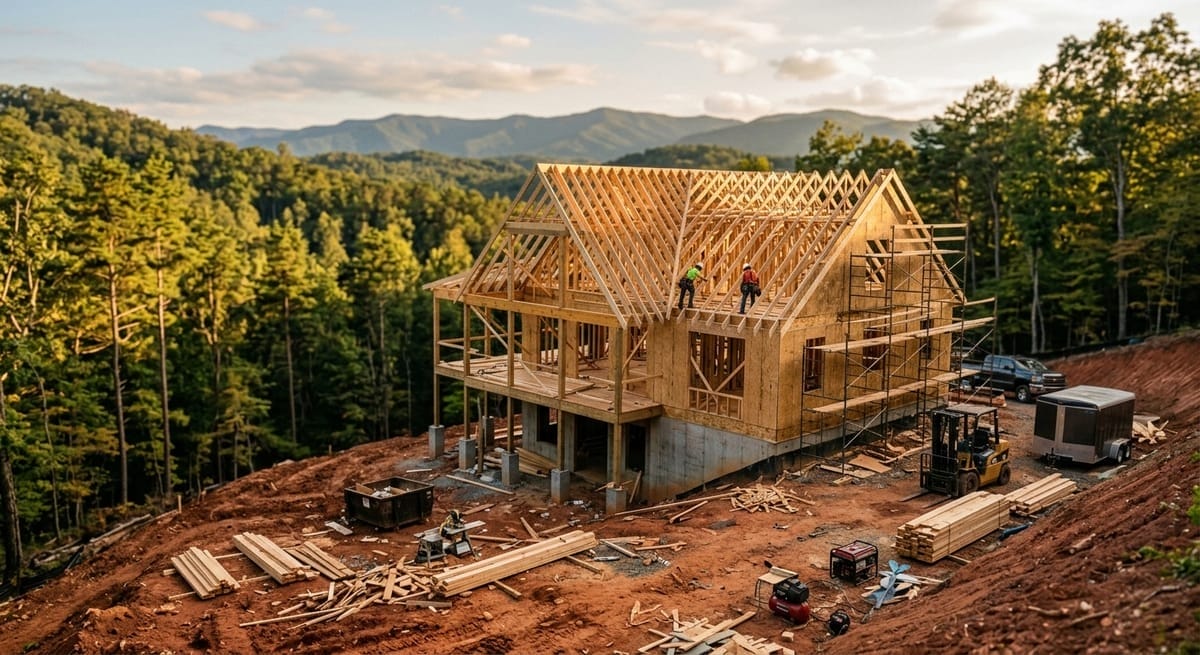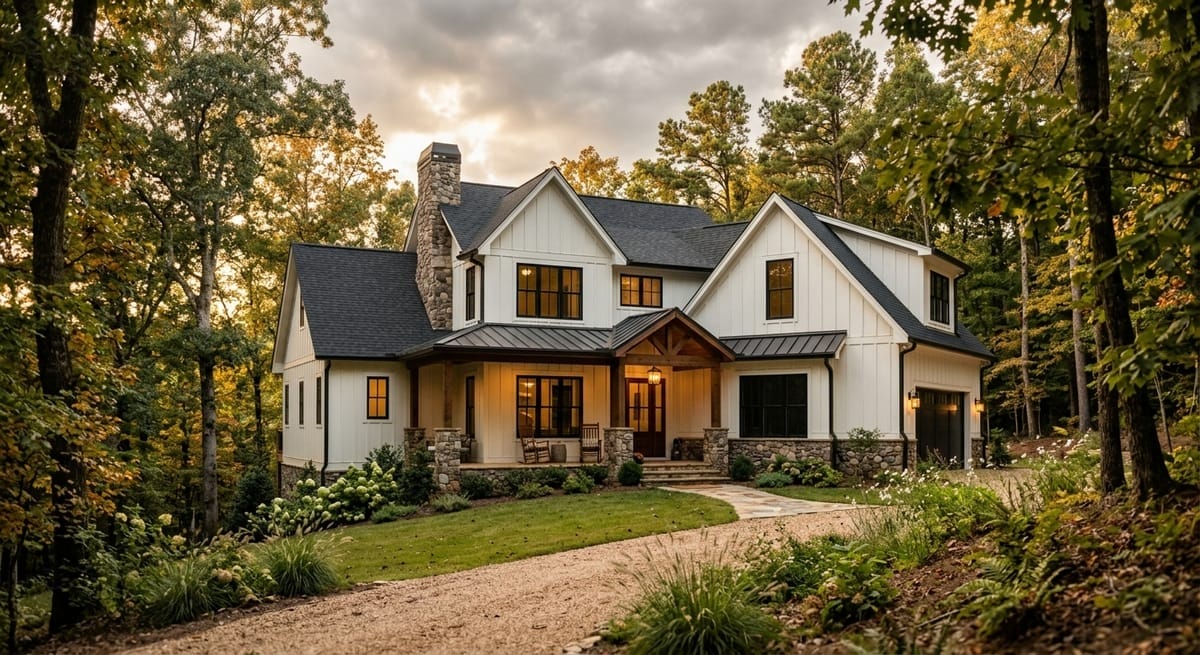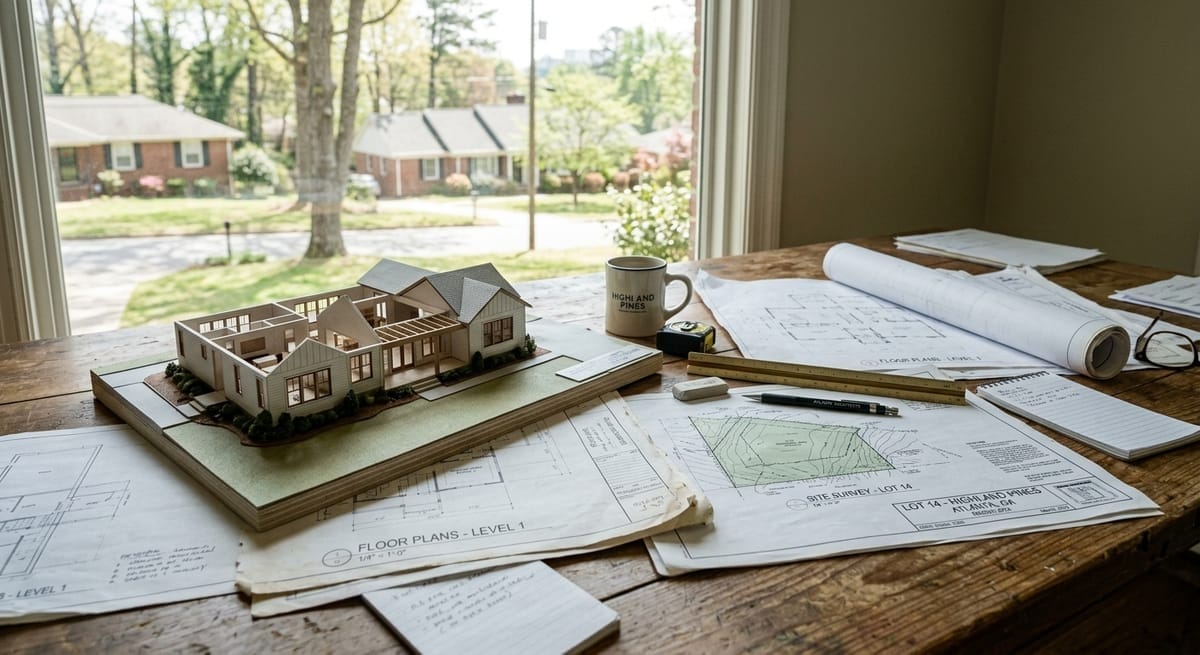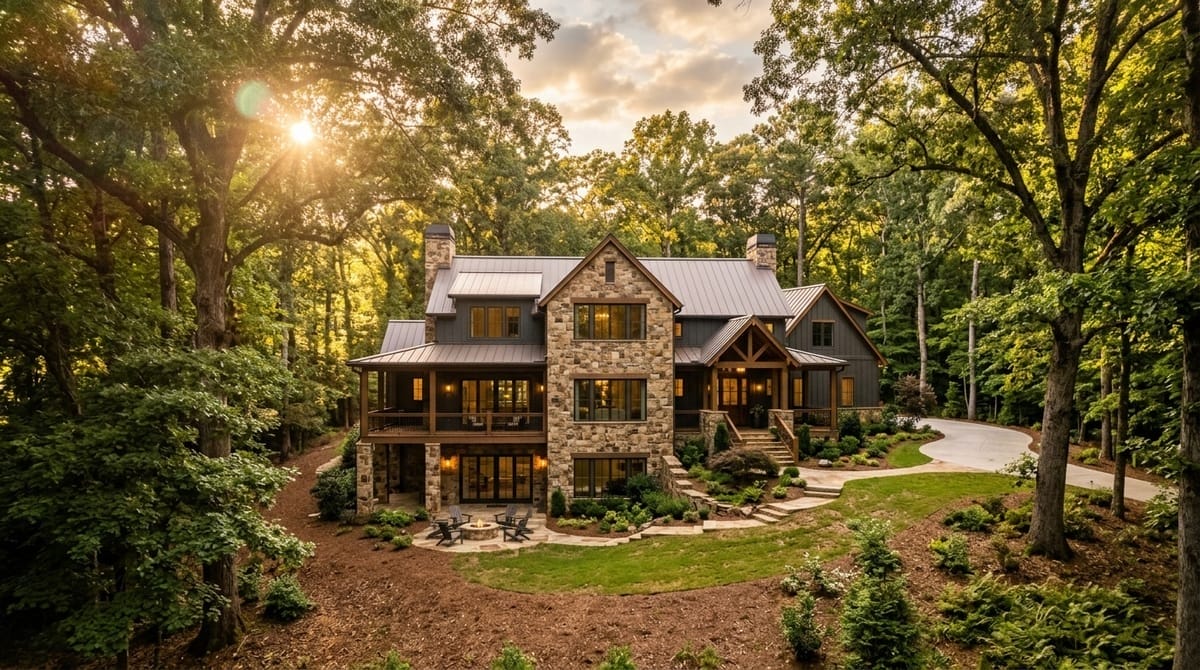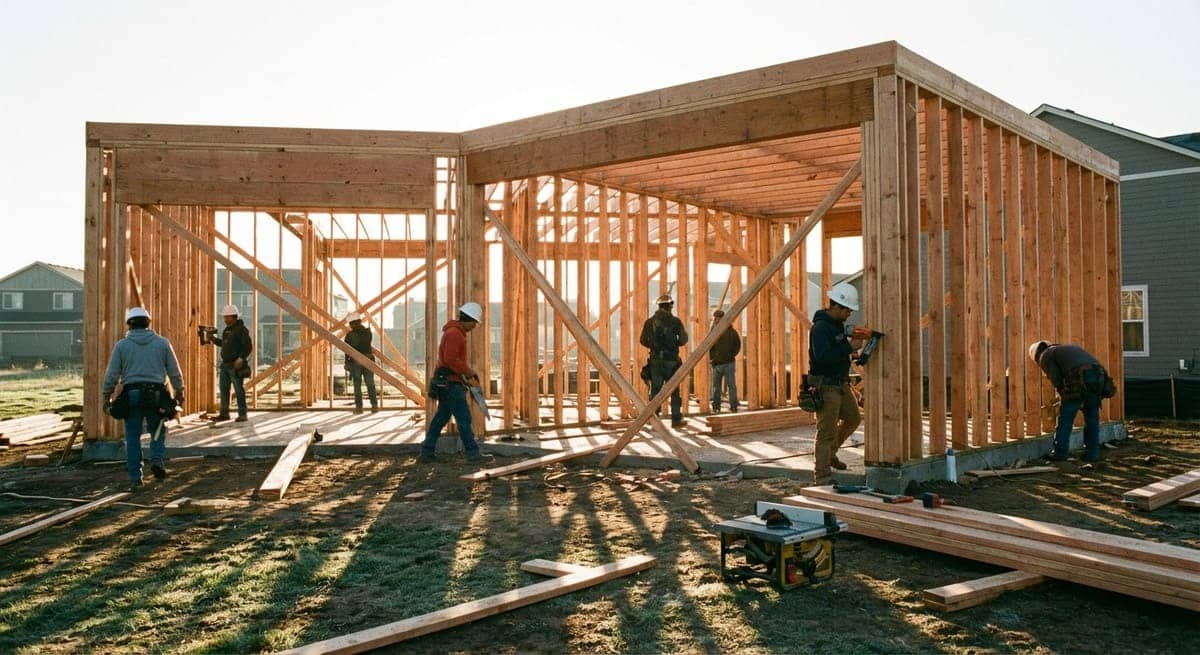
Building a custom home in Georgia takes 8-14 months on average from permit approval to move-in day. If you’re a family in Cherokee, Cobb, or North Fulton County weighing whether to keep house hunting or start building, understanding this timeline, and what actually determines how long construction takes, is critical for making the right decision.
Most homeowners planning custom construction underestimate the full timeline. They focus on building time but forget design decisions, permit approval, and seasonal weather impacts. Now this guide breaks down exactly what to expect when building in North Atlanta, with real data from actual construction schedules.
Standard Home Building Timeline: Phase-by-Phase Construction Process
Building a custom home involves seven distinct phases:
| Phase | Duration | Key Activities |
| Design & Planning | 1-4 months | Finalize floor plans, elevations, specifications, structural engineering |
| Permitting | 3-8 weeks | County plan review, approval, pre-construction meetings |
| Site Prep & Foundation | 2-4 weeks | Lot clearing, grading, utilities, foundation pour |
| Framing & Dried-In | 6-10 weeks | Structure build, roof systems, weatherproofing |
| MEP Systems & Rough-In | 3-4 weeks | Mechanical, electrical, plumbing installation, insulation |
| Interior Finishes | 6-8 weeks | Drywall, trim, cabinets, flooring, painting, fixtures |
| Final Inspections | 1-2 weeks | County approvals, utility connections, punch list completion |
Standard custom home (2,500-3,000 sq ft): 10-12 months from permit approval to move-in.
Semi-custom/production home: 7-9 months with limited customization and standardized processes.
Complex custom home (4,000+ sq ft with luxury finishes): 14-16+ months due to custom millwork, specialty materials, and high-end trade coordination.
These timelines start from permit approval, not your first builder meeting. Add 1-4 months of pre-construction planning before breaking ground.
Add 1-4 months of pre-construction planning before breaking ground. If you are also thinking ahead about how you want your finished home to function day to day, including entertaining and transitions between spaces, see our indoor-outdoor living guide.
8 Things That Affect The Timeline
1. Home Size and Custom Design Features
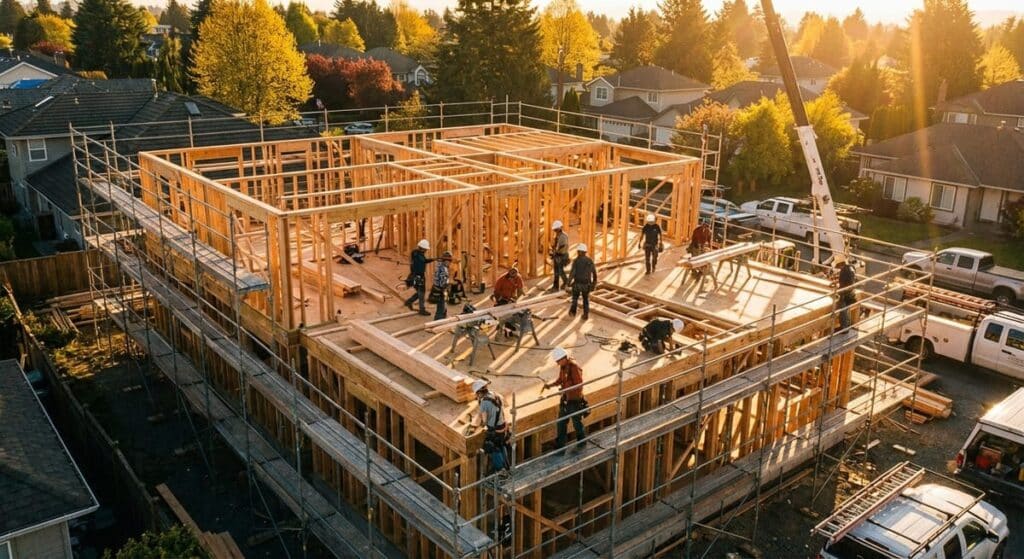
Square footage directly impacts construction time. Beyond size, custom architectural elements, coffered ceilings, curved walls, custom millwork, require specialized labor that extends the timeline. Production builders minimize this variable through limited floor plan modifications.
2. Lot Condition and Site Preparation Requirements
| Lot Condition | Timeline Impact |
| Cleared, level, utilities ready | 1-2 weeks |
| Wooded requiring clearing | +2-4 weeks |
| Sloped requiring grading/retaining walls | +3-6 weeks |
| Poor soil conditions | +2-4 weeks |
Geotechnical engineers test soil bearing capacity to ensure foundations meet structural requirements. Poor soil conditions may require deeper footings, specialized drainage systems, or engineered fill, all affecting construction time.
3. County Permit Approval Time and Processing
County permit timelines vary by location:
| County | Processing Time | Key Considerations |
| Cherokee | 4-6 weeks | Septic system approval adds 2-3 weeks in rural areas |
| Cobb | 3-5 weeks | Fastest processing; strict stormwater requirements |
| North Fulton | 5-7 weeks | HOA architectural review required first |
| Forsyth | 4-6 weeks | Homes over 5,000 sq ft require fire marshal review |
Submit complete, professional plans initially. Resubmissions after corrections add 2-4 weeks to your timeline. Common triggers include missing structural calculations, inadequate drainage details, or unclear energy code compliance.
4. Weather Delays and Seasonal Construction Impacts
North Georgia weather creates predictable challenges:
Winter (Dec-Feb): Foundation work is most vulnerable. Concrete requires minimum 40°F temperatures during placement and for 48 hours afterward. Ground freezing prevents excavation. Interior work continues normally once dried-in.
Spring/Summer: Afternoon thunderstorms stop work 1-2 hours daily during peak season. Framing proceeds during light rain once dried-in.
Fall (Sep-Nov): Most favorable building period. moderate temperatures, lower rainfall, ideal for exterior finishing.
5. Material Lead Times and Availability
| Material Type | Lead Time | Planning Strategy |
| Standard materials | 1-2 weeks | Order as needed |
| Custom windows | 8-12 weeks | Order during permitting |
| Specialty cabinets | 10-14 weeks | Early material selection |
| Custom doors/specialty glass | 16 weeks | Finalize during design phase |
| Natural stone countertops | 4-6 weeks after template | Schedule templating early |
| Custom lighting fixtures | 8-12 weeks | Order before rough-in |
Experienced builders order long-lead items during permitting rather than waiting until installation approaches. This reduces delays but requires you to finalize design decisions earlier.
6. Labor Availability and Trade Contractor Scheduling
Georgia experiences seasonal availability patterns. Spring and summer represent peak building season, trade contractors may have 1-2 week gaps between projects extending your timeline. Fall and winter offer more immediate availability.
Builders with established trade relationships experience fewer scheduling conflicts. Quality contractors book 3-4 weeks ahead during peak season.
7. Design Changes and Change Order Impacts
Mid-construction modifications reliably extend your timeline:
- Material changes after ordering: 1-2 weeks
- Layout changes after framing: 2-4 weeks
- Structural modifications: 2-4 weeks minimum
Timeline protection strategy: Make decisions when asked. Builders provide decision deadlines throughout the process, meeting these keeps your construction on track.
To avoid delays, review common remodeling mistakes before finalizing selections.
8. Building Inspection Schedules and Requirements
Counties schedule inspections within 3-5 business days. Required checkpoints:
- Foundation inspection: Verifies footing depth, rebar placement
- Framing inspection: Confirms structural member sizing, connections
- Rough-in inspection: Examines MEP systems before walls close
- Final inspection: Verifies all work matches approved plans
Failed inspections require corrections and re-inspection, adding 5-10 days. Common failures include improper electrical box installation, missing fire-blocking, or inadequate plumbing venting.
Your Role in Meeting Your Construction Timeline

When Critical Decisions Are Needed During Construction
Your responsiveness directly affects how long building takes. Builders need specific decisions at specific times:
| Project Phase | Decisions Required | Timeline Impact if Delayed |
| Months 1-2 (Design) | Floor plan, elevations, structural decisions | Minimal if changed here |
| Month 3 (Pre-construction) | Exterior materials, colors, windows | 6-8 weeks |
| Months 4-5 (Framing) | Plumbing/electrical locations, HVAC placement | Requires cutting finished walls |
| Months 6-7 (Before finishes) | Flooring, tile, cabinets, countertops, paint, lighting | 2-4 weeks minimum |
If you are feeling overwhelmed, our home improvement stress guide can help!
How to Be an Effective Building Partner
Pre-select materials when possible: Visit showrooms during design and permitting phases so you’re ready when formal selections are needed.
Understand change order timeline impacts: Ask “How does this change affect our completion date?” before deciding on modifications.
Maintain responsive communication: Respond to calls, texts, and emails promptly. Projects with the shortest timelines have highly responsive homeowners.
As you move through design and planning, it also helps to think through your technology choices early. Use this smart home systems guide to align your selections with your build schedule.
Building Code Requirements and Safety Standards
All Georgia residential construction must comply with the International Residential Code (IRC) with local amendments. This establishes minimum standards for:
Structural integrity systems: Engineered designs for complex loads, spans over 20 feet, or unusual roof configurations.
Electrical system standards: National Electrical Code (NEC) standards including proper wire sizing, GFCI protection in wet locations, AFCI protection for bedrooms.
Fire safety requirements: Smoke detectors in every bedroom and hallway, carbon monoxide detectors near sleeping areas, fire-rated assemblies between garage and living space.
Choosing a Builder: Licensing and Warranty Coverage
Georgia requires residential contractors to hold licenses from the State Licensing Board. Verify license status at verify.sos.ga.gov before signing contracts.
Standard new construction warranty coverage:
- 1 year: Workmanship and materials
- 2 years: Mechanical systems
- 10 years: Structural defects
Get warranty terms in writing before construction begins. Understand coverage, exclusions, and the claim submission process.
FAQ
Can I speed up the construction timeline by paying more for expedited service?
Paying more doesn’t significantly accelerate construction because most delays stem from required curing times, inspection schedules, and material lead times. You can reduce timeline variability by choosing semi-custom plans over full custom designs.
What happens if construction delays push past my lease expiration or closing date?
Most builders include contingency language acknowledging that weather and permit delays may occur. Plan buffer time, if you need to move by August 1st, target June completion. Consider rent-back agreements or temporary housing as backup.
Can I act as my own general contractor to reduce the timeline?
Serving as your own general contractor rarely saves time and usually extends construction unless you have construction experience. Licensed builders maintain established trade relationships and handle scheduling complexities that inexperienced owner-builders struggle with.