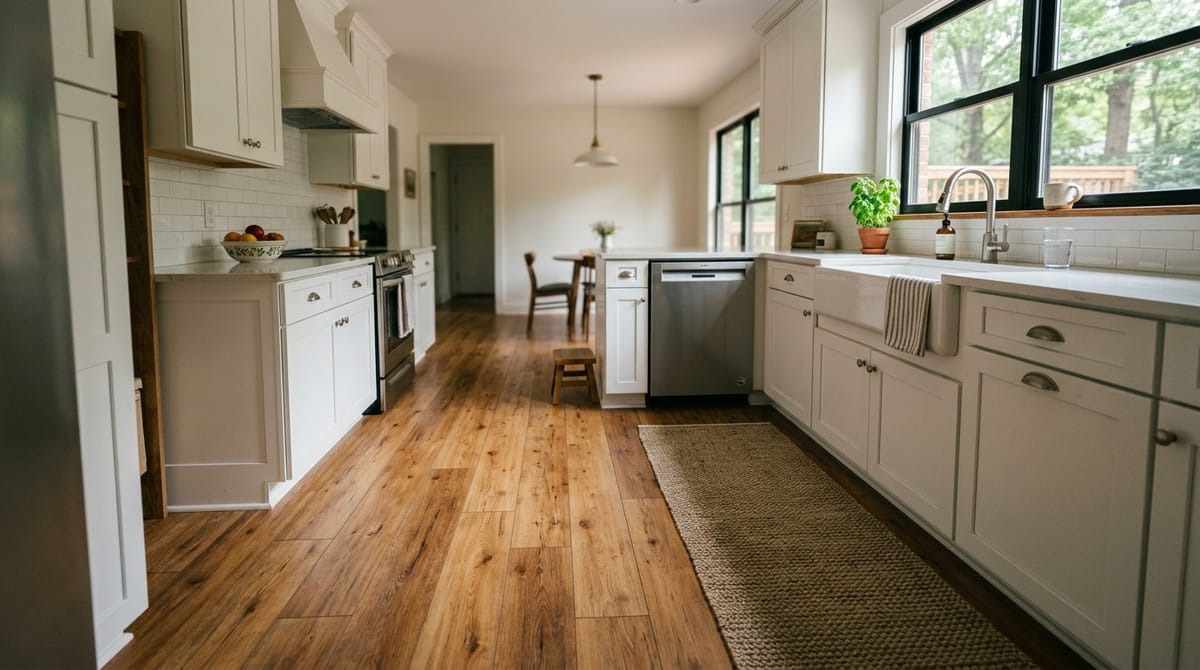
If you’re planning a remodel, finding the best kitchen flooring for your Georgia home is the most important decision you will make. National flooring guides will only get you so far. They’ll tell you LVP is durable and tile is waterproof, but they won’t tell you what happens to laminate on a slab foundation during Georgia’s humid subtropical summers, or why solid hardwood is a gamble in Cherokee County homes. This guide covers the best kitchen flooring options that actually perform in this climate, what they cost locally, and how to make a decision you won’t regret.
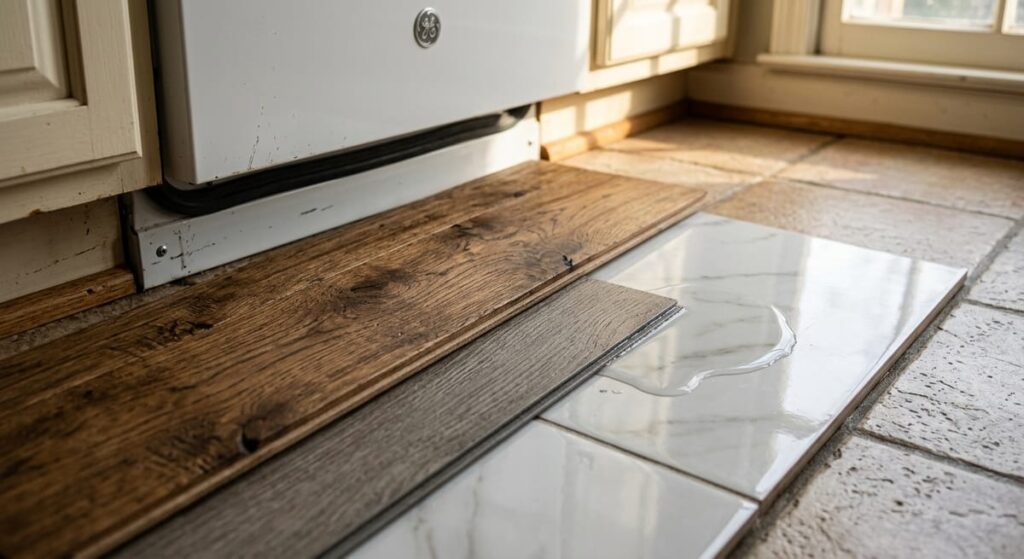
What to Look for Before You Choose Kitchen Flooring
Most homeowners start with aesthetics and work backward. That’s how you end up with a floor that looks great at the showroom and fails in a house with kids, pets, and Georgia humidity. Before comparing kitchen flooring ideas, get clear on what your kitchen actually demands.
Water and moisture resistance is non-negotiable. Spills, steam, dishwasher leaks, and wet shoes mean kitchens take water from multiple directions. Any waterproof kitchen flooring needs to handle surface moisture without warping, staining, or delaminating.
Durability and maintenance matter every day. Families with kids and pets need the most durable kitchen flooring available. Consider how much maintenance you’re signing up for: some floors require regular sealing; others need only a damp mop.
Cost, comfort, and resale value each deserve weight. Hard tile is more durable but punishing during long cooking sessions. LVP costs less installed but may not carry the same resale premium as porcelain in higher-end Alpharetta or Milton neighborhoods.
What Are the Best Kitchen Flooring for Georgia Homes?
Luxury Vinyl Plank: Top Waterproof Kitchen Flooring for Most North Atlanta Homes
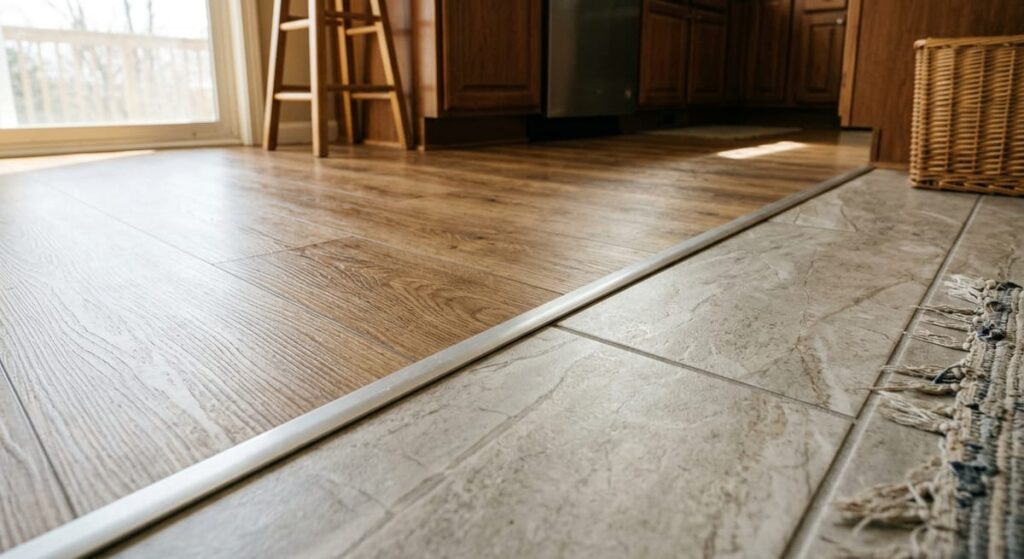
LVP is the most practical choice for the majority of North Atlanta kitchens. Its 100% waterproof core, realistic wood and stone visuals, and forgiving feel underfoot make it a standout in active family kitchens.
| Feature | Detail |
| Best for | Active households, slab foundations, budget-conscious remodels |
| Wear layer | 12 mil or higher (look for NALFA certification) |
| Core type | WPC or SPC; SPC preferred for slab-on-grade |
| Certifications | FloorScore or GREENGUARD Gold for low VOC emissions |
Pros: Fully waterproof core; softer and warmer underfoot than tile; highly scratch-resistant; faster installation; reliable through Georgia’s humidity swings.
Cons: Heavy furniture can cause damage; lower perceived luxury in high-end listings; quality varies significantly—vinyl plank kitchen flooring under 6 mil wear layer disappoints quickly.
Porcelain and Ceramic Tile: Hardworking and Long-Lasting Kitchen Floors
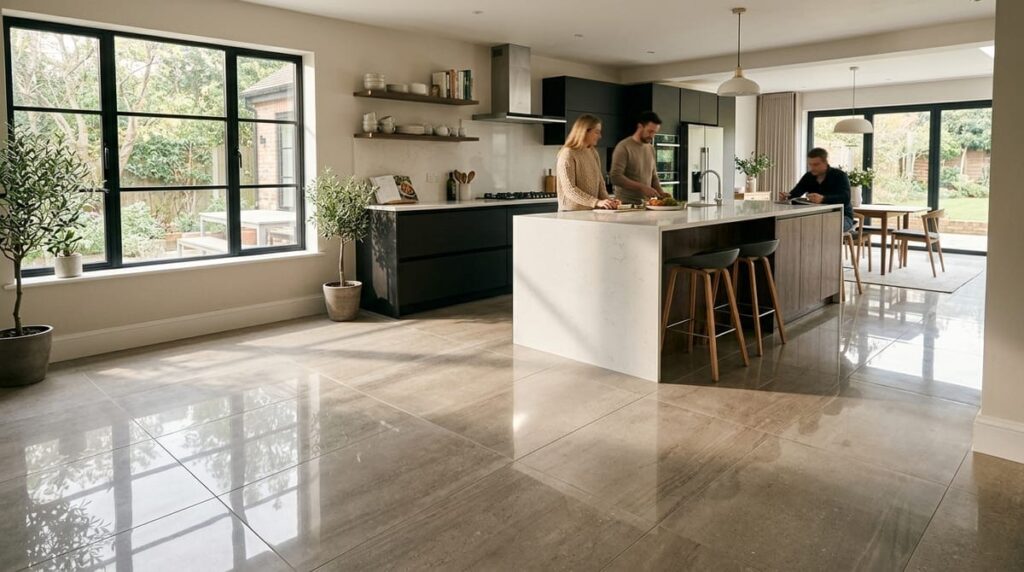
A porcelain tile kitchen floor is the most durable kitchen flooring option and the strongest choice for slab foundations.
Pros: Near-impervious to water, stains, and heat; 20+ year lifespan; a PEI rating of 4 or 5 confirms commercial-grade hardness; large-format options reduce grout lines; strong resale value.
Cons: Hard and cold underfoot; grout lines require periodic sealing; dropped dishes shatter; higher installation cost than LVP.
A ceramic tile kitchen floor offers a budget-friendly alternative—slightly softer and more porous, but serviceable in lower-traffic kitchens.
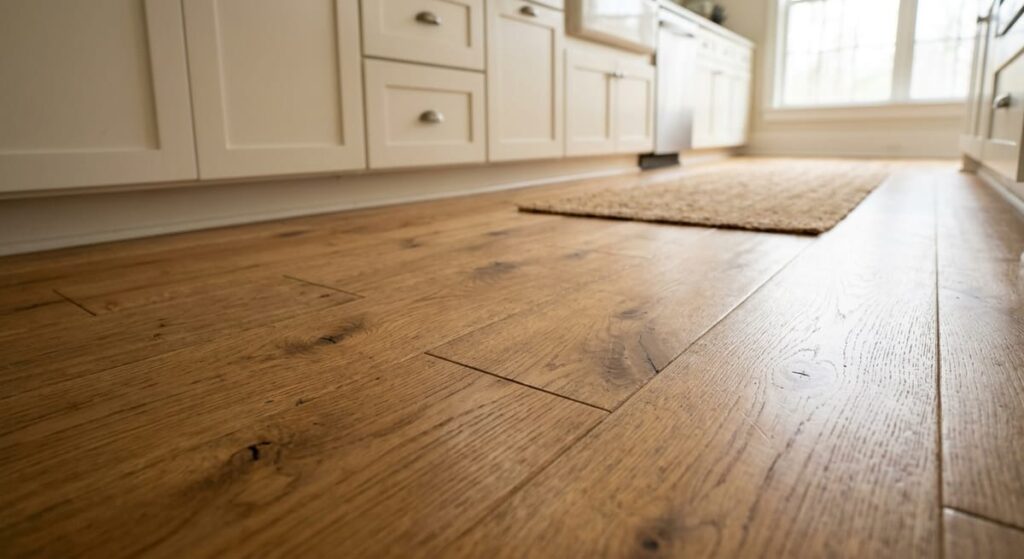
Engineered Hardwood: Beauty With Better Moisture Tolerance
Engineered hardwood kitchen flooring delivers the warmth of real hardwood with meaningfully better humidity resistance than solid hardwood.
Pros: Real wood veneer with genuine warmth and character; layered plywood core limits expansion and contraction; veneers of 3mm or more can be refinished once or twice; strong resale appeal in Roswell, Alpharetta, and East Cobb markets.
Cons: Not waterproof; standing water causes damage; requires a moisture barrier and full acclimation before installation. Solid hardwood carries significant warping risk in Georgia’s climate and isn’t recommended for kitchens.
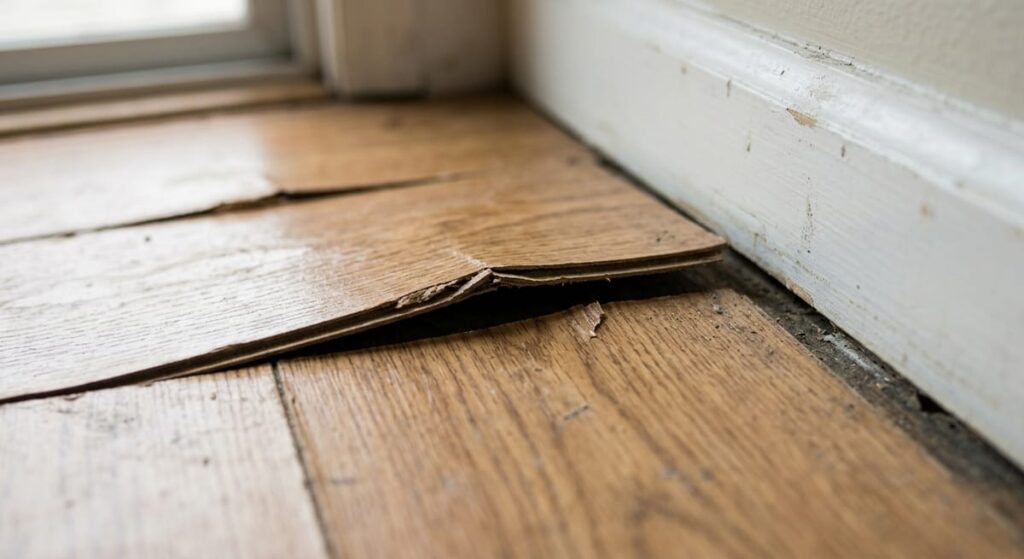
Laminate Kitchen Flooring: Budget-Friendly With Real Trade-Offs
Laminate kitchen flooring pros and cons tilt toward risk in Georgia kitchens. Standard laminate swells and delaminates with moisture—a serious problem on slab foundations. It can’t be refinished; damaged sections require full replacement. If budget is the primary constraint, choose a specifically waterproof laminate product and understand you may be replacing it sooner.
How the Top Kitchen Flooring Materials Compare
| Material | Water Resistance | Durability | Maintenance | Comfort | Installed Cost (per sq ft) | Resale Value |
| LVP | High | High | Low | High | $4–$11 | Medium-High |
| Porcelain Tile | High | Very High | Medium | Low | $8–$20 | High |
| Engineered Hardwood | Medium | Medium-High | Medium | High | $7–$18 | High |
| Ceramic Tile | Medium-High | High | Medium | Low | $5–$13 | Medium-High |
| Laminate | Low-Medium | Medium | Low | Medium | $3–$9 | Low-Medium |
Cost ranges reflect Atlanta-area installed pricing and vary based on subfloor conditions, material grade, and project scope.
Choosing Kitchen Flooring for Georgia’s Climate
What Georgia Humidity Does to Your Kitchen Floor
North Georgia’s humid subtropical climate means relative humidity regularly exceeds 70–80% during summer, and slab foundations allow moisture vapor to migrate upward through concrete year-round. This affects flooring from below, not just from spills above.
Standard laminate absorbs vapor and swells. Solid hardwood expands and contracts seasonally, buckling in summer. Even floating vinyl plank kitchen flooring needs proper acclimation and correct expansion gaps. A qualified contractor should run a calcium chloride or RH probe moisture test before installation. ASTM F2170 is the industry standard for in-situ relative humidity testing on concrete slabs.
Why Your Foundation Type Matters
Most newer homes in Kennesaw, Acworth, Holly Springs, and Canton sit on slab foundations. These require flooring with a waterproof or vapor-resistant core and a proper moisture barrier beneath any floating product. Skipping a subfloor moisture assessment is the single most common reason kitchen floors fail prematurely. Just as with basement flooring in Atlanta homes, testing before installation prevents expensive failures.
For most slab-on-grade homes: LVP with a waterproof SPC core is the safest, most practical choice. A porcelain tile kitchen floor is the premium alternative. Engineered hardwood works with proper prep. Solid hardwood and standard laminate carry meaningful risk in Georgia kitchens.
Kitchen Flooring Costs in the Atlanta Area
Local labor rates, subfloor conditions in older Cherokee and Cobb County homes, and the added steps Georgia’s climate requires all push costs above national averages.
Hidden costs to factor in:
- Subfloor leveling: uneven concrete adds cost before flooring goes down
- Moisture barrier installation: required on most slab foundations
- Old flooring removal and disposal: often excluded from initial quotes
- Transition strips: needed at every doorway where materials change
Your flooring choice should inform cabinet colors, countertop finishes, and grout tones—not get selected last. Knowing your flooring budget early helps sequence every other decision correctly.
Get an accurate estimate: Artistic Construction offers free walkthroughs with no obligation.
How Artistic Construction Handles Kitchen Flooring Installation
Flooring chosen in isolation creates mismatches that are expensive to fix. At Artistic Construction, flooring is part of an integrated design process. We use 3D renderings so you can see how your floor works with your cabinet finish, countertop material, and lighting before work begins—especially when matching kitchen flooring to existing hardwood in adjacent living spaces, a frequent request across our North Atlanta kitchen remodeling projects.
If you’re also exploring 2026 kitchen design trends or comparing countertop materials, we can cover all of it in a single consultation.
Start with a free estimate and walkthrough of your goals.
Serving homeowners across Woodstock, Canton, Acworth, Kennesaw, Marietta, Roswell, Alpharetta, Milton, Holly Springs, and Ball Ground. Questions about your specific kitchen flooring project? We’re glad to walk through your situation, no cost, no pressure.
Frequently Asked Questions
What is the best kitchen flooring for homes with kids and pets?
Luxury vinyl plank with a 12 mil or higher wear layer is the most durable kitchen flooring for active households. It resists scratches, pet claws, dropped pots, and water exposure. Porcelain tile with a PEI rating of 4 or 5 is a close second for raw durability but is harder underfoot.
Is LVP better than tile for a kitchen floor?
For most homeowners comparing vinyl plank kitchen flooring vs. tile, LVP is the more practical choice—warmer underfoot, more comfortable during long cooking sessions, and faster to install. Porcelain tile outperforms LVP in long-term scratch resistance and is the stronger pick for slab-on-grade foundations.
Can you put hardwood floors in a Georgia kitchen?
Engineered hardwood kitchen flooring can work with proper moisture management. Its layered construction handles humidity better than solid hardwood. Solid hardwood is high-risk in Georgia’s humid subtropical climate and isn’t recommended for kitchens here.
How much does kitchen flooring installation cost in Atlanta?
Installed costs typically range from $3–$9 per square foot for laminate, $4–$11 for LVP, $5–$13 for ceramic tile, $8–$20 for porcelain tile, and $7–$18 for engineered hardwood. Subfloor prep, old floor removal, and transition strips add cost that most initial quotes exclude.
What is the best kitchen flooring for a slab foundation?
LVP with a waterproof SPC core and porcelain tile are the strongest choices for slab-on-grade homes. Both handle moisture vapor migrating upward through concrete. Standard laminate and solid hardwood carry significant warping risk on slab.
How long does kitchen flooring installation take?
LVP installs in one to two days once subfloor prep is complete. Tile takes two to four days including grout cure time. Engineered hardwood requires 48–72 hours of acclimation in your home before installation begins.