 Est. 2003
Is a Home Addition Worth It? An Honest Answer for Atlanta-Area Homeowners

If you are looking for a straight answer on whether or not is a home addition worth it financially, you’re in the right place. At Artistic Construction, we’ve spent 22 years building additions across Cherokee, Cobb, and North Fulton County, and we’ve told homeowners when not to build too.”
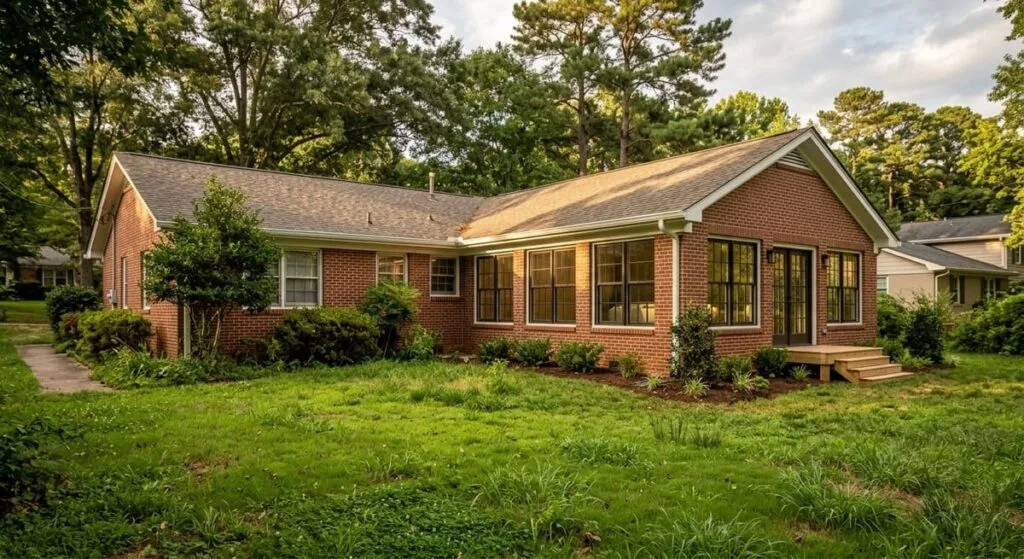
When Is a Home Addition Worth It
A home addition is worth it when the financial math works and it solves a genuine functional problem you can’t resolve another way.
Adding square footage makes sense when:
- You have usable equity and plan to stay 5+ years
- Moving to a larger home in Woodstock, Canton, or Kennesaw would cost significantly more than adding on, especially factoring in your current mortgage rate
- You’re adding a bedroom, primary suite, or in-law suite.
It probably isn’t worth it when:
- Your home is already at or above the price ceiling for your neighborhood
- The project would push your total home value well above comparable homes nearby, limiting home addition resale value
If an addition over-improves your home relative to the neighborhood, you may not fully recover the home addition cost at resale. Most contractors won’t put that in writing.
Is It Cheaper to Add On or Move?
Homeowners who purchased or refinanced between 2020 and 2022 are sitting on rates in the 2.5%–3.5% range. Trading that for a 7%+ rate on a larger move-up home creates a real monthly payment difference, often enough to finance a home addition instead. If you want to see what that kind of project runs, our 20x20 home addition cost guide breaks down the numbers for a 400 sq ft addition in North Atlanta.
| Factor | Home Addition | Sell & Buy Up |
| Mortgage impact | Keep existing rate | New rate on larger loan |
| Timeline | 4–7 months | 60–120+ days |
| School district | Unchanged | May change |
| Transaction costs | None | 6–10% of sale price |
Move-up inventory in Woodstock, Canton, Kennesaw, and Marietta is limited, and you absorb both selling and buying costs in the same transaction. That said, if you want a different school district or neighborhood, moving may still be the right answer.
Want to see how the numbers look for your home? Request a free estimate from Artistic Construction, no commitment required.
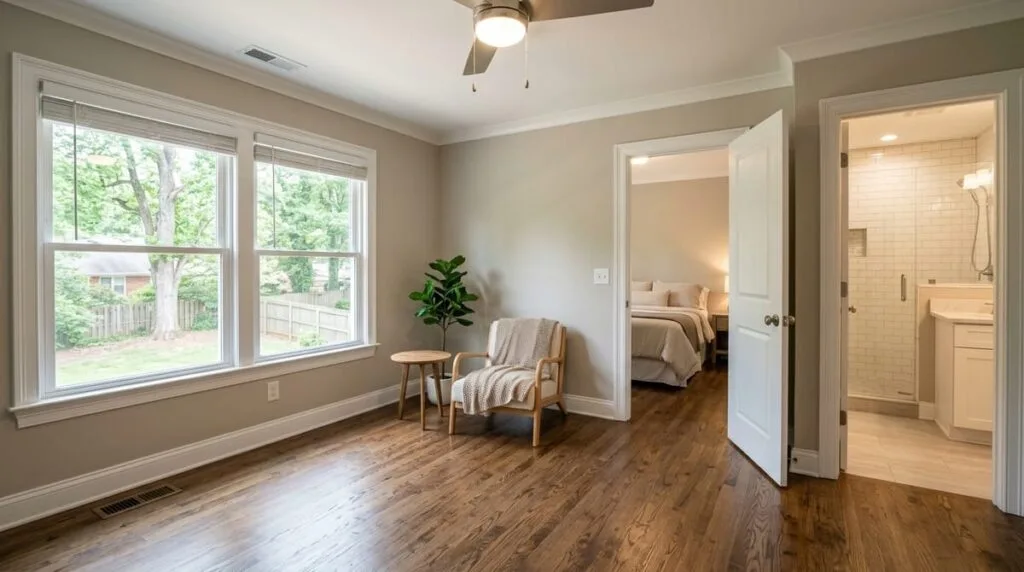
Home Addition Return on Investment by Addition Type
Our North Georgia home addition cost guide breaks down current pricing by project type. Here’s how home addition return on investment breaks down:
| Addition Type | Typical ROI at Resale |
| Primary Suite Addition | 60–70% |
| Room Addition (bedroom) | 65–75% |
| Garage Addition | 60–70% |
| In-Law Suite / ADU | 65–80%+ |
| Sunroom | 50–60% |
Source: Remodeling Magazine Cost vs. Value Report, contextualized for the Atlanta market.
If a room addition pushes your total home value more than 15–20% above neighborhood comps, expect a reduced resale return. Not sure which addition type makes the best investment? Our guide to 12 types of home additions for Atlanta homeowners covers every option with pros, cons, and cost context.
Frequently Asked Questions
How much does a home addition cost in the Atlanta area?
In Metro Atlanta and North Georgia suburbs, home addition cost runs $150–$300 per square foot depending on project type, finish level, and structural complexity. Our detailed cost guide covers current pricing by room type, including the cost of adding a room as a bump-out or full addition.
Will a home addition increase my home’s value?
Home addition value increase typically returns 60–75% of cost in appraised value at resale. In-law suites and ADUs often show stronger long-term returns when rental income is factored in. The key caveat: additions pushing total home value more than 15–20% above neighborhood comps return less at resale.
Is it cheaper to add on or move?
For most North Atlanta homeowners holding low-rate mortgages from 2020–2022, adding on pencils out better. Absorbing a new 7%+ mortgage rate plus transaction costs on both sides costs more than home addition financing in most cases.
Is a second story addition worth it compared to a ground-floor room addition?
A second story addition worth it depends on your site constraints and budget. It costs more per square foot than a ground-floor bump-out due to structural complexity, but is often the best option when lot size or setbacks limit your footprint.
What should I look for when choosing a home addition contractor?
Verify permits, liability insurance, workers’ compensation, and a written project schedule. Ask about home addition financing options, warranty coverage, and whether you’ll have a single point of contact. A contractor offering 3D renderings upfront removes the biggest source of homeowner regret: unclear expectations.
Can I stay in my home during a home addition?
In most cases, yes. Room additions and primary suite additions are built as separate structures that connect once framing is complete, keeping interior disruption minimal.
*Still weighing whether a home addition is the right move? Let’s walk through the numbers together, no charge, no pressure.*

Planning a project?
Skip the guesswork, get real numbers.
Reading is great. A clear, itemized estimate is better. Tell us what you have in mind.