Choosing sustainable building materials for your Metro Atlanta home remodeling project means balancing environmental responsibility with practical performance in Georgia’s humid subtropical climate. Homeowners in Woodstock, Canton, Marietta, and surrounding communities face unique challenges, from termite resistance to humidity control, that make eco-friendly material selection critical for long-term success.
This guide examines proven green building products that perform reliably in North Atlanta’s climate, with transparent insights into durability and real-world performance data from local projects.
Why Metro Atlanta Homeowners Choose Sustainable Building Materials
Sustainable materials deliver measurable benefits beyond environmental impact. In Georgia’s climate, the right eco-friendly materials directly affect your energy bills, indoor air quality, and home value.
Long-Term Savings With Energy Efficient Materials
Energy-efficient materials cut cooling costs during Atlanta’s hot summers. Metal roofing reflects heat while high-performance insulation maintains comfortable temperatures year-round. Metal roofing lasts 50+ years versus asphalt shingles’ 15-20 years.
The economics become clear when you consider lifecycle performance. A material costing slightly more upfront but lasting three times longer while reducing energy bills annually delivers substantial savings.
Health Benefits With Non-Toxic Materials
Low-VOC paints eliminate toxic off-gassing affecting indoor air quality. Volatile Organic Compounds continue releasing harmful chemicals for months after application, contributing to respiratory issues and headaches. Zero-VOC formulations provide identical coverage without these risks.
Mold-resistant materials prove essential for Georgia’s humidity levels. Natural materials like cork and bamboo contain antimicrobial properties that resist bacterial growth. When humidity regularly exceeds 60% during summer, these biodegradable products become invaluable for basement remodeling and other moisture-prone areas.
Increasing Your Home’s Value
Buyers in Alpharetta, Roswell, and East Cobb actively seek homes with sustainable features. Market data shows eco-friendly homes command premium resale values, with energy efficient materials providing competitive advantages in listings.
Best Sustainable Building Materials for Atlanta’s Climate
| Material | Lifespan | Climate Benefit | Maintenance |
| Bamboo Flooring | 25-50 years | Moisture-resistant, harder than oak | Re-seal every 5-7 years |
| Cork Flooring | 20-30 years | Antimicrobial, natural insulation | Seal every 3-5 years |
| Recycled Steel Roofing | 50-70 years | Reflects heat, reduces cooling 10-25% | Minimal, periodic inspection |
| Reclaimed Wood | 50+ years | Termite-treated, unique character | Standard wood care |
| Cellulose Insulation | 20-30 years | Moisture-regulating, R-3.5/inch | None after installation |
| Recycled Glass Countertops | 30+ years | Heat/scratch resistant | Seal every 2-3 years |
Bamboo and Cork for Humidity Resistance
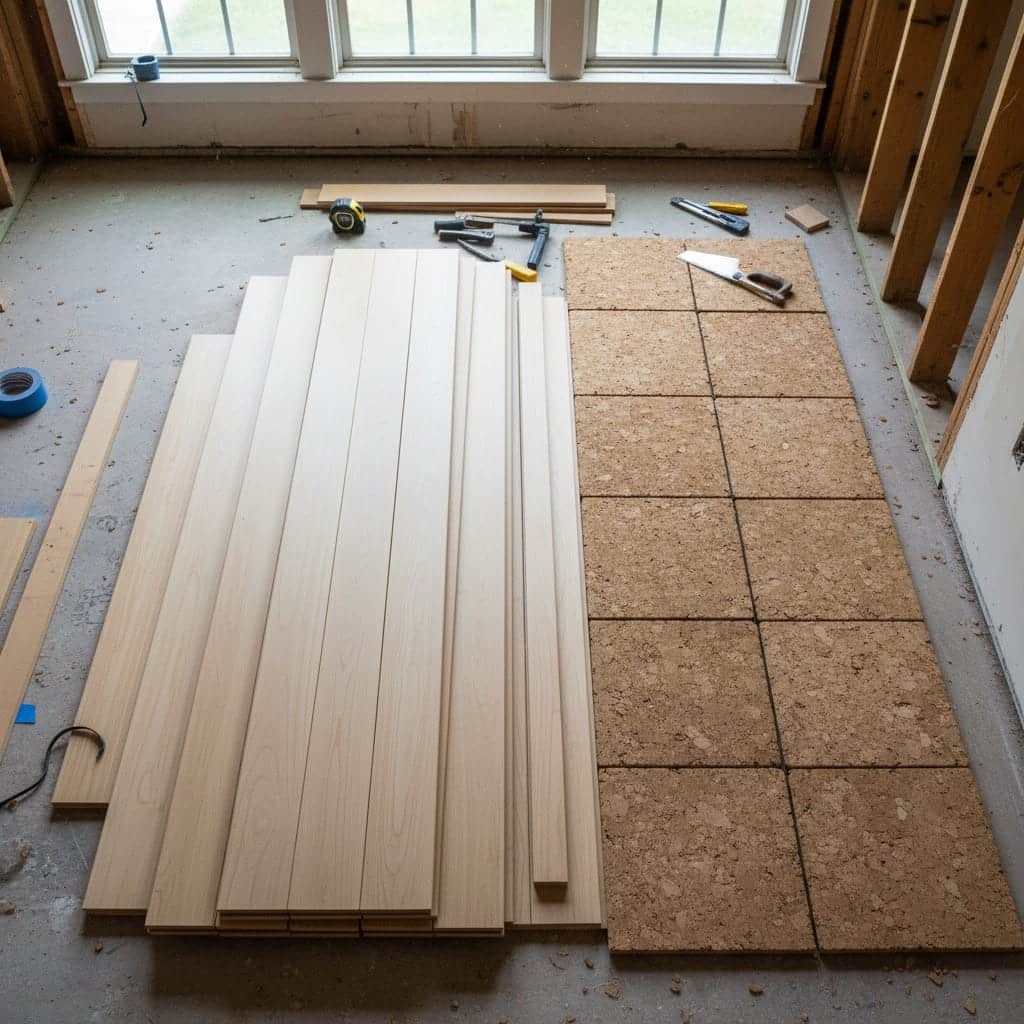
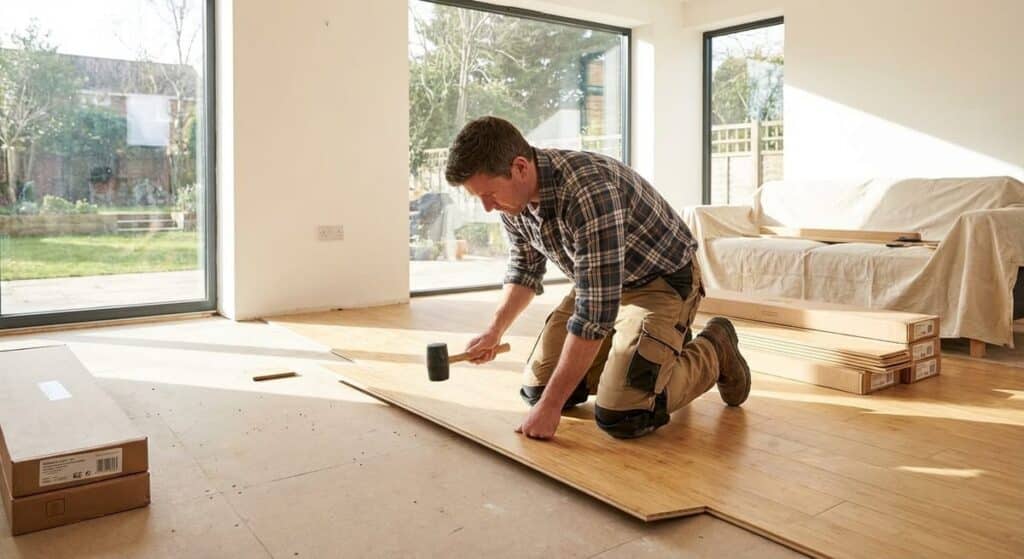
Bamboo naturally resists moisture when properly sealed, with hardness exceeding many hardwoods (1,300-1,400 Janka rating). Installation requires 72-hour acclimation to prevent warping. Once installed with moisture barriers, bamboo performs exceptionally in Georgia’s climate.
Cork offers natural antimicrobial properties ideal for bathrooms and basement finishing. Its cellular structure creates millions of air pockets providing insulation, sound dampening, and cushioning while absorbing moisture during humid periods and releasing it during drier months.
Reclaimed Wood for Character and Sustainability
Salvaged from old barns, factories, and demolished Atlanta buildings, reclaimed wood brings unique character while eliminating new timber harvest impact. Each piece tells a story through patina, nail holes, and weathering patterns.
Inspect reclaimed wood for previous termite damage—this is critical in Georgia. Professional inspection should verify no active infestations exist. Treatment with borate-based solutions creates protection without harsh chemicals. Reputable suppliers provide kiln treatment documentation (160°F for 24+ hours), ensuring structural stability.
Reclaimed wood excels in accent walls, ceiling beams, and custom cabinetry for whole-home remodeling.
Recycled Steel and Metal Roofing Systems
Metal roofing delivers 50-70 years performance versus asphalt shingles’ 15-20 years, reflecting Atlanta’s summer heat to reduce cooling costs 10-25%. Standing seam metal roofing features interlocking panels with concealed fasteners eliminating leak penetration points.
Termite-proof and fire-resistant, metal roofing carries Class 4 impact ratings withstanding Georgia’s hail and wind events. This highest residential rating means withstanding 2-inch hail stones. For tornado-prone North Georgia areas, wind resistance exceeds 140 mph.
Modern recycled steel contains 25-95% recycled content and remains fully recyclable at end of life. Consider it for exterior updates and home additions requiring new roofing systems.
Low-VOC Paints and Finishes
Zero-VOC formulas eliminate toxic off-gassing while delivering comparable performance to traditional paints. Traditional paints contain 50-200 g/L VOCs, low-VOC options contain <50 g/L, and zero-VOC formulations contain <5 g/L.
Mildew-resistant formulas prove essential for Georgia bathrooms, including EPA-registered antimicrobial agents preventing mold growth without compromising zero-VOC status. Major Atlanta retailers stock brands like Benjamin Moore’s Natura, Sherwin-Williams’ Harmony, and Behr’s Premium Plus Zero VOC.
Cellulose Insulation for Georgia Homes
Cellulose insulation from recycled paper provides R-3.5/inch while naturally regulating moisture, perfect for Georgia basements. Dense-pack application eliminates air gaps reducing traditional batt insulation effectiveness.
Cotton and wool insulation offer superior moisture management versus fiberglass. Denim insulation from recycled blue jeans contains no formaldehyde or VOCs while providing R-3.7/inch. These materials naturally absorb and release moisture vapor without degrading.
Proper insulation reduces HVAC costs 15-30%. Professional installers understand local building codes and can design systems managing both heating season vapor drive and cooling season condensation risks.
Use our hiring a remodeling contractor guide to help evaluate who you work with.
Eco-Friendly Countertops and Flooring Systems
Recycled glass countertops combine heat and scratch resistance with stunning visual appeal, containing 85% post-consumer glass in cement or resin binders. Paper composite options like Richlite provide waterproof surfaces ideal for kitchen remodeling, resisting heat to 350°F.
Polished concrete with recycled aggregate works exceptionally for basements, offering durability and easy maintenance. When sealed properly, concrete resists moisture while providing thermal mass moderating temperature swings. Most options require sealing every 2-3 years in humid climates.
What Sustainable Materials Really Cost
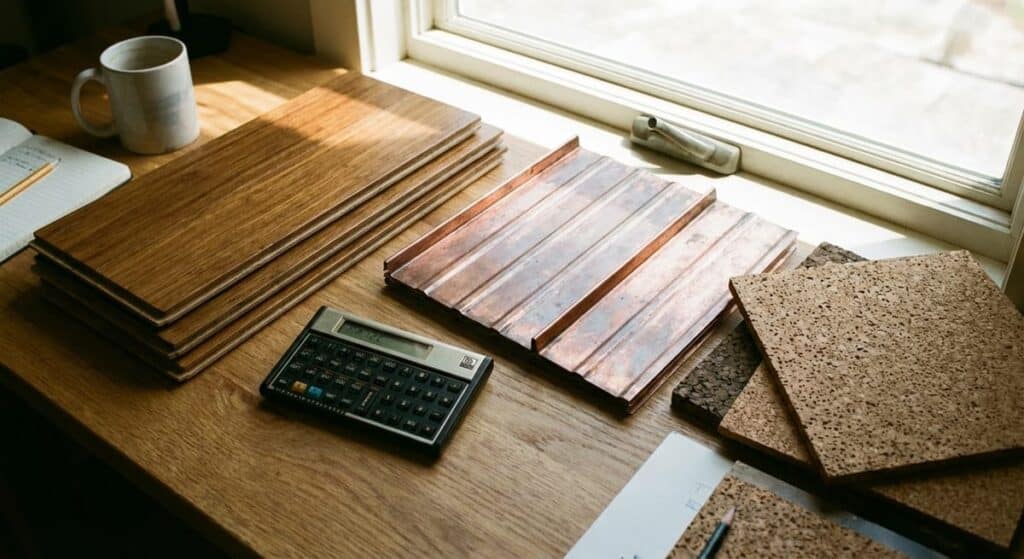
Sustainable materials cost slightly more upfront but deliver savings through lower energy bills and reduced maintenance over their lifespan.
Bamboo flooring falls within comparable range to traditional hardwood. Cork pricing falls below traditional hardwood while offering superior comfort and acoustic properties.
Metal roofing requires higher upfront investment but lasts three times longer than asphalt shingles. Homes with metal roofing see 15-20% summer cooling cost reductions.
Low-VOC paints compare favorably to standard options. Recycled glass countertops align with mid-range granite pricing while offering superior heat resistance.
Return on Investment for Common Projects
Kitchen Remodeling: Sustainable material packages add modest premiums recovered through annual energy savings plus increased resale value. Georgia Power offers rebates for insulation upgrades and energy-efficient appliances, while federal tax credits return percentages on solar installations.
Recycled Steel Roofing: Despite higher initial investment, metal roofing’s extended lifespan creates neutral lifecycle costs accounting for multiple traditional roof replacements. Energy savings throughout ownership and insurance premium discounts for impact/fire resistance add economic benefits.
Basement Finishing: Moisture-resistant eco-friendly materials prevent costly future mold remediation. Basement finishing with proper moisture barriers proves more economical than dealing with water damage later.
How to Choose the Right Materials for Your Remodeling Project
| Room Type | Recommended Products | Key Considerations |
| Kitchen | Bamboo/cork floors, recycled glass counters, FSC cabinets | Moisture, heat, sanitation |
| Bathroom | Cork/bamboo floors, glass tile, mildew-resistant paint | Constant moisture exposure |
| Basement | Polished concrete, cellulose insulation, metal framing | Below-grade humidity |
| Exterior | Metal roofing, fiber cement siding | Weather resistance, durability |
Kitchen Remodeling Material Recommendations
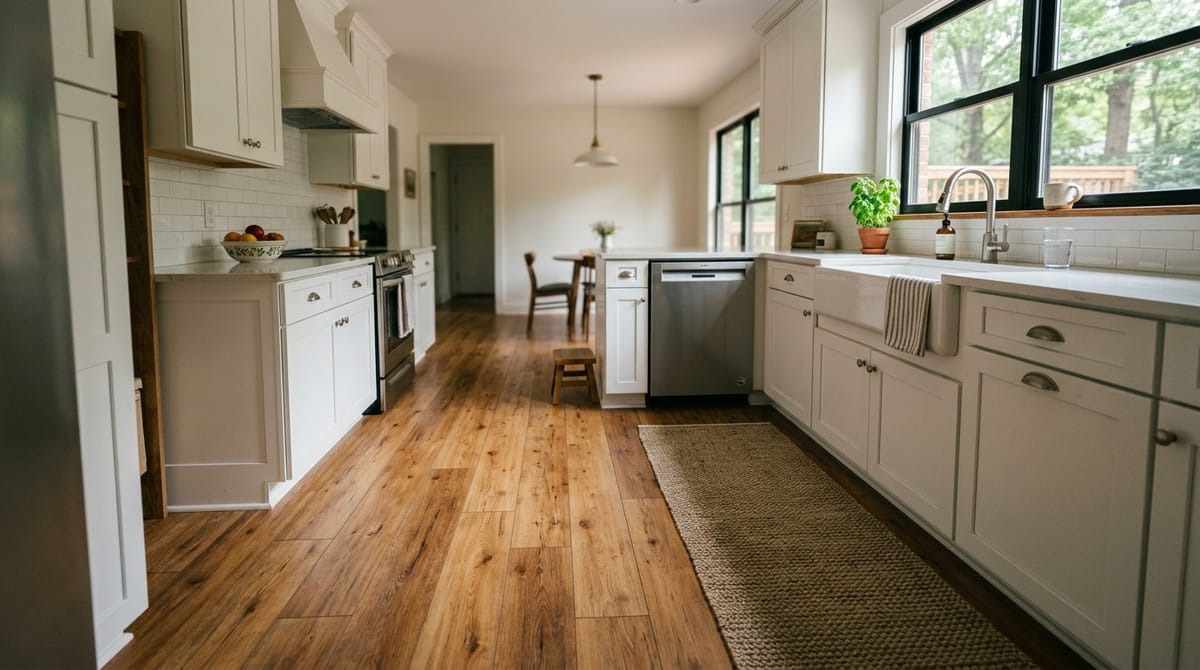
Kitchens generate high humidity from cooking, requiring water-resistant, easy-clean surfaces. Bamboo or cork flooring handles moisture when properly sealed, providing comfortable standing surfaces. Natural antimicrobial properties resist bacterial growth around food preparation areas.
Recycled glass or paper composite countertops resist heat and stains. FSC-certified cabinets ensure responsible sourcing. Low-VOC paints maintain air quality in spaces where families gather most.
Bathroom Renovation With Moisture-Resistant Materials
Bathrooms face constant moisture exposure, making material selection critical for preventing mold. Cork or bamboo flooring provides natural moisture resistance while offering warm surfaces underfoot. Proper installation with moisture barriers and adequate ventilation ensures these products thrive.
Recycled glass tile delivers beauty and durability handling direct water exposure. The material’s non-porous surface prevents moisture absorption. Low-VOC mildew-resistant paint formulations combine zero off-gassing with antimicrobial protection.
Basement Finishing Materials for Georgia
Below-grade spaces demand specialized materials handling moisture challenges. Polished concrete floors eliminate water damage concerns while providing easy-to-clean surfaces. Thermal mass moderates temperature swings, creating year-round comfort.
Cellulose or wool insulation manages humidity without compromising performance. Moisture-resistant drywall alternatives and recycled steel framing prevent mold issues. Metal framing maintains structural integrity regardless of humidity levels.
Making Sustainable Materials Work for Your Project
Selecting the right options for your Metro Atlanta home requires understanding how different green building products perform in Georgia’s climate. The materials discussed deliver proven results across hundreds of local projects, combining environmental responsibility with practical durability.
Focus on humidity resistance, termite prevention, and energy efficiency. These three factors matter most in North Atlanta’s climate.
Start material selection early in project planning. Many sustainable options require longer lead times than traditional materials.
Ready to discuss sustainable material options for your specific project? Contact us for a free consultation where we’ll review your goals and recommend eco-friendly materials matching your budget, timeline, and performance requirements.
Frequently Asked Questions
Are sustainable building materials more affordable than traditional options in Atlanta?
Sustainable materials cost slightly more upfront but save money through lower energy bills and reduced maintenance over their lifespan. Many eco-friendly options like bamboo flooring and low-VOC paints price comparably to traditional alternatives when you factor in longevity and performance benefits.
Which sustainable materials hold up best to Georgia’s humidity and heat?
Materials like bamboo, cork, recycled steel roofing, and cellulose insulation carry specific ratings for humid subtropical climates and outperform traditional options in moisture resistance and heat management.
What are the best insulation and basement materials for Georgia homes?
Polished concrete floors, cellulose insulation, recycled steel framing, and moisture-resistant drywall alternatives prevent mold growth and handle below-grade humidity effectively, creating healthy finished basements.
Do sustainable materials increase home resale value in North Atlanta?
Yes. Homes with energy-efficient, eco-friendly materials command premium prices in Alpharetta, Roswell, and East Cobb markets, with buyers actively seeking these features.
How do I choose sustainable materials that require less maintenance in Atlanta’s climate?
Bamboo flooring requires re-sealing every 5-7 years, recycled glass countertops need sealing every 2-3 years, and metal roofing requires only periodic inspections. Most sustainable materials’ natural properties reduce maintenance compared to traditional options.