 Est. 2003
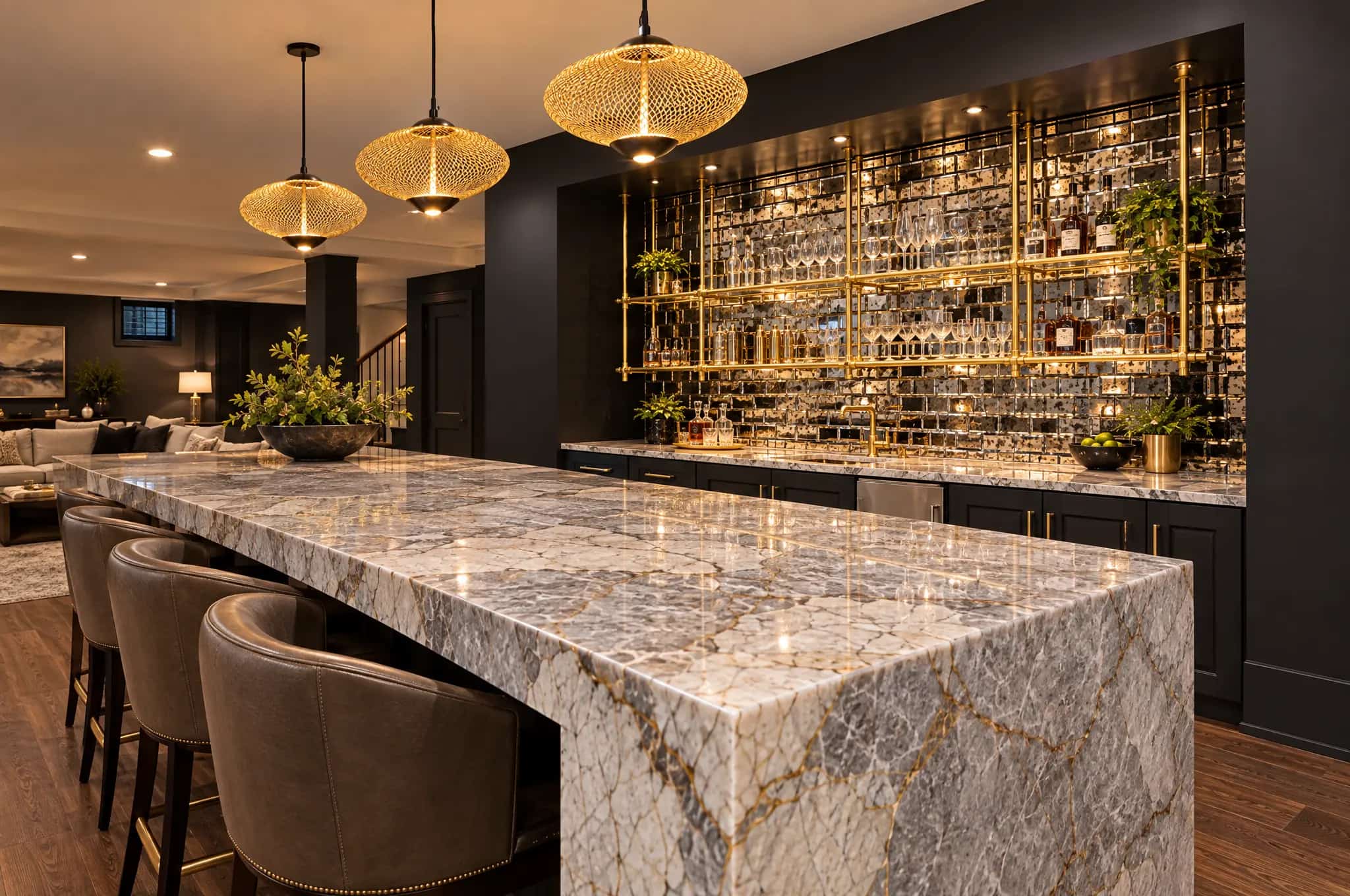
Basement finishing in Atlanta, GA.
We finish in-town basements, mostly on Atlanta's north side, in houses from 1920s bungalows on hand-dug cellars to new builds on teardown lots. Our crew drives down to in-town jobs from Woodstock, and there is no Atlanta office.
Basement finishing contractor · Atlanta, GA
Basements finished for Buckhead and Morningside houses.
In-town jobs range from cellars under half of a Morningside bungalow to postwar Collier Hills ranches that drop a full story to the back yard. New houses in Garden Hills are often handed over with the lower level unfinished.
Every job runs on the same contract, with fixed line-by-line pricing. We file the City of Atlanta permit ourselves. You get a job-site photo every working day and a one-year written warranty on everything we build.
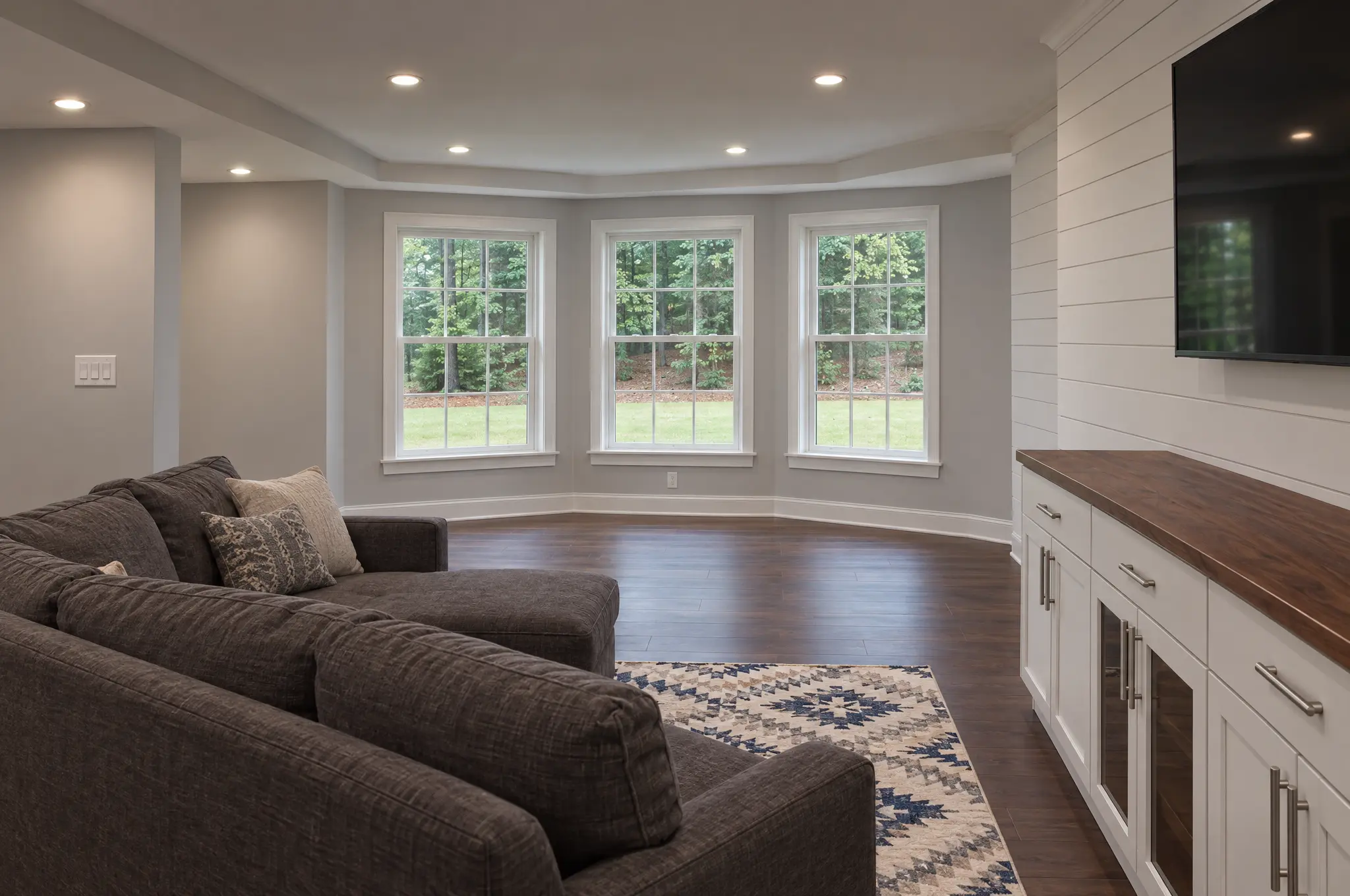
Basement types
Three kinds of basement in Atlanta.
In-town lots sit on ridges and fall toward Peachtree Creek, Nancy Creek and their branches. How much of a lower level gets daylight depends on the slope. What is under it depends on the age of the house.
Cellar or partial basement
Many 1920s and 1930s houses in Morningside, Virginia-Highland and Peachtree Hills sit on a cellar dug under part of the footprint. Crawlspace covers the rest. Expect low ceilings, brick or block walls and an old floor. The plan depends on how much can be dug out or underpinned.
Daylight lower level
Ranches from the 1940s through the 1960s around Collier Hills, Sherwood Forest and Chastain Park were often set into the hill. One long wall stands above grade. These usually have daylight and an escape opening already, so they are the simplest to finish.
New full basement
Infill houses across Buckhead and Garden Hills are often built over a full poured basement left unfinished. They have good ceiling height and sound walls. The work is laying out rooms around a mechanical room and plumbing rough-ins the builder placed without a floor plan.
What we build
Basement finishing work for Atlanta homes.
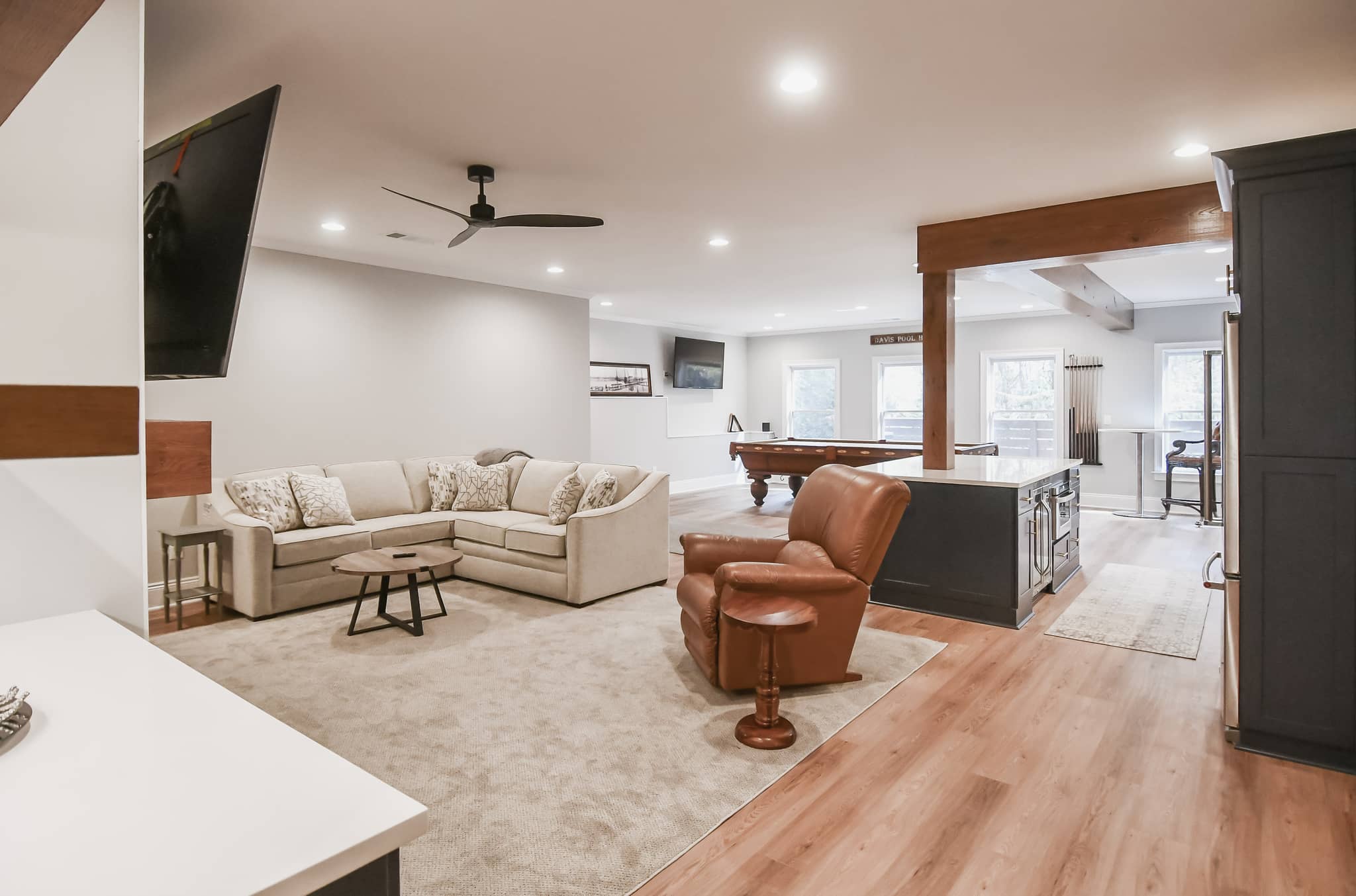
Family Room & Wet Bar
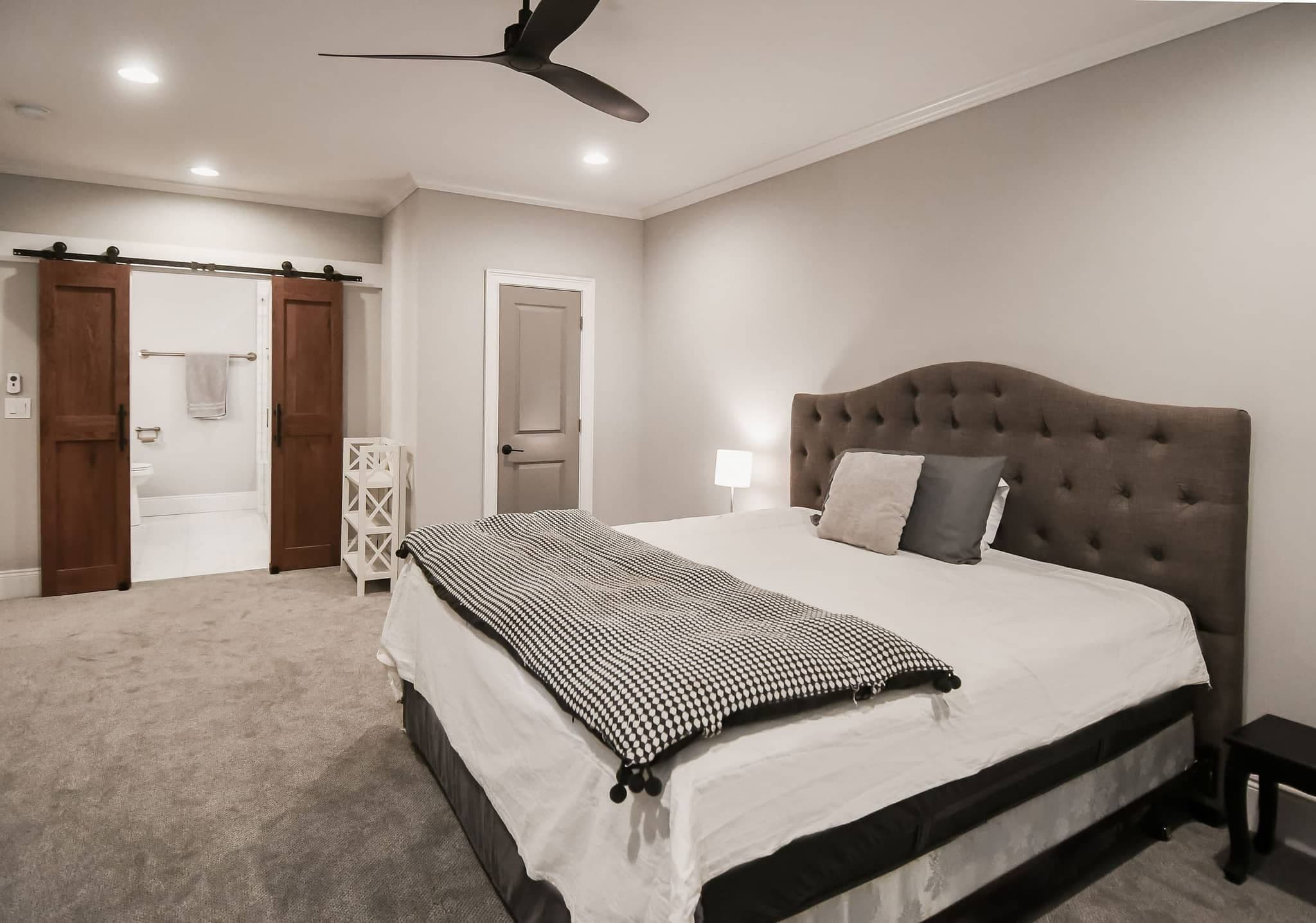
In-Law & Teen Suites
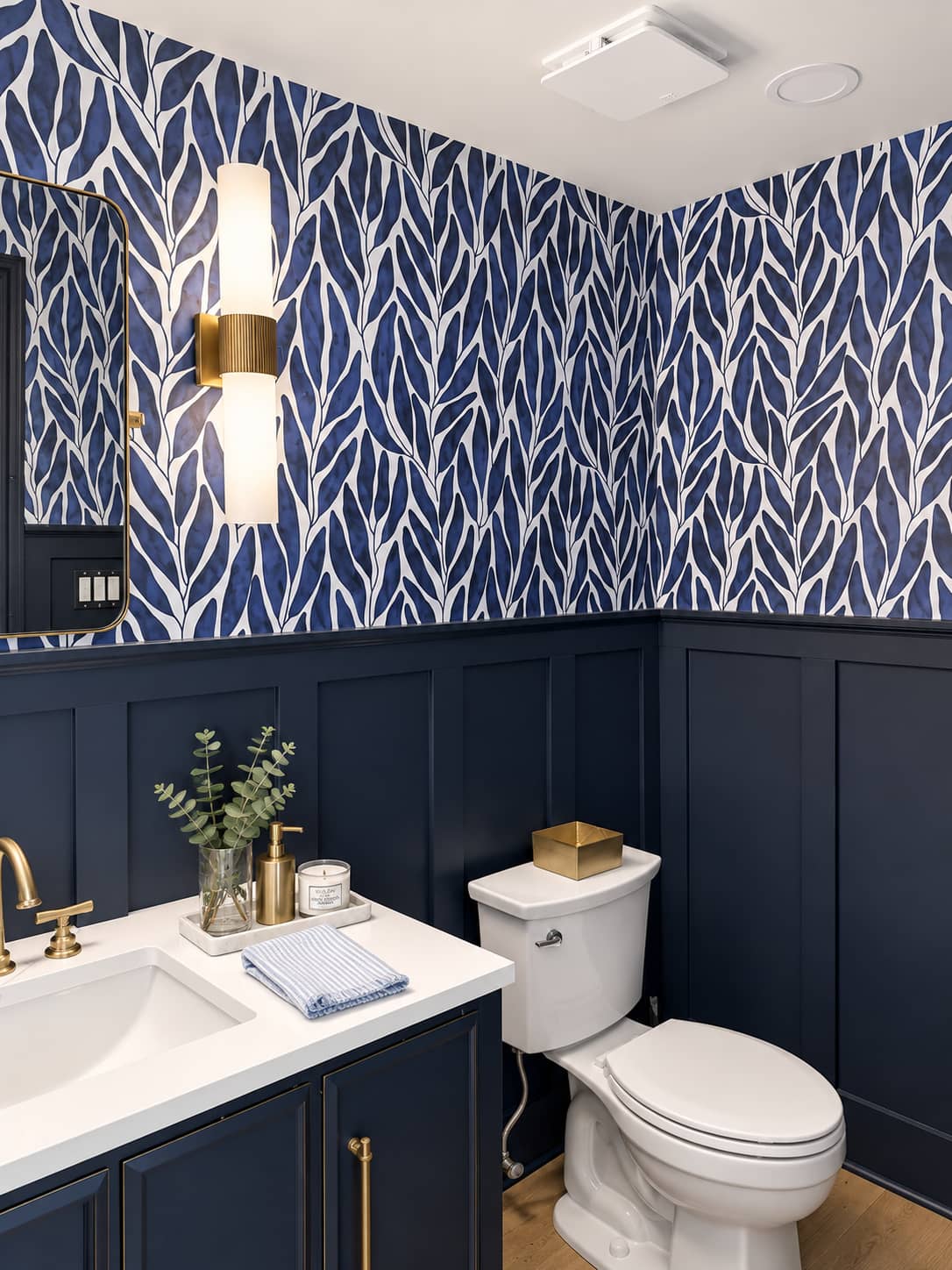
Basement Bathrooms

Home Theaters
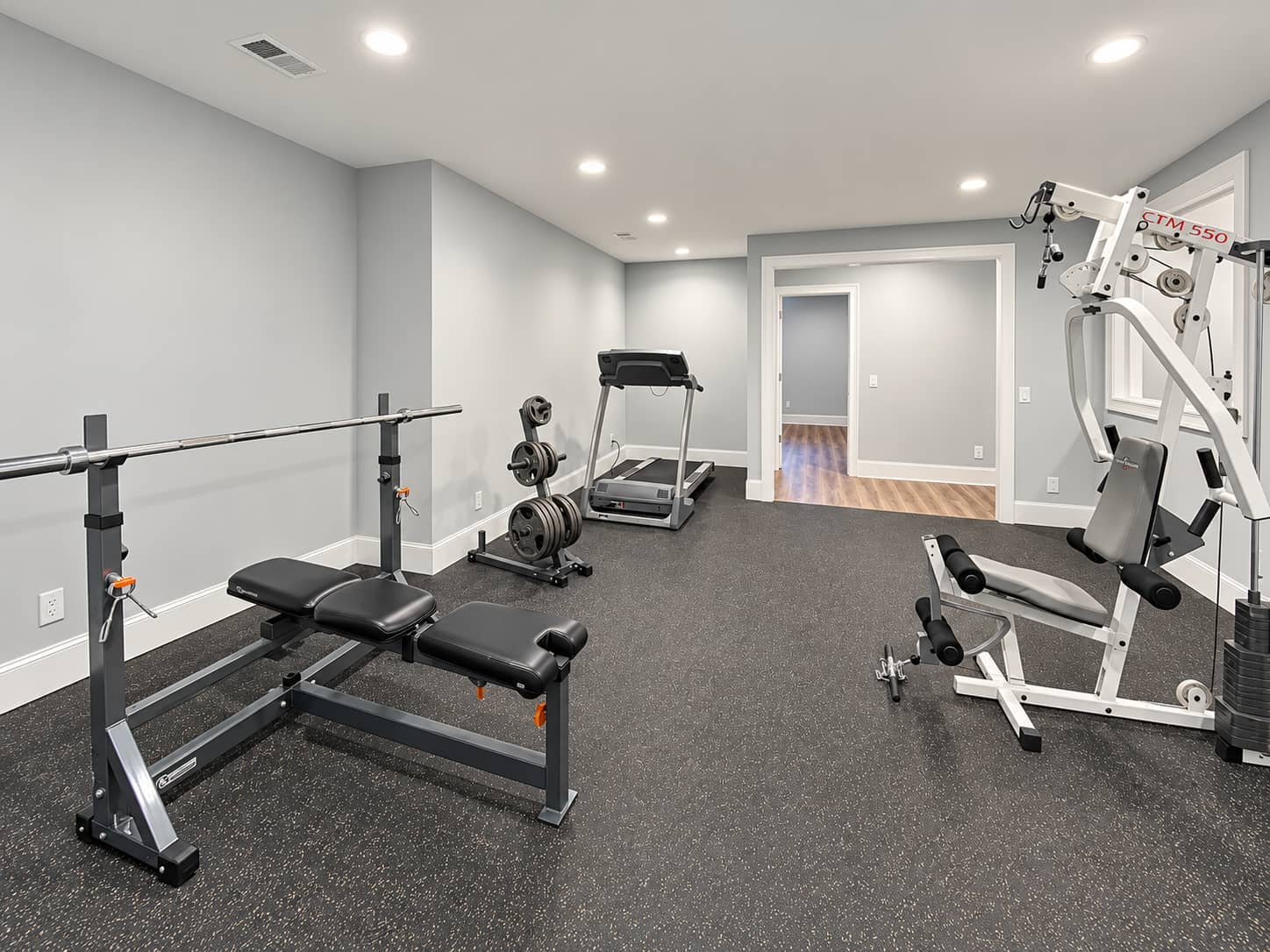
Home Gyms
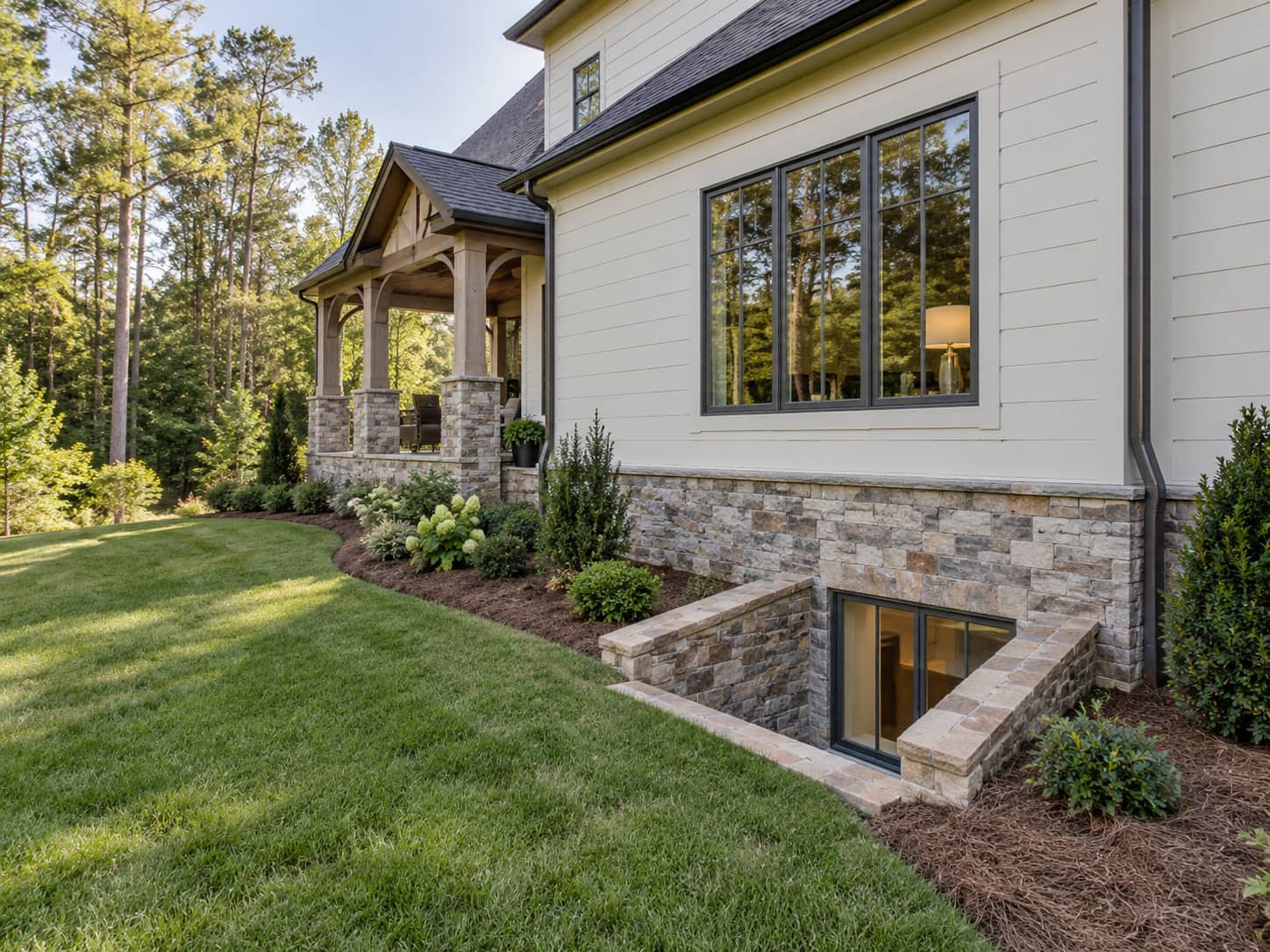
Egress Windows
Included in every basement
One fixed price for every trade in the basement.
- Design & lower-level layout
- Permit application & inspections
- Exterior grade & drainage review
- Framing & moisture-smart wall assembly
- Electrical, recessed & accent lighting
- HVAC supply, return & balancing
- Plumbing, baths & wet bars
- Insulation & sound separation
- Flooring, ceilings, trim & paint
- Egress windows & wells where required
- Daily cleanup & job-site photos
- One-year written warranty
Local conditions
Basement finishing for in-town Atlanta houses.
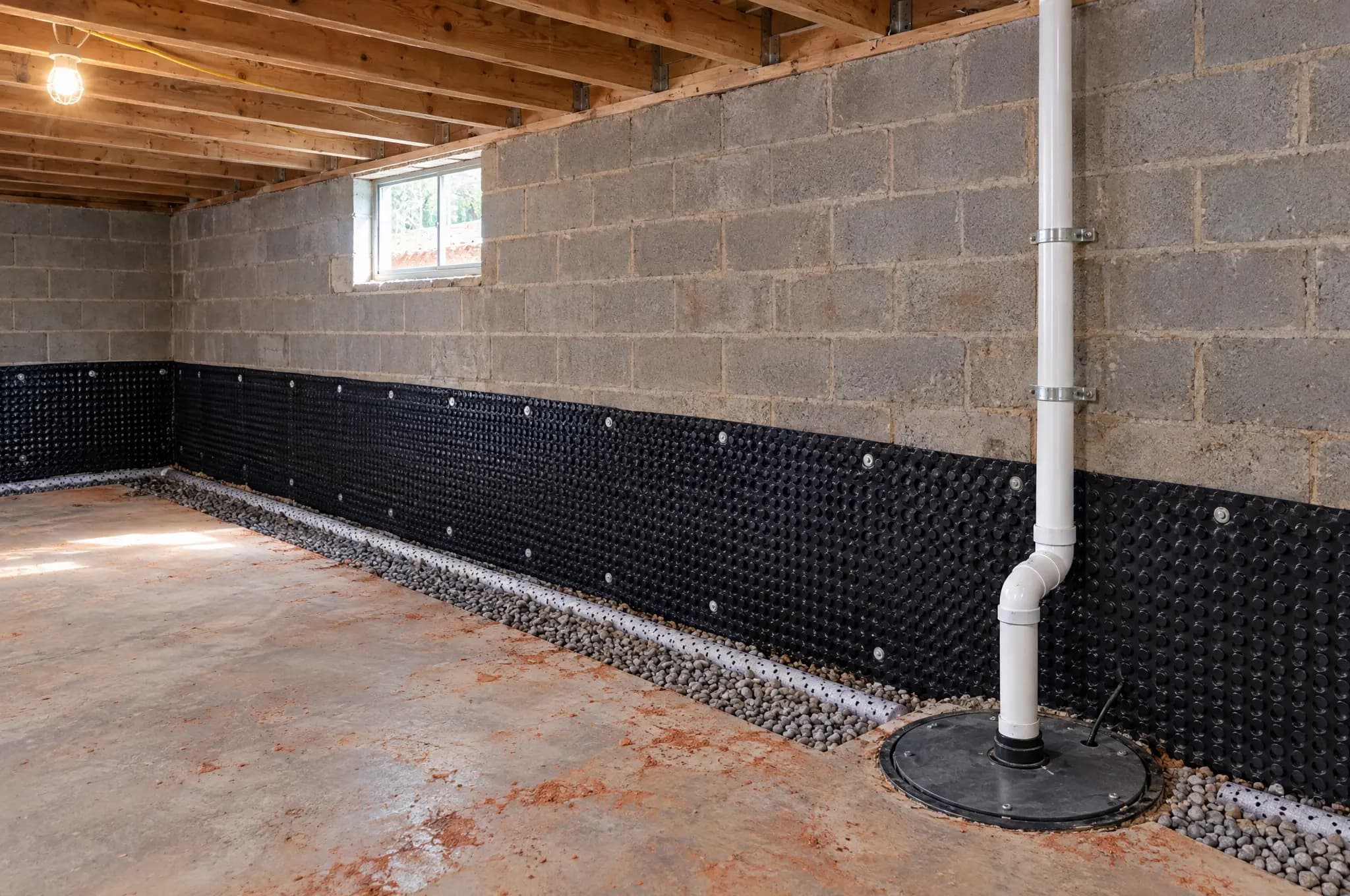
Red clay holds moisture against a foundation wall, so we deal with water first. On a lot that falls toward one of the creeks, runoff collects at the lowest corner of the house. Older foundations seldom had a perimeter drain or a membrane. Before any framing, we trace grading, gutters and every downspout outlet and decide whether the wall needs an interior drain to a sump.
A 1920s cellar has a low ceiling and an uneven floor. Its ceiling often carries galvanized supply lines and cast-iron drains that are most of a century old. Replacing them is cheapest while that ceiling is open, so we price the replacement as its own option on the first proposal.
The city's tree rules can apply to a window well dug beside a mature oak. In a designated historic or landmark district, any new exterior opening gets a second review. We confirm both before the design is final.
Our process
The sequence for an Atlanta basement finish.
Read the lot after rain
We note where the ground falls, where each downspout empties and which corner stays wet. That sets the drainage plan before anyone draws a floor plan.
Measure the clear height
We measure under the lowest beam, duct or pipe. In a pre-war cellar, that measurement tells us whether the room can be a den or a gym, or should be finished as storage.
Check the district and the trees
We confirm whether the parcel sits in a designated historic or landmark district. If a window well or exterior door comes near a tree, we book the arborist meeting.
Price egress and old plumbing
A bedroom needs a compliant escape opening, and an older house often needs its supply and drain lines replaced. Both go on the first proposal as their own lines.
File with the Office of Buildings
The application goes into the city's Accela Citizen Access portal under our license, with the drawings the Residential Division reviews.
Build, inspect and send daily photos
Framing and rough-ins come first, with inspections in the order the city publishes for residential work. Then finishes, the final inspection and a walkthrough with you.
Permits
Permitting a basement finish with the City of Atlanta.
Atlanta issues its own building permits through the Department of City Planning's Office of Buildings, at City Hall on Trinity Avenue. The city issues them on both sides of the county line. The city reaches into DeKalb County on its east side, and the north-side neighborhoods we work in are in Fulton County. Applications go through Accela Citizen Access, the city's online portal, and the office's Residential Division reviews residential plans.
New applications filed since February 2026 are reviewed under the 2024 International Residential Code with Georgia amendments. A building permit that sits for six months without inspection activity is at risk of expiring, so we keep inspections moving through the whole job.
Who issues it
City of Atlanta Office of Buildings, 55 Trinity Avenue SW, Suite 3900. Main line 404-330-6150, Residential Division 404-330-6906. atlantaga.gov
Accela Citizen Access
The city's online portal for applications, payments and inspection requests, open around the clock. We file under our license. atlantaga.gov
The arborist meeting
Since June 2025, a permit application with a possible impact on trees needs a completed meeting with the Arborist Division first. Window wells and new exterior doors near mature trees can trigger it. atlantaga.gov
Historic and landmark districts
In a designated district, exterior changes go to the city's historic preservation staff or the Urban Design Commission. A new egress opening is an exterior change. atlantaga.gov
Budget
What a finished basement costs in Atlanta.
Artistic Construction finishes basements at $75 to $125 per square foot, priced at our own finish standard. A dry, standard basement lands inside that band; moisture correction, a new egress opening and structural work are what move it.
Water and the age of the house change an in-town price more than anything else. A newer basement with dry poured walls and good height is a straightforward finish. A 1920s cellar that needs an interior drain, a sump, new supply lines and a leveled floor costs more. The proposal should show each of those on its own line.
Lot access is the next factor. Narrow side yards, street parking and protected trees slow deliveries and any exterior digging, so we price that time in from the start.
What costs the most
Interior drainage and a sump, egress cuts in brick or block walls, replacing old plumbing overhead, and bathrooms.
Why a newer basement costs less
An infill house with a full poured basement usually has height, dry walls and rough-ins in place. That removes the most expensive lines from the proposal.
Planning guides
Basement finishing guides to read first.
How to compare basement quotes
Set two in-town bids side by side, with water management, egress and old plumbing on lines of their own.
Read the guide →Cellar vs. basement
How height above grade, light and egress decide whether a cellar can become living space.
Read the guide →Basement bathroom cost in Atlanta
What a lower-level bath costs when the drain has to be cut into an old floor.
Read the guide →Egress windows and permits in Georgia
The escape-opening rules that decide whether a basement bedroom passes.
Read the guide →Basement remodel cost calculator
Put in your square footage and scope for a starting range.
Open the tool →Where we work
Basement finishing in Buckhead and in-town Atlanta.
Areas we serve · Basement finishing overview · Basement finishing cost in Georgia
In their words
Reviews from finished basements.
A whopping amount of ZERO stress. You are in truly good hands from start to finish.
Very responsive, patient with our questions, and made suggestions that improved our project.
Exceptional professionalism, expertise, and a genuine commitment to delivering quality service.
Atlanta questions
Questions about basement finishing in Atlanta.
You are based in Woodstock. Do you work in-town?+
Yes, mostly on the north side of the city, in Buckhead, the neighborhoods along Peachtree Creek, Morningside and Virginia-Highland. You get the same daily photo and one-year warranty as on any job.
Our basement is a cellar under half the house. Can it be finished?+
Often, if the clear height allows. If there is enough height under the beams, the cellar can become a finished room once water is handled. If there is not, the floor can sometimes be lowered by underpinning the walls, with an engineer involved. Our cellar vs. basement guide covers how to tell which you have.
Why do quotes for an old cellar and a new infill basement differ so much?+
An old cellar needs work a newer poured basement in Buckhead or Garden Hills usually does not, and a drywall-and-carpet bid leaves it out. A 1920s cellar in Morningside or Virginia-Highland often needs an interior drain, a sump and a leveled floor. Its galvanized supply lines and cast-iron drains are best replaced while the ceiling is open. Ask every contractor to show water management, egress and plumbing replacement as separate lines, which the basement finishing cost guide walks through.
Does Fulton County or the city issue the permit?+
The City of Atlanta, through its Office of Buildings, for any parcel inside the city limits, whether it sits in Fulton or DeKalb. The city also recognizes homeowner permits. On one, the homeowner takes the contractor's place and must be on site for inspections that require the permit holder. We file under our license and meet every inspection ourselves.
Why would an arborist need to see a basement project?+
Only when the work may affect trees. The city then requires a meeting with its Arborist Division before it accepts the permit application. A finish that stays inside the walls does not trigger it. An egress well, a new walkout door or a regraded drainage swale near a mature oak can, so we check before the design is final.
Atlanta & nearby
What will your Atlanta basement cost?
Tell us about your Atlanta basement and we will come back with clear costs and a realistic timeline, line by line.
- ✓ Walkout & daylight basements
- ✓ In-law suites & guest baths
- ✓ Egress, drainage & permits
- ✓ Fixed pricing, line by line