 Est. 2003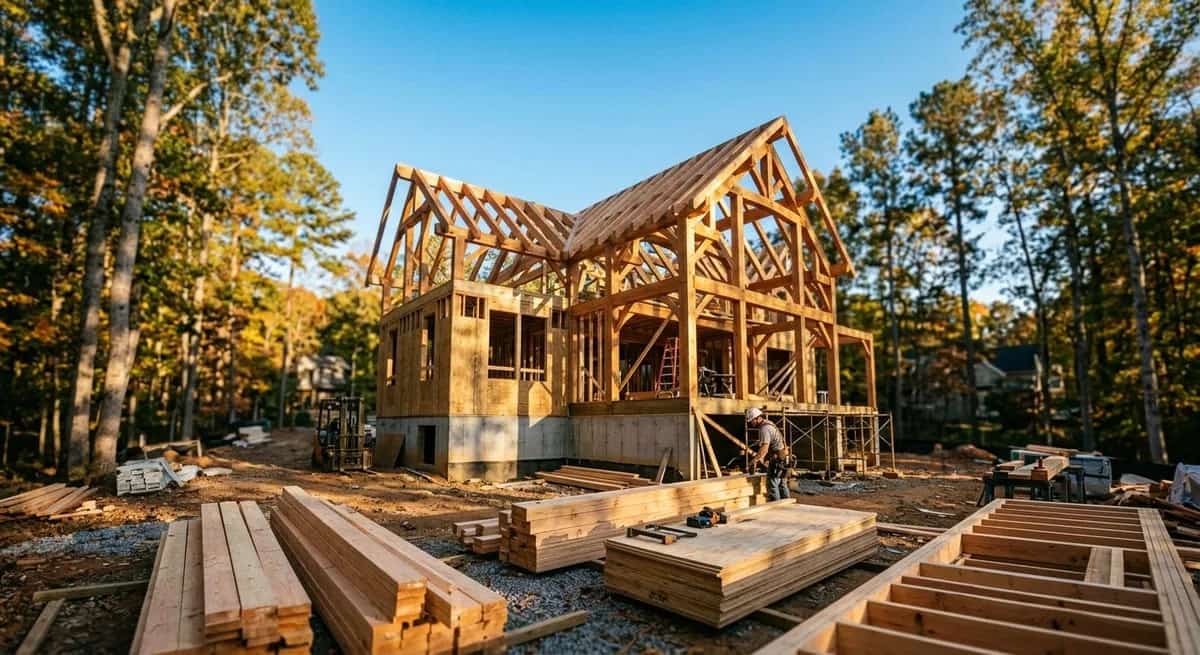

Building a custom home in North Atlanta is one of the most financially significant decisions you'll make, and most buyers enter the process unclear on a fundamental question: how does a custom home construction loan actually work? A construction loan is not a mortgage on a finished house. The mechanics, qualification requirements, and draw schedule are different, and understanding them before you sit down with a lender puts you in a far stronger position.
What a Custom Home Construction Loan Is and How It Compares to a Mortgage
A standard mortgage funds the purchase of an existing home. A custom home construction loan (sometimes called a construction-to-permanent loan or new home construction financing) funds the building process itself, disbursing money in stages as construction progresses, then converting to a permanent mortgage once your home is complete and a certificate of occupancy is issued. If you're planning a basement as part of the build, our guide to egress windows and permits for a finished basement in Georgia explains what the county will look for before issuing final approval.
During the build, you pay interest only on funds that have been drawn, not the full loan amount, keeping carrying costs considerably lower than a fully funded loan.
One-Time Close vs. Two-Close Construction Loans
| One-Time Close | Two-Close | |
|---|---|---|
| Closings | Single closing | Two separate closings |
| Rate Lock | Permanent rate locked upfront | Rate set at second closing |
| Best For | Fixed budget, signed builder contract | Uncertain timeline or final loan amount |
For most North Atlanta buyers building with a signed contract and defined scope, a one-time close construction loan eliminates duplicate closing costs. If your timeline is less certain, a two-close structure gives more flexibility at the cost of additional closing expenses.
Do You Qualify? Down Payments, Credit Scores, and Land Equity Explained
How Much Do You Need for a Construction Loan Down Payment?
Construction loans are underwritten on a loan-to-cost (LTC) basis. Most lenders require 10-20% of total project cost, including land, site work, and construction, in liquid funds or equivalent equity. This is one of the key construction loan requirements that separates custom build home financing from a conventional purchase mortgage.
Reviewing custom home cost data for North Georgia before approaching a lender helps you arrive with a realistic project budget, which strengthens your application considerably.
Credit Score and DTI Requirements in Georgia
Most conventional construction loans in Georgia require a minimum credit score of 680-700. FHA construction-to-permanent options may accommodate lower scores with strong compensating factors such as cash reserves or a low debt-to-income ratio. DTI is capped at 43-45% for conventional new home construction financing. If you’re weighing a new build against fixing up your current place, our guide to stress-free home remodeling in North Georgia explains what to expect from a contractor.
The higher your credit score, the better the rate you'll lock for the permanent mortgage phase, a difference that compounds over a 30-year loan.
Using Land You Already Own to Reduce Your Cash Requirement
If you own a lot in Cherokee County, Forsyth County, or elsewhere in North Atlanta's northern suburbs, the appraised value of that land can often substitute for part or all of your cash down payment on a land and construction loan. Lots in Ball Ground, Canton, and Holly Springs that have appreciated since purchase may carry more equity than owners realize. Raw land without utilities is assessed differently than an improved building site, so discuss your lot's specific status with your lender.
How Construction Loan Draws Work
The draw schedule is the most misunderstood part of custom home building loan financing.
The Draw Schedule: From Foundation to Final Inspection
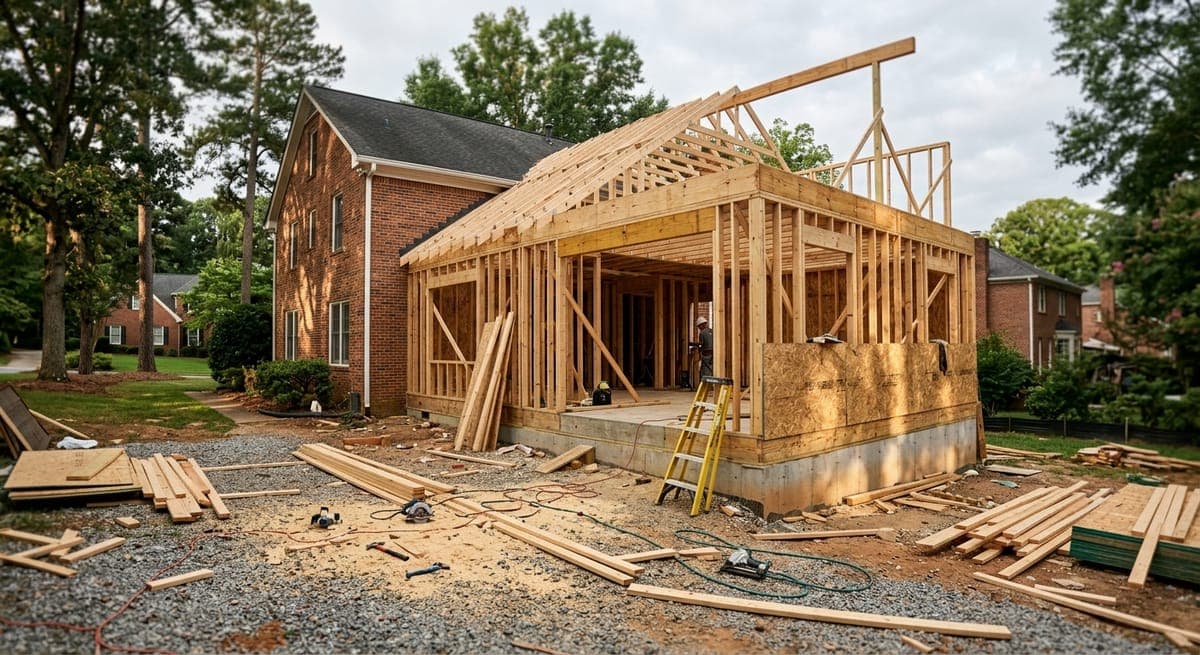
Construction funds disburse in staged draws tied to verified milestones, typically across 4-6 phases:
| Phase | Work Completed |
|---|---|
| 1. Site prep & foundation | Clearing, grading, foundation poured |
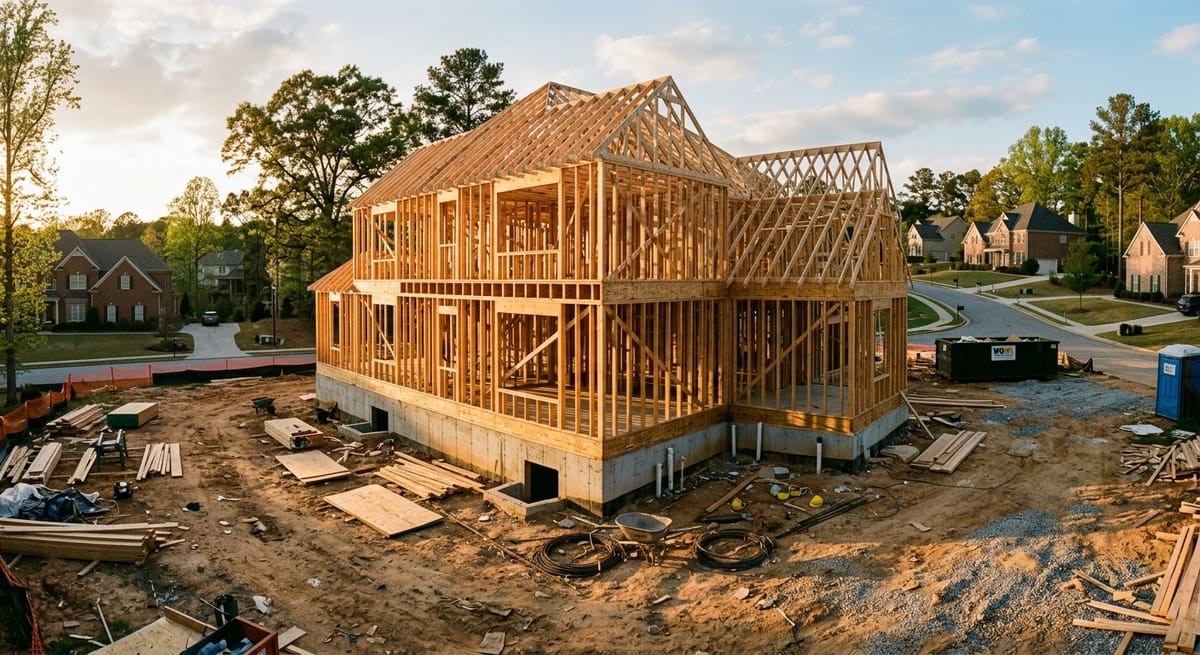
| 2. Framing | Structural walls, floors, roof system |
| 3. Rough mechanicals | Plumbing, electrical, HVAC roughed in |
| 4. Insulation & drywall | Building envelope closed |
| 5. Interior finishes | Cabinetry, flooring, fixtures installed |
| 6. Final inspection | Certificate of occupancy issued |
Your builder submits a draw request; the lender sends an inspector to verify the phase is complete. Once approved, disbursement takes 3-7 business days. You pay interest only on the cumulative amount drawn. If your construction loan is $650,000 and $210,000 has been disbursed after framing, your monthly payment is based on $210,000.
Delays in draw disbursements are almost always caused by incomplete paperwork. An experienced builder manages draw documentation and inspection scheduling, keeping your build on schedule.
Choosing a Builder Your Lender Will Approve
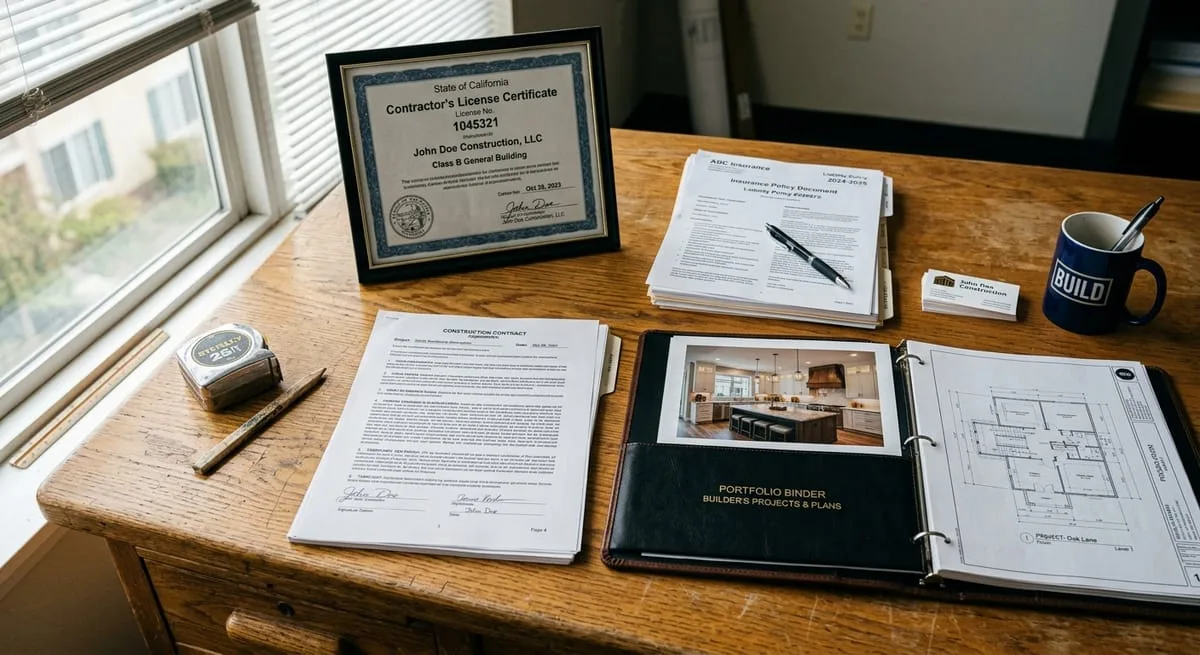
Your lender will vet your builder before approving your construction loan, a step that surprises many buyers.
What Lenders Actually Check About Your Builder
| Requirement | Detail |
|---|---|
| Georgia contractor license | Valid and current |
| Insurance | General liability + workers' comp at required coverage levels |
| Signed contract | Itemized, with defined draw milestones and a bounded price |
| Clean record | No outstanding liens or unresolved legal disputes |
Selecting a builder who has this documentation ready shortens your construction loan approval timeline considerably.
How Artistic Construction Supports Your Financing Process
Artistic Construction brings 22+ years of custom home building experience in North Georgia. Every project includes detailed upfront budgeting and a single point-of-contact project manager, the operational structure lenders want to see when reviewing a custom build home financing application.
Permit-ready drawings and lender-compatible cost documentation are provided from the start of the design process. For buyers working through soft vs. hard costs in custom home construction, understanding where the builder's role intersects with construction loan requirements matters. If you're weighing renovation financing against new construction, the Georgia home renovation financing guide covers current loan options across North Atlanta.
Artistic Construction builds throughout North Atlanta's northern suburbs: Woodstock, Canton, Alpharetta, Milton, Kennesaw, Acworth, Marietta, Roswell, Holly Springs, and Ball Ground, including rural lots in unincorporated Cherokee County requiring well and septic installation.
Every project starts with a free estimate and a no-pressure walkthrough of your goals.
Get a Free Estimate or call (687) 613-3424 to speak directly with the Artistic Construction team.
Frequently Asked Questions About Custom Home Construction Loans in Georgia
Can I use land I already own as a down payment on a construction loan?
Yes. Lenders apply the appraised value of your land toward your equity requirement on a lot and construction loan. A lot in Canton or Ball Ground that has appreciated may satisfy a significant portion of your construction loan down payment. Raw land without utilities is assessed differently than an improved lot, so confirm specifics with your lender.
What credit score do I need to qualify?
Most conventional construction loans in Georgia require a minimum of 680-700. FHA construction-to-permanent loans may allow lower scores with compensating factors such as strong cash reserves or a low DTI. The higher your score, the better the rate you'll lock for the permanent mortgage phase.
How do interest-only payments work during construction?
You pay interest only on funds disbursed, not the full loan amount. As draws are released at each milestone, your interest payments increase incrementally, keeping carrying costs low during the build.
Does my builder need to be approved before I can get a construction loan?
Yes. Lenders verify state licensing, appropriate insurance, a signed and itemized contract, and no outstanding liens. Choosing a builder who has this documentation in order reduces friction and keeps your approval timeline on track.
Do I need a separate lot loan before applying for a construction loan?
Not necessarily. If you're purchasing land and building simultaneously, many lenders will roll the land acquisition into the construction loan as a land and construction loan. If you already own the lot outright, that equity counts toward your down payment.

Planning a project?
Skip the guesswork, get real numbers.
Reading is great. A clear, itemized estimate is better. Tell us what you have in mind.