 Est. 2003

Adding space to your home is one of the most significant financial decisions you'll make, and choosing the wrong financing option can cost you tens of thousands of dollars. This guide covers every major home improvement loan available to North Atlanta homeowners, flags the mistake rate-locked homeowners keep making right now, and gives you a clear five-step sequence to follow. If you need a number to anchor your financing research, get a free project estimate from Artistic Construction before you approach any lender.
What a Home Addition Actually Costs in North Atlanta
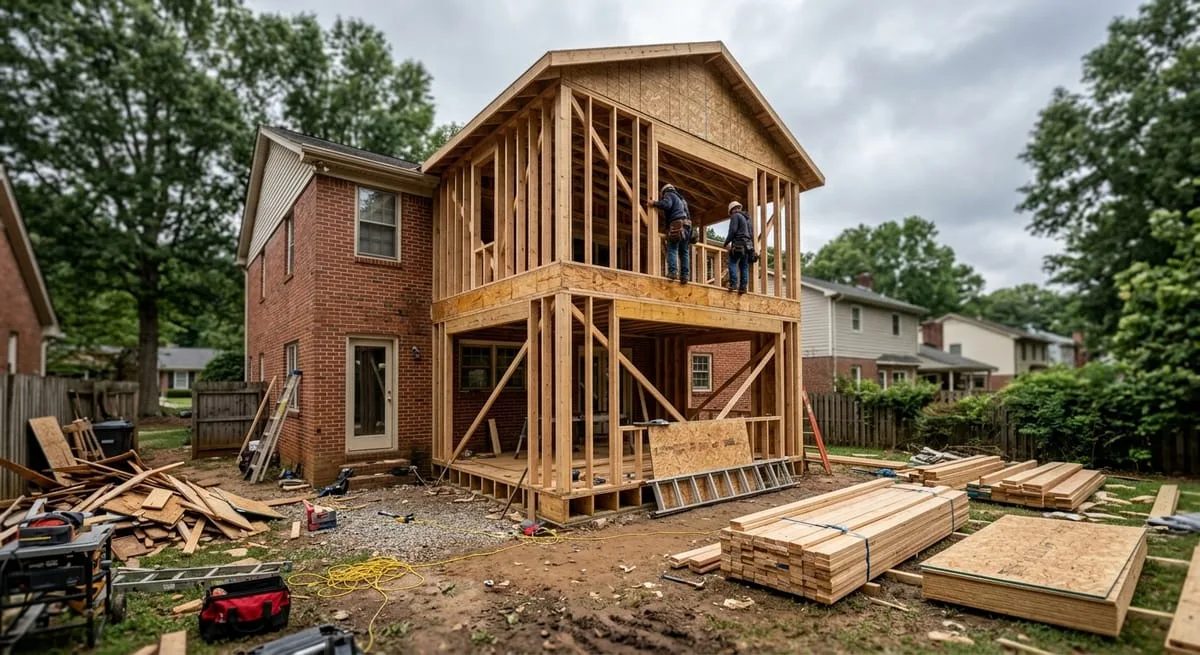
National cost averages are nearly useless for Georgia homeowners. North Georgia's labor market, permitting timelines, and material logistics push local prices above national benchmarks. Based on project experience across Cherokee County (Woodstock, Canton, Ball Ground, Holly Springs) and Cobb/Fulton County markets (Marietta, Roswell, Alpharetta, Milton), here are realistic 2026 ranges: If your addition is getting into custom-build territory, this guide on custom home construction loans in Georgia explains how draws, down payments, and builder approval work.
| Addition Type | Cherokee County | Cobb / Fulton County |
|---|---|---|
| Bedroom + Bath | $90,000 – $140,000 | $110,000 – $170,000 |
| In-Law Suite | $120,000 – $180,000 | $140,000 – $210,000 |
| Second Story (full) | $180,000 – $300,000+ | $220,000 – $350,000+ |
| Garage Addition | $50,000 – $90,000 | $65,000 – $110,000 |
| Sunroom / Screen Room | $35,000 – $70,000 | $45,000 – $85,000 |
For per-square-foot breakdowns by project type, see Artistic Construction's North Georgia home addition cost guide.
One critical rule when financing a room addition or larger project: borrow 10–15% more than your contractor's bid. Mid-project shortfalls caused by material price fluctuations, unforeseen structural issues, or scope changes are the leading reason home additions stall.
What to Know About 2026 Rates Before Choosing a Financing Option
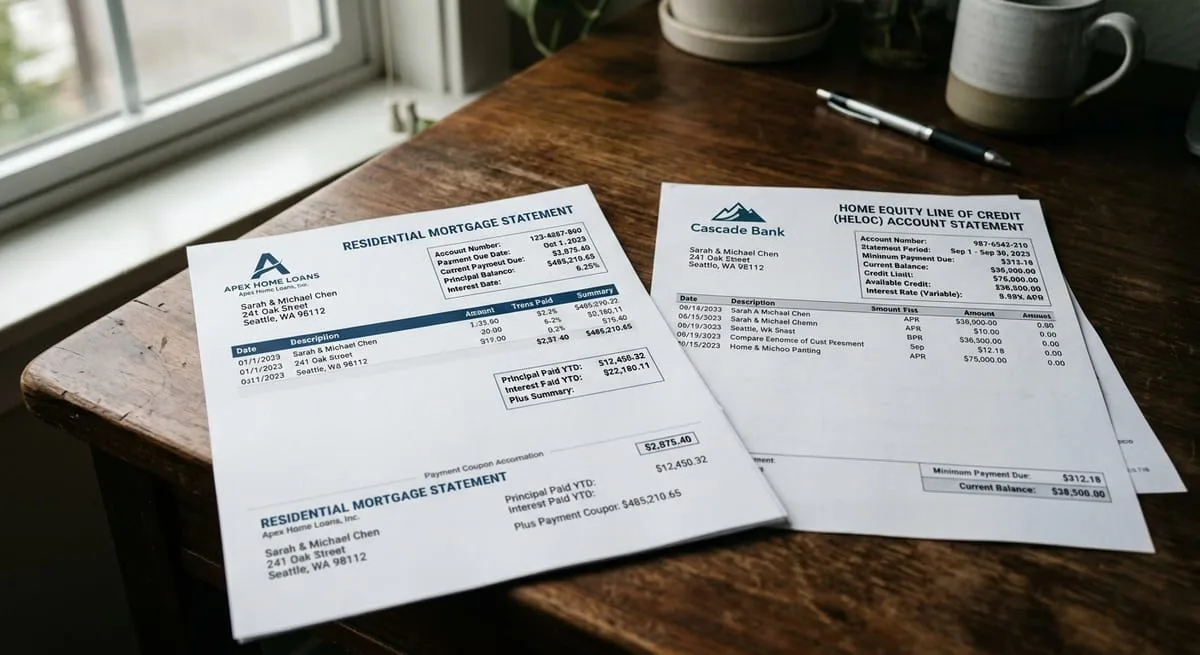
If you refinanced or purchased between 2020 and 2022, you likely locked in a rate between 2.5% and 3.9%. That rate is an asset. Giving it up to fund a home addition is almost certainly the wrong decision.
Why a HELOC or Home Equity Loan Beats a Cash-Out Refi for Rate-Locked Homeowners
A cash-out refinance replaces your entire first mortgage with a new loan at today's rates, currently in the upper 6% to 7%+ range. Refinancing a $350,000 balance from 3.2% to 7.0% increases your monthly payment by roughly $800–$1,000 on that balance alone, before addition funds are counted. If you are weighing that against building on in Forsyth County, our Home Addition Contractor in Cumming, GA page explains how we price additions before you talk to a lender.
A HELOC for home renovation leaves your first mortgage untouched. You borrow only the addition amount at a separate rate. The math nearly always favors this approach for rate-locked homeowners, guidance most banks and national finance sites aren't giving you. If your addition is opening walls anyway, it is also a good time to plan smart home wiring design ideas so you do not pay to fish low-voltage cable later.
When a Cash-Out Refinance Makes Sense
If your current rate is already above 6.5%, a cash-out refinance is worth evaluating. You're not surrendering a meaningful rate advantage, and consolidating into one payment simplifies your debt. Homeowners in Milton, Alpharetta, and Roswell who purchased in 2020–2022 are the most common group to fall into the cash-out refinance trap.

Comparing Home Addition Financing Options
| Loan Type | Best For | Rate Type | Equity Required | Touches First Mortgage |
|---|---|---|---|---|
| HELOC | Phased projects | Variable | Yes (≤85% CLTV) | No |
| Home Equity Loan | Fixed-budget projects | Fixed | Yes (≤85% CLTV) | No |
| Cash-Out Refi | Rate already above 6.5% | Fixed or ARM | Yes (≤80% LTV) | Yes |
| FHA 203(k) | Limited equity / lower credit | Fixed | Limited | Yes |
| Construction Loan | Large / complex additions | Variable → Fixed | Project-based | Varies |
| Personal Loan | Small projects, fast funding | Fixed | No | No |
If you locked in below 4%, the "Touches First Mortgage" column is the most important factor in this comparison.
HELOC for Home Renovation
A revolving credit line secured by your home's equity. You draw funds as needed during a 10-year draw period, then repay during a separate repayment phase. Rates are variable and tied to the prime rate. Best for: Phased projects where construction happens in stages. When comparing a home equity line of credit to a personal loan for home addition projects above $30,000, the HELOC almost always wins on rate. If you're weighing a HELOC against selling and buying, see our home addition vs. moving cost breakdown for the numbers side by side.
Home Equity Loan: Fixed-Rate Financing for a Room Addition
A lump-sum loan at a fixed rate, secured by your equity, sometimes called a second mortgage for renovation. Your rate and payment are predictable from day one. Best for: Fixed-budget projects like bedroom additions and in-law suites where the full scope is defined before construction begins. This is often the best way to finance a home addition when you hold a sub-4% rate. If your addition has turned into a full teardown and rebuild, our Custom Home Builder in Dunwoody, GA page explains how we handle those larger projects.
Cash-Out Refinance for Home Improvement
Replaces your existing first mortgage with a new, larger loan; you receive the difference in cash. Lenders require 80% LTV after the refinance. Review the rate environment section above before pursuing this option if your current rate is below 4%.
FHA 203(k) Renovation Loan for Limited Equity
A government-backed renovation loan that rolls refinance financing together with construction costs. Georgia FHA loan limits reach $688,850 in Cherokee, Cobb, and Fulton counties. Best for: Homeowners with limited equity, lower credit scores, or older homes needing structural work. Plan for 45–60 days from application to first draw.
Construction Loan for a Home Addition
A short-term loan releasing funds in draws aligned with construction milestones, then converting to a permanent mortgage at project completion. Best for: Major additions, full second stories, or projects exceeding HELOC and home equity loan limits.
Personal Loan for a Home Addition: When Speed Matters More Than Rate
No equity required; approved on creditworthiness alone. Home improvement loan rates on personal products run 10–18%, significantly higher than equity-backed options. Best for: Projects under $50,000 where equity is limited or funds are needed within days.
Home Addition Loan Requirements: Credit, Equity, and Income
Credit Score Requirements by Loan Type
| Loan Type | Min. Credit Score |
|---|---|
| FHA 203(k) | 580 |
| HELOC / Home Equity Loan | 620 |
| Personal Loan | 650+ |
| Construction Loan | 680 |
How to Calculate Available Equity
Most equity-backed renovation loans cap at 85% CLTV. If your home is worth $450,000 and you owe $300,000: $450,000 × 85% = $382,500 minus $300,000 = $82,500 available to borrow. Cash-out refinances use a more conservative 80% LTV threshold.
Debt-to-Income Ratio
Most lenders require total monthly debt payments to stay below 43–45% of gross monthly income. Self-employed homeowners should expect to provide two years of tax returns plus profit-and-loss statements.
How to Finance a Home Addition: A 5-Step Process
Step 1: Get a rough estimate before talking to a lender. You need a project number to anchor your financing research. Artistic Construction offers free on-site estimates with no obligation, and getting two contractor quotes gives you a defensible range before you walk into any lender's office.
Step 2: Assess your equity and credit position. Pull comparable sales in your neighborhood on Zillow or Redfin to estimate current market value. Apply the CLTV formula above to calculate your realistically available equity.
Step 3: Pre-qualify for your home improvement loan. Use the comparison table to narrow to one or two loan types that match your credit and equity profile. Pre-qualification gives you a realistic borrowing ceiling.
Step 4: Finalize contractor bids with contingency built in. Final bids should include a 10–15% contingency line. If your pre-qualified amount is $180,000, your base bid shouldn't exceed $155,000–$160,000.
Step 5: Align permits, draws, and construction milestones.
| County | Standard Permit Timeline |
|---|---|
| Cherokee County | 3–4 weeks |
| Cobb County | 2–3 weeks |
| Fulton County | 4–6 weeks |
For construction loans, your lender's draw schedule must align with your contractor's milestone schedule, confirm this in writing before signing either agreement. Start with a free walkthrough estimate to begin the process.
Artistic Construction has been serving North Georgia homeowners for over 22 years, with more than 5,000 completed projects across Woodstock, Canton, Marietta, Roswell, Alpharetta, Milton, and surrounding communities. Knowing how to plan your home addition and how to finance it are two sides of the same decision.
Frequently Asked Questions
Can I finance a home addition without touching my existing mortgage?
Yes. A home equity loan or HELOC lets you borrow against your equity without altering your first mortgage rate or terms. For homeowners who locked in rates below 4%, this is almost always the better path compared to a cash-out refinance.
What credit score do I need to finance a home addition in Georgia?
FHA 203(k) loans accept scores as low as 580. HELOCs and home equity loans require 620 or higher. Construction loans require 680 or above.
How much equity do I need to qualify for a HELOC or home equity loan?
Most lenders allow you to borrow up to 85% of your home's combined loan-to-value. If your home is worth $500,000 and you owe $300,000, you could borrow up to $125,000 against that equity.
How long does home addition financing approval take?
Personal loans can fund in 1–5 days. HELOCs and home equity loans take 2–4 weeks. FHA 203(k) and construction loans require 45–60 days. Build this timeline into your project planning.
Should I use a HELOC or a home equity loan to finance a room addition?
Choose a HELOC if your project will be built in phases and you want to draw funds incrementally. Choose a home equity loan if your scope and budget are fully defined upfront and you want a fixed monthly payment. Both work well for rate-locked homeowners who want to avoid touching their first mortgage.
What happens if my addition costs more than my approved loan amount?
Finance 10–15% above your contractor's bid from the start. If a shortfall still occurs, a personal loan or credit line can bridge the gap, but those carry higher rates. Build the buffer in at the outset rather than scrambling mid-build.
Keep reading
More posts.

Planning a project?
Skip the guesswork, get real numbers.
Reading is great. A clear, itemized estimate is better. Tell us what you have in mind.