 Est. 2003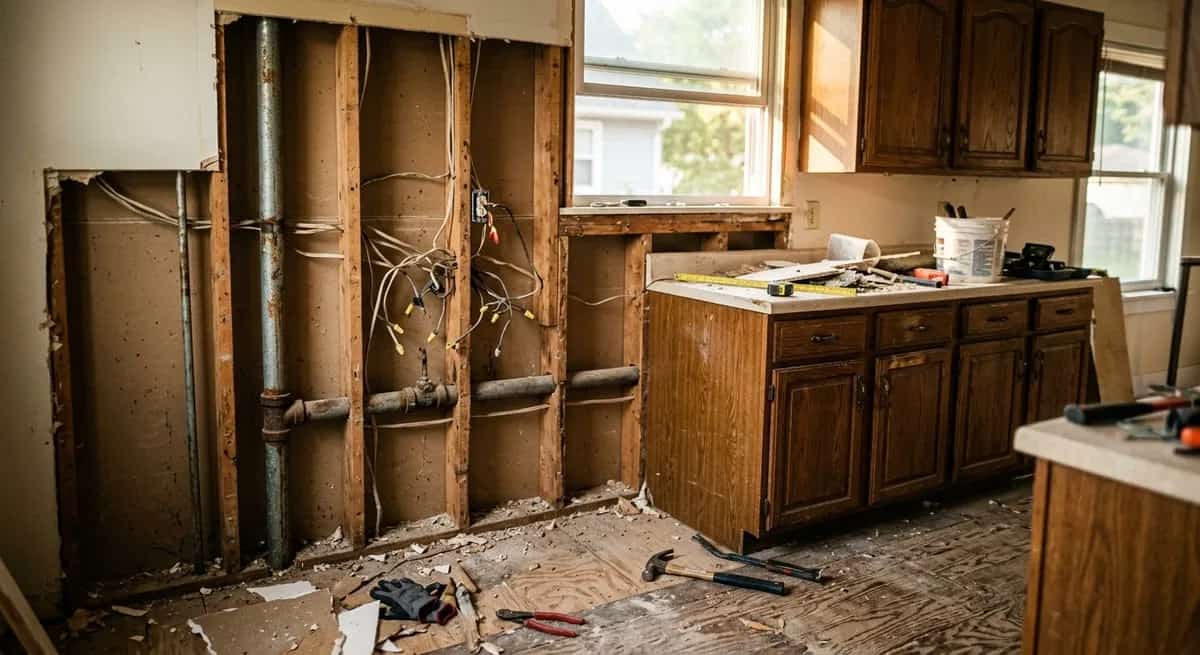

Planning a kitchen remodel in Woodstock, Canton, or the North Atlanta area? Get a free walkthrough estimate from Artistic Construction, no pressure, no obligation. Schedule My Free Estimate →
Written by Bobby Gwynn, Owner, Artistic Construction | Serving Cherokee, Cobb, and Fulton Counties
Why Kitchen Remodels Go Wrong More Often Than You'd Expect
A kitchen remodel in the North Atlanta market is a major financial commitment. In Cherokee, Cobb, and North Fulton County, a complete kitchen renovation typically runs between $35,000 and $85,000-plus depending on scope, materials, and what's discovered behind the walls. Countertops can swing the budget too, and our quartz vs. granite countertops comparison breaks down how each choice affects price, maintenance, and heat resistance.
Most kitchen remodel mistakes aren't caused by bad luck. They come from predictable, avoidable decisions made before a single cabinet is ordered: decisions about budget structure, contractor selection, layout planning, and permit compliance that homeowners in Woodstock, Kennesaw, and Alpharetta make every week without realizing the consequences. If you are weighing a bigger home project, our basement remodel costs in Woodstock, GA guide breaks down what a finished lower level usually costs in Cherokee County.
This guide was written specifically for North Atlanta homeowners. Every cost figure, permit reference, and kitchen renovation tip reflects the reality of remodeling in Cherokee and Cobb County, the building departments, the climate, the housing stock, and the subcontractor market Artistic Construction has worked in for over 22 years. If countertop pricing is part of your plan, see our kitchen countertops cost guide for real installed ranges in Woodstock, Canton, Marietta, and the rest of North Atlanta.
What Makes the North Atlanta Market Especially Unforgiving for Kitchen Renovation Planning
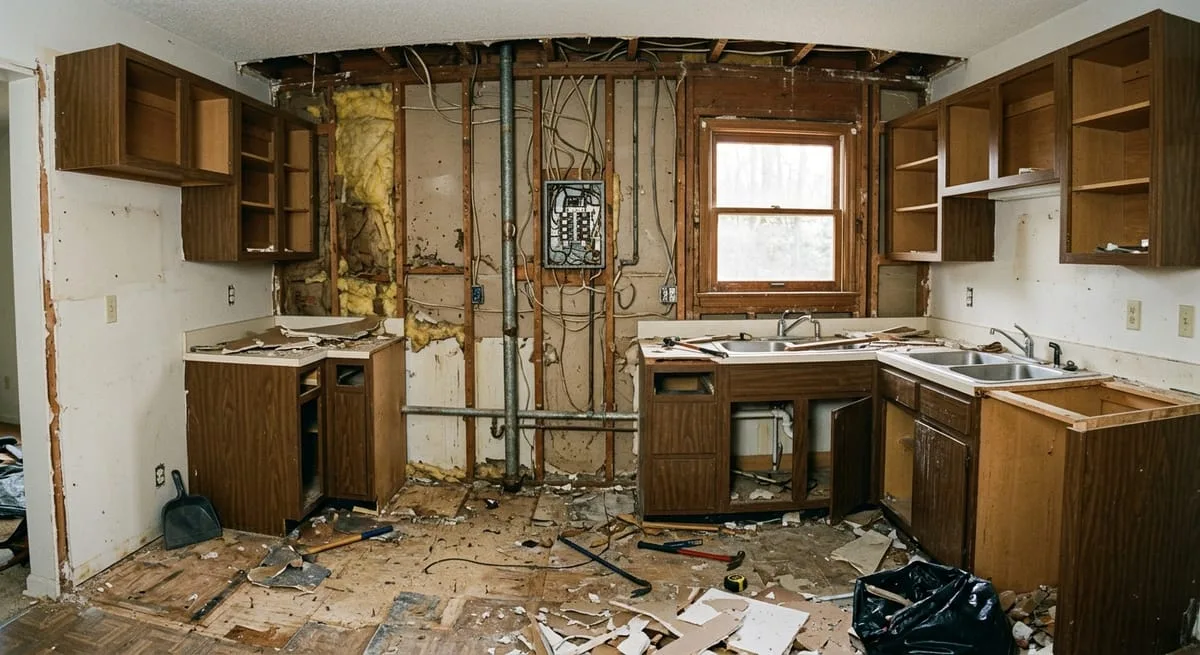
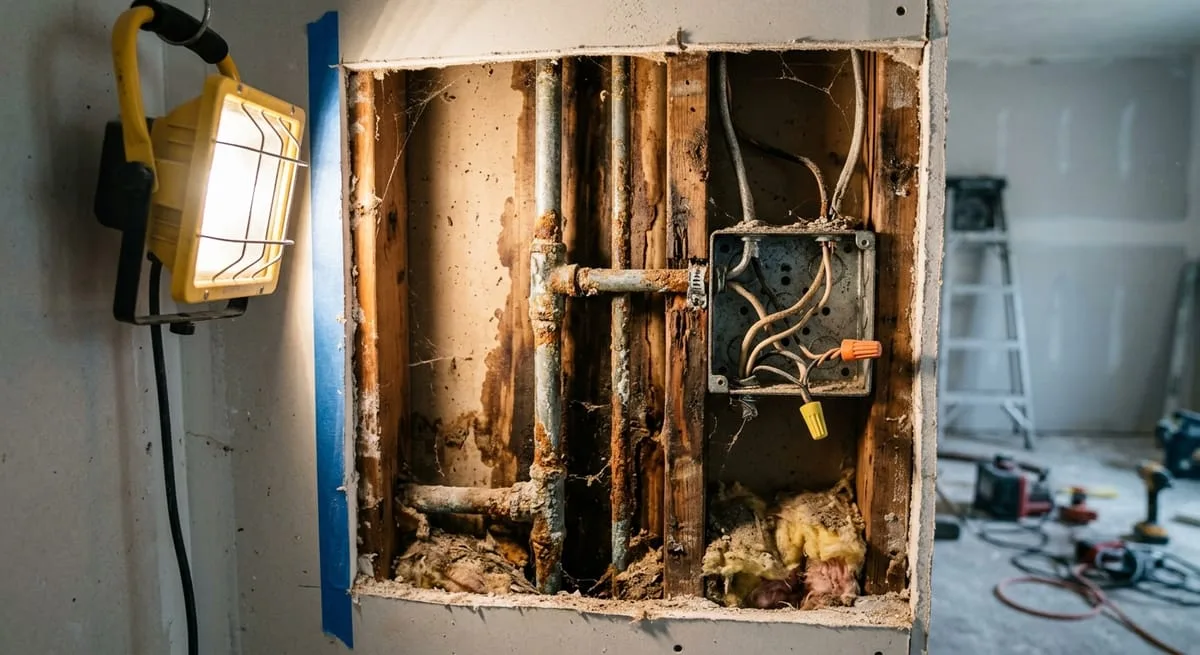
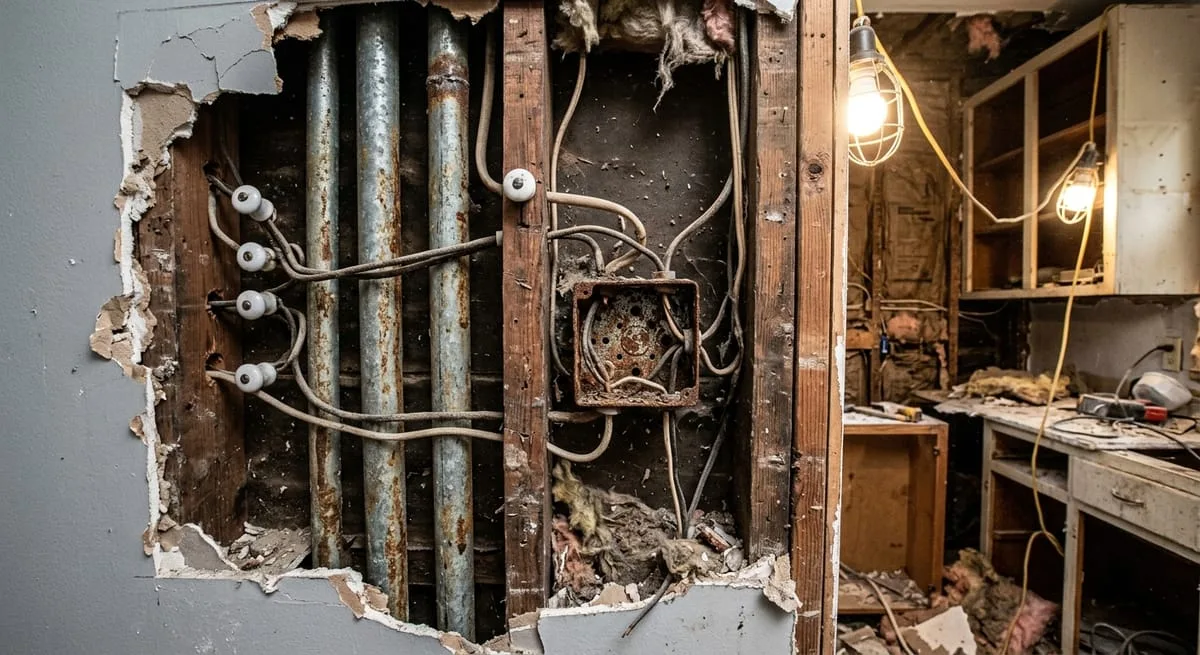
Cherokee and Cobb County homes vary dramatically in age and construction quality. Neighborhoods in Kennesaw, Acworth, and parts of Woodstock include substantial housing stock from the 1980s and early 1990s, homes frequently built with galvanized plumbing, 100-amp electrical panels, and HVAC configurations that don't align with modern kitchen demands. Opening walls in these homes routinely reveals infrastructure surprises that never appear in any pre-sale disclosure. That’s why cabinet pricing can swing so much, which we break down in our guide to kitchen cabinet cost in Atlanta.
Add Atlanta's climate, where humidity regularly exceeds 70% in summer, and material selection becomes consequential in ways that matter far less in drier markets. Every mistake on this list has been seen firsthand on job sites across North Atlanta.
The 15 Common Kitchen Remodeling Mistakes to Avoid
Mistake #1: No Contingency Plan in Your Kitchen Remodel Budget
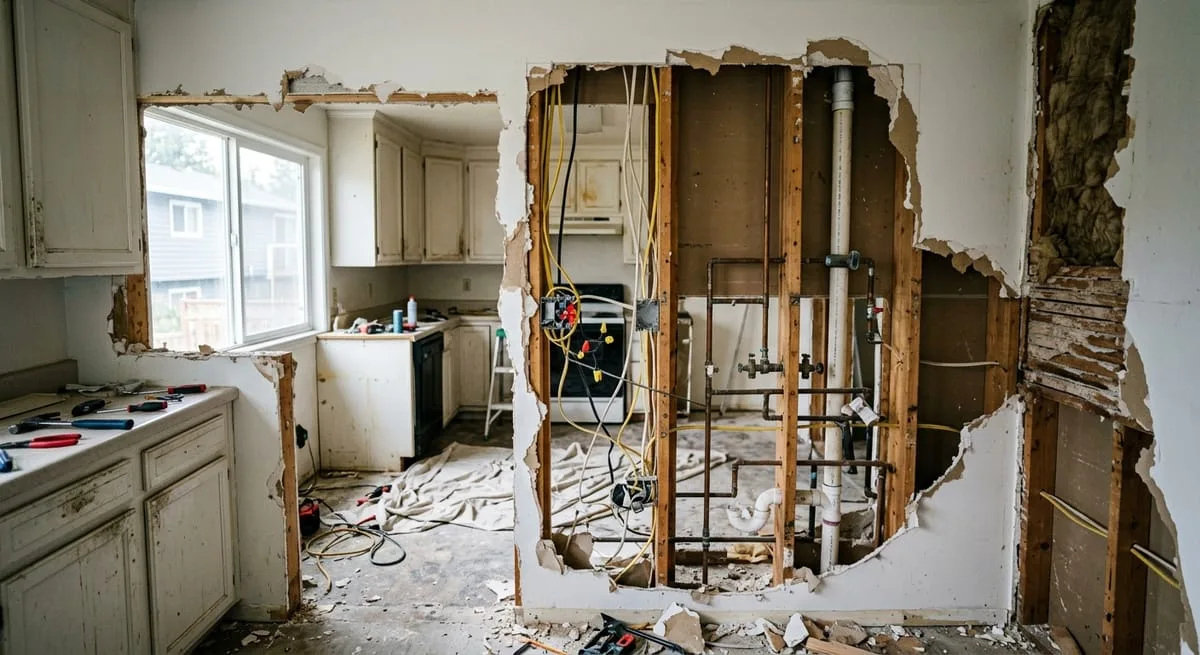
Most homeowners budget for what they can see: cabinets, countertops, appliances, flooring. The problem is what's behind the walls, and in North Atlanta homes built before 1990, that's where the worst kitchen remodel cost overruns come from.
Why it happens: Budgets get built top-down. Homeowners start with a number they want to spend and work backward. Contingency gets treated as optional. It rarely is.
What it costs: Galvanized pipe replacement runs thousands of dollars. Upgrading a 100-amp panel to 200 amps adds more. HVAC rerouting adds still more. These aren't rare exceptions in pre-1990 Cherokee and Cobb County homes, they're common enough to treat as baseline assumptions. If you're also planning finish choices, our kitchen backsplash ideas guide covers the tile styles and costs that fit North Atlanta kitchens.
How to avoid this mistake:
- Reserve 15-20% of your total budget as a contingency fund before signing any contract
- Schedule a pre-remodel inspection to identify plumbing, electrical, and HVAC vulnerabilities before demo
- Require a contingency line and a defined change-order process in the written contract
- For homes built before 1990, assume you'll find something; the only question is how much it costs
How Artistic Construction handles this: Every estimate includes a scope-of-work review that identifies known risk factors before work begins. See how transparent pricing works on our kitchen remodeling page.
Mistake #2: Skipping Permits and the Resale Consequences That Follow
This mistake hits hardest at the worst possible time: when you're trying to sell your home. It's one of the most serious kitchen renovation pitfalls homeowners overlook.
What it costs: Retroactive permitting on completed work requires opening finished walls so inspectors can view the rough-in work. That process regularly exceeds the cost of the original permitted work. Where retroactive permitting isn't possible, correction orders can require full demolition of completed sections. If you're planning new construction instead of a remodel, our cost to build a 2,000 sq ft house in North Atlanta guide shows how permit fees, site work, and finish level affect the all-in number.
The local detail that matters: Cherokee County requires separate permits for structural, electrical, and plumbing work. The City of Woodstock Building Department issues permits independently from unincorporated Cherokee County, a distinction some contractors miss, with consequences including failed inspections and stop-work orders. Always confirm your specific jurisdiction before work begins.
How to avoid this pitfall:
- Ask every contractor to name the specific permits they'll pull and confirm the issuing jurisdiction before signing
- Permits must be pulled in the contractor's licensed name, not yours
- Any contractor who suggests skipping permits is handing you liability they won't share
Mistake #3: Choosing a Contractor Based on the Lowest Bid
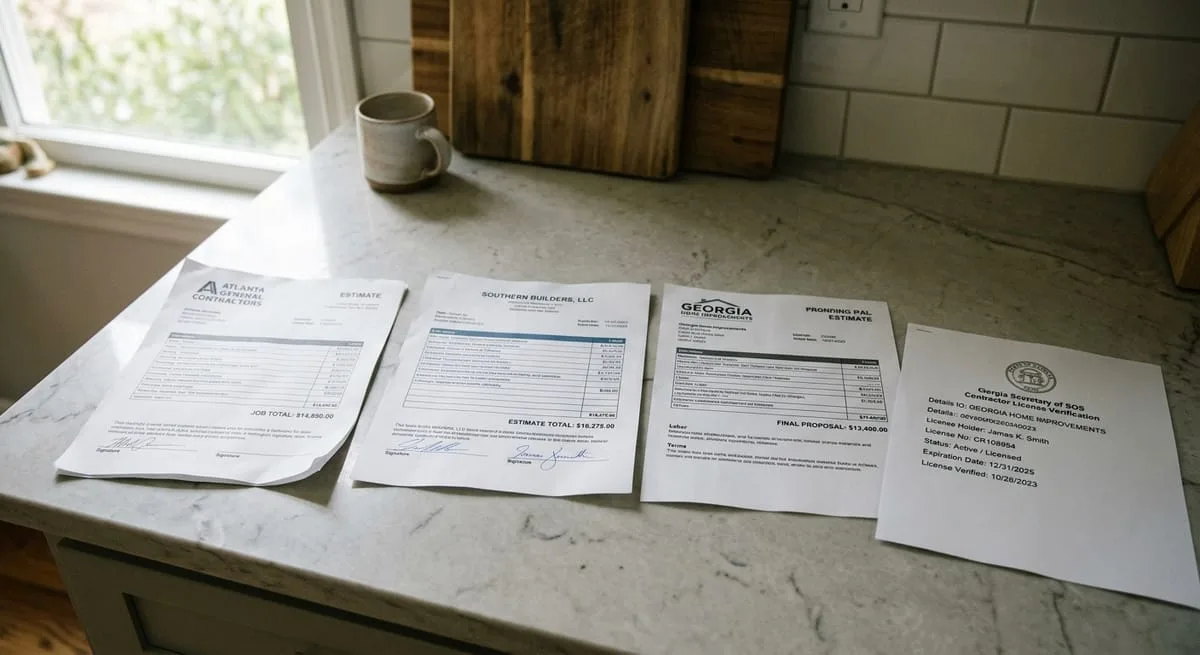
The lowest bid is rarely the lowest cost. When one bid comes in significantly lower than others, something is usually missing: unlicensed subcontractors, materials that will be substituted without disclosure, or scope items quietly excluded that reappear as change orders after you've signed.
What it costs: Hiring a second contractor to finish work started by someone else, with no documentation, no permits, and non-standard rough-in work, consistently costs more than the original gap between bids.
Three questions to ask before accepting any bid:
- Can you provide three local references from jobs completed in the past 18 months?
- What is your Georgia contractor license number, and where can I verify it?
- Who are your electrical and plumbing subcontractors, and are they independently licensed and insured?
A contractor who can't answer all three immediately is not someone you want inside your walls.
Every mistake above starts before anyone picks a cabinet. Artistic Construction is licensed and insured in Georgia and works throughout Cherokee, Cobb, and Fulton Counties. Get My Free Estimate from Artistic Construction →
Mistake #4: Redesigning Your Layout Without Understanding Workflow
Poor kitchen layout mistakes are among the most expensive to correct because they require moving plumbing, electrical, and structural elements after the fact.
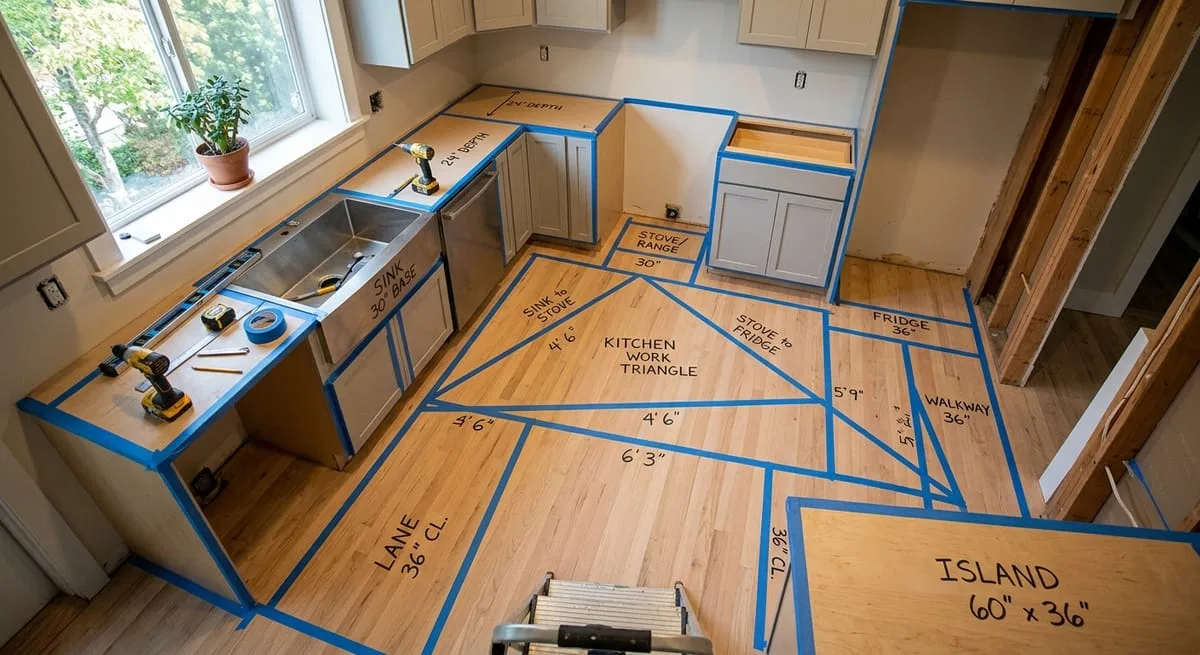
The work triangle standard: The total perimeter distance between sink, stove, and refrigerator should stay between 12 and 26 feet. Traffic lane widths matter equally:
| Element | Minimum Dimension |
|---|---|
| Single-cook traffic lane | 42 inches |
| Two-cook traffic lane | 48 inches |
| Landing space beside refrigerator | 15 inches |
| Landing space each side of range | 12 inches |
How to avoid poor layout mistakes:
- Before any cabinets are ordered, tape the proposed layout on the floor with blue painter's tape and physically walk through your daily routines
- Test every appliance transition: fridge to prep area, prep area to stove, stove to serving area
- Ask your contractor to demonstrate landing space and traffic lane compliance on paper and on the floor
Mistake #5: Underestimating Storage When Planning Your Cabinets
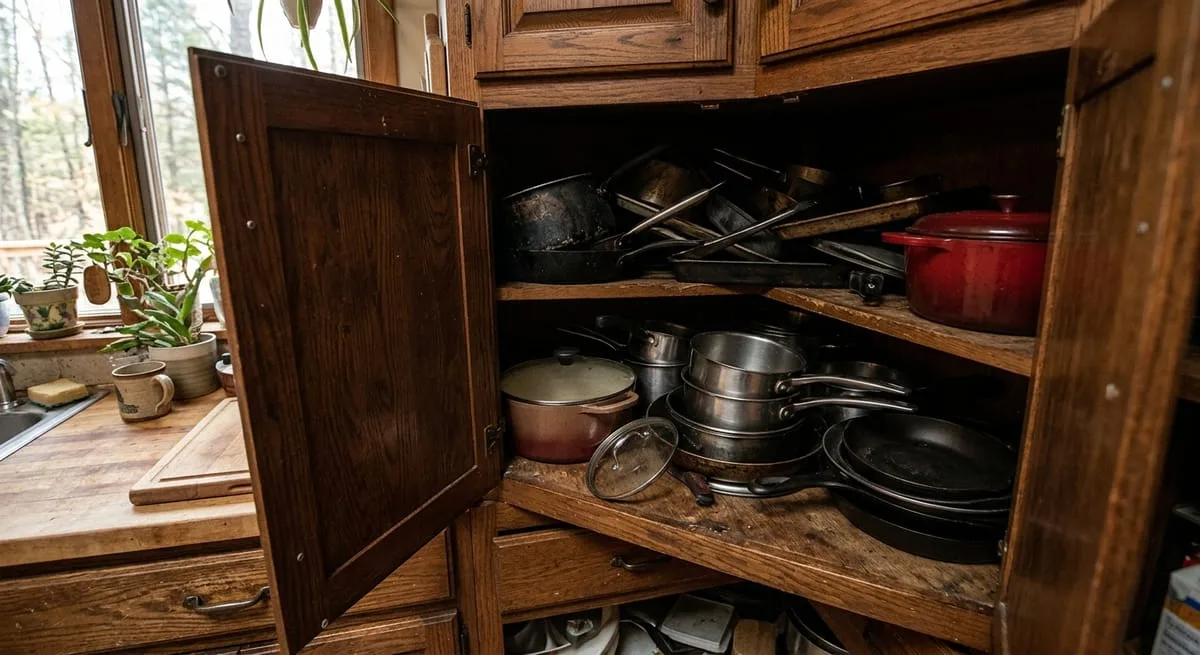
Kitchens almost always have less storage than families need. Among the most common kitchen cabinet mistakes: deep corner cabinets installed without pull-out hardware, rendering the back half of every corner functionally unreachable.
How to avoid this:
- Inventory your current kitchen contents before finalizing the cabinet layout
- Account for small appliances specifically: stand mixer, food processor, air fryer, coffee system
- Request pull-out shelving in corner configurations as a baseline, not an upgrade
- Consider vertical storage: pot rails, tall pantry cabinets, and drawer stacks deliver more function per dollar than additional upper cabinets
For a deeper look at cabinet construction standards, see what's most expensive in a kitchen remodel.
Mistake #6: Treating Kitchen Lighting as an Afterthought
Kitchen lighting mistakes follow the same pattern every time: lighting is the last thing planned and the first thing homeowners wish they'd reconsidered.
Why it happens: Lighting decisions happen late in the design process, after layout is set and cabinets are ordered. By then, electrical rough-in may already be planned without under-cabinet lighting circuits.
What good kitchen lighting requires:
| Layer | Purpose | Key Requirement |
|---|---|---|
| Ambient | Overall illumination | Recessed cans or ceiling fixture |
| Task | Work surface visibility | Under-cabinet lighting over every prep surface |
| Accent | Visual depth | Inside upper cabinets, above island |
| Dimmer controls | Zone flexibility | Every zone independently dimmable |
Under-cabinet lighting must be wired during rough-in, before drywall. Building it into the electrical plan from the start is the only way to avoid costly retroactive installation requiring drywall repair.
Mistake #7: Ordering Appliances Too Late and Stalling Your Timeline
Delayed appliances are one of the most common reasons a kitchen remodel runs weeks past its projected completion date.
Why it happens: Appliances get ordered after cabinets are installed and dimensions confirmed. By that point, a 6-10 week lead time puts the finish line much further away than anticipated.
How to avoid this:
- Order appliances immediately after cabinet dimensions are confirmed and locked
- Confirm lead times in writing from the supplier at the time of order
- Build the delivery date into your contractor's schedule
See the Artistic Construction kitchen remodeling cost guide for current appliance budget context in the North Georgia market.
Mistake #8: Choosing Finishes That Won't Hold Up in Atlanta's Climate
Atlanta's summer humidity regularly exceeds 70%, a material selection constraint that directly causes cabinet failures and countertop problems. These kitchen renovation errors are entirely preventable with the right specs.
What fails in Atlanta's climate:
| Material | The Problem | The Fix |
|---|---|---|
| Particleboard cabinet boxes | Absorbs moisture, swells, warps near sink/dishwasher | Specify plywood box construction in writing |
| Improperly sealed hardwood floors | Gaps, warping, or cupping within 2-3 years near sink | Confirm sealing standard before selection |
| Unsealed natural stone countertops | Absorbs moisture, prone to staining | Get sealing schedule for Atlanta's climate in writing |
For a full comparison of how countertop materials perform in North Georgia conditions and how to avoid common kitchen countertop mistakes, see the complete countertop guide from Artistic Construction.
Mistake #9: Moving Plumbing or Gas Lines Without Scrutinizing the Cost First
Moving plumbing is expensive. Moving gas lines is more expensive and involves additional permit requirements. Both are sometimes necessary, but this decision deserves serious scrutiny, it's a frequent source of kitchen remodel cost overruns.
How to avoid this:
- Before committing to any layout that moves the sink or range more than a few feet, get a specific cost estimate on the plumbing and gas relocation
- In many cases, designing around the existing rough-in achieves 90% of the visual result at a fraction of the cost
Mistake #10: Ignoring Ventilation Until It's Too Late to Fix It
A range hood that exhausts into the wall cavity instead of to the exterior creates grease accumulation, moisture problems, and air quality issues that degrade the kitchen over time. It's invisible at first and expensive to fix later.
Why it happens: Hood venting gets treated as cosmetic. The hood gets chosen for appearance, and the venting question is deferred to installation, by which point the duct route may conflict with already-built cabinets.
How to avoid this:
- Decide on vented versus recirculating exhaust before cabinet design is finalized
- For gas ranges, exterior venting is the right standard in almost every situation
- Confirm the duct diameter and route with your contractor during the design phase, not during installation
Mistake #11: Prioritizing Trends Over Finishes That Hold Their Value
Design trends move, and what photographs well today can feel dated in five years. In the North Atlanta market, where kitchen renovation ROI matters at resale, trend-chasing carries a measurable cost. This is one of the kitchen remodel do's and don'ts that matters most if you're planning to sell. For a similar look at resale and budget planning, see our bathroom remodel cost guide for North Atlanta homeowners.
How to avoid this:
- For major structural and cabinet decisions, apply a ten-year test: would a version of this still feel current in a decade?
- Reserve trend-forward choices for easily changeable elements: hardware, backsplash tile, lighting fixtures, paint color
- If you're selling in Marietta, Roswell, or Alpharetta within a few years, ask your contractor explicitly about finish choices performing well in current local resale comps
Mistake #12: Relying on a Rough Sketch Instead of Engineered Plans
Ordering cabinets, scheduling subcontractors, and pulling permits from a rough sketch leads to incorrect dimensions, wrong cabinet orders, and electrical rough-in in the wrong location.
How to avoid this:
- Require dimensioned drawings before any materials are ordered or permits are applied for
- For full gut remodels with layout changes, 3D renderings let you identify problems before they're built
- Any change to the engineered plan after materials are ordered carries real cost
Artistic Construction provides 3D design renderings as part of every project. See the full kitchen remodeling process here.
Mistake #13: Not Verifying Subcontractor Licensing Before Work Begins
If an unlicensed plumber or electrician does the rough-in work and it fails inspection, the disruption and correction cost fall on your project timeline and budget.
How to avoid it: Before signing any contract, ask who the specific subcontractors are for electrical and plumbing work, whether they hold independent Georgia licenses, and whether they carry their own liability insurance. A reputable contractor names their subs without hesitation.
Mistake #14: Committing to Structural Changes Without Running the Resale Math
Removing walls, adding windows, relocating an island, structural changes dramatically affect renovation costs. Before committing, the resale math deserves scrutiny.
How to avoid it: For any structural change, ask your contractor for a realistic cost estimate and a candid assessment of the functional and resale benefit. A well-designed layout working with the existing structure delivers most of the result at a fraction of the cost of structural work.
Mistake #15: Starting Without a Written, Phased Payment Schedule
Contractors who ask for 50% or more upfront are asking you to assume all financial risk with no leverage. Your payments should correspond to verified project milestones, not promises.
How to avoid it:
- Never pay more than 30-33% upfront before work begins
- Subsequent payments should align with defined phases: permit approval, rough-in completion, cabinet installation, final walkthrough
- Get the payment schedule in writing as a contract term before any work starts
Red Flags vs. Green Flags When Choosing a Kitchen Remodel Contractor
| Red Flag | Green Flag |
|---|---|
| Quote is a single lump-sum with no line items | Itemized bid breaking out labor, materials, and subcontractor costs |
| No mention of permits, or active discouragement | Proactively names which permits will be pulled and in whose name |
| Asks for 50%+ payment upfront before work begins | Milestone-based payment schedule tied to completed project phases |
| Can't provide local references from the past 12-18 months | Provides 3+ references in your county with callable phone numbers |
| Vague about subcontractors or unwilling to name them | Named, licensed, insured subcontractors listed in the contract |
| No written change-order process | Change-order process defined in writing before work begins |
| Pressure to sign immediately or lose the price | Willingness to let you review the quote with a spouse or advisor |
How to Verify Kitchen Contractor Licensing in Georgia in Under 10 Minutes
Georgia contractor license verification is public record. Search the Georgia Secretary of State's website to look up any contractor's license status, license type, and disciplinary history before signing. For Cherokee County projects, also confirm the contractor has pulled permits in Woodstock or Canton within the last 24 months. Any contractor who is licensed, insured, and has a clean permit history should welcome this verification.
These are the standards Artistic Construction holds on every kitchen remodel in Cherokee, Cobb, and Fulton County. See how our kitchen remodeling process works →
What a Kitchen Remodel Done Right Actually Looks Like
Every mistake on this list has a process answer. Kitchen renovations go wrong not from bad luck, but from the absence of a defined, communicated, documented process.
Free estimate and walkthrough: We come to your home, assess the space, identify infrastructure realities, and provide an honest budget range with known variables named upfront.
3D design and permit-ready drawings: Before any materials are ordered, you see the finished kitchen in three dimensions. Cabinet orders, appliance placement, lighting circuits, and plumbing positions are confirmed against the design before a permit application is filed.
Permit filing: We pull every required permit, structural, electrical, plumbing, in our name, through the correct jurisdiction, before demo begins.
Phased construction with daily communication: Our clients know what's happening on their project every day, not just a weekly call.
Final walkthrough and warranty: Every Artistic Construction kitchen remodel includes a one-year workmanship warranty and a documented review of completed work against the original scope.
What Our North Atlanta Clients Say
"It was a large job with a budget but Bobby was transparent giving us options with pros and cons.", Tracy Z., verified Google review
"Bobby the owner did excellent job. He is very professional, thorough, understands the process, cooperative, flexible and easy to work with.", Zainul K., verified Google review
"The biggest take away is the amount of stress we endured working with Bobby, a whopping amount of ZERO stress.", Steve A., verified Google review
Ready to Remodel Without the Regrets?
Every kitchen remodel mistake on this list is avoidable, through planning, the right contractor, and a process built to catch predictable problems before they become expensive ones.
Artistic Construction has completed kitchen remodels throughout Woodstock, Canton, Acworth, Kennesaw, Marietta, Roswell, Alpharetta, Milton, Holly Springs, and Ball Ground. Your kitchen renovation starts with a free conversation. We come to your home, walk through the space, identify the real variables, and give you an honest assessment. No vague numbers, no obligation, no pressure.
We respond within one business day to schedule your walkthrough.
Schedule My Free Estimate → Call Us: (678) 613-3424
Serving Cherokee, Cobb, and Fulton Counties, Woodstock, Canton, Acworth, Kennesaw, Marietta, Roswell, Alpharetta, Milton, Holly Springs, and Ball Ground.
Frequently Asked Questions About Kitchen Remodel Mistakes and Costs in North Atlanta
How much should I budget for a kitchen remodel in the North Atlanta area?
Kitchen remodels in Cherokee and Cobb County run between $35,000 and $85,000-plus depending on scope and materials. Reserve a 15-20% contingency above your target number, particularly in homes built before 1990, where aging plumbing and electrical panels frequently require replacement. For current pricing context, see the Artistic Construction kitchen remodeling cost guide.
What permits are required for a kitchen remodel in Cherokee or Cobb County?
Cherokee County requires separate permits for structural, electrical, and plumbing work. The City of Woodstock issues permits independently from unincorporated Cherokee County, so confirm your jurisdiction before work begins. Any licensed contractor should pull permits in their own name. A contractor who suggests skipping them creates a problem that transfers full liability to you at resale.
What is the single biggest kitchen remodel planning mistake first-time renovators make?
Setting a budget without a contingency reserve. Most homeowners plan for expected costs but not for what they find once walls open. In Cherokee and Cobb County homes built before 1990, galvanized plumbing and undersized electrical panels are common discoveries. Establishing a 15-20% contingency fund before signing any contract is the highest-leverage decision you can make to avoid unexpected kitchen remodel cost overruns.
How long does a kitchen remodel take in the Atlanta suburbs?
A complete kitchen remodel takes 6 to 12 weeks from demolition to final walkthrough, depending on scope and permit processing times. Cosmetic updates can complete in 2-4 weeks. Appliance lead times are the most common source of schedule extension, and entirely avoidable if you order immediately after cabinet dimensions are confirmed.
Should I stay in my home during a kitchen remodel?
Most homeowners can stay in place, though the first one to two weeks of demolition and rough-in are the most disruptive. Planning a temporary setup, microwave, mini-fridge, and a space to eat, makes it manageable. If the project involves significant structural changes or HVAC work, discuss short-term relocation with your contractor during planning.
How do I verify contractor licensing in Georgia before hiring?
Search the Georgia Secretary of State's website to verify any contractor's license status, license type, and disciplinary history. Also confirm the contractor has pulled permits in your specific county within the last 24 months. A licensed, insured contractor with a clean permit history will welcome this verification, it's the single most effective step for avoiding kitchen renovation errors that trace back to contractor selection.
Planning a project?
Skip the guesswork, get real numbers.
Reading is great. A clear, itemized estimate is better. Tell us what you have in mind.