 Est. 2003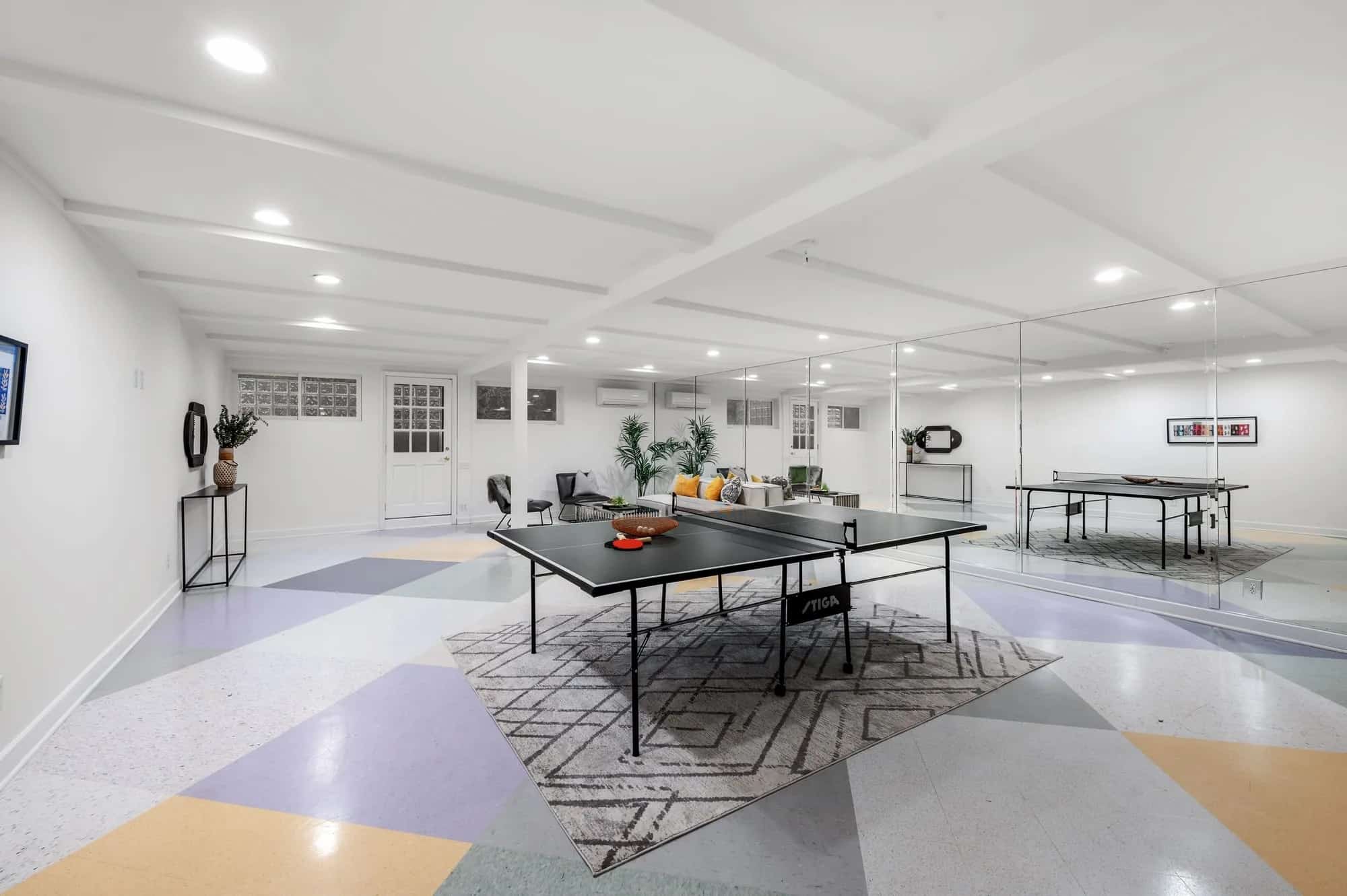

Finishing a basement returns more of its cost at resale than most remodeling work, and in the South Atlantic region, which includes Georgia, the recovery rate is 76%. That is the honest headline. What it hides is what the work costs here, what an appraiser will and will not count, and the one condition that can take the return to nothing.
What the return actually looks like
Zonda's 2025 Cost vs. Value Report prices a mid-range basement remodel at $52,012 nationally and puts the resale value recovered at $36,905, or 71%. The South Atlantic region, which covers Georgia, performs better: $51,409 spent against $39,049 recovered, a 76% return. If you are pricing a basement finish in Cumming, GA, the site conditions matter just as much as the finish level, and we cover that in basement finishing in Cumming, GA.
Two things are worth taking from that. It is one of the stronger recovery rates in the report, ahead of most kitchen and bathroom work. It is also still a recovery rate, not a profit. You do not get the money back. You get roughly three quarters of it back, plus the use of the room for every year you own the house, and for most households that second part is the actual reason to build.
Does a finished basement count as square footage?
This is where expectations break most often. Under ANSI Z765-2021, the measuring standard Fannie Mae requires for conventional appraisals, finished space below grade is excluded from Gross Living Area no matter how well it is built. It gets reported on its own line instead.
So a 2,000 square foot house with a 1,000 square foot finished basement does not become a 3,000 square foot house on the appraisal. A walkout does not change that either. Under the standard, a level counts as below grade if any part of it is below grade, so a basement with a full wall of glass and a door to the yard is still reported separately from the floor above it.
None of that makes the space worthless. Appraisers commonly assign finished below-grade space a lower value per square foot than above-grade space, and how much lower depends on the market, the quality of the finish and how much real daylight the room gets. It is a convention rather than a fixed ratio, which is why two appraisals on similar basements can land differently.
What finishing a basement costs here
Published market ranges for finishing a basement in North Georgia start around $25 per square foot and run past $50, because they average builder-grade work across every contractor and every finish level. We hold our own work at $75 to $125 per square foot, finished to the same standard as the rest of the house. Both figures are real, they just describe different products, and comparing a bid against the wrong one is how a quote looks expensive when it is not. If you are comparing pricing in Woodstock, GA, we break down the local site conditions in basement finishing in Woodstock, GA.
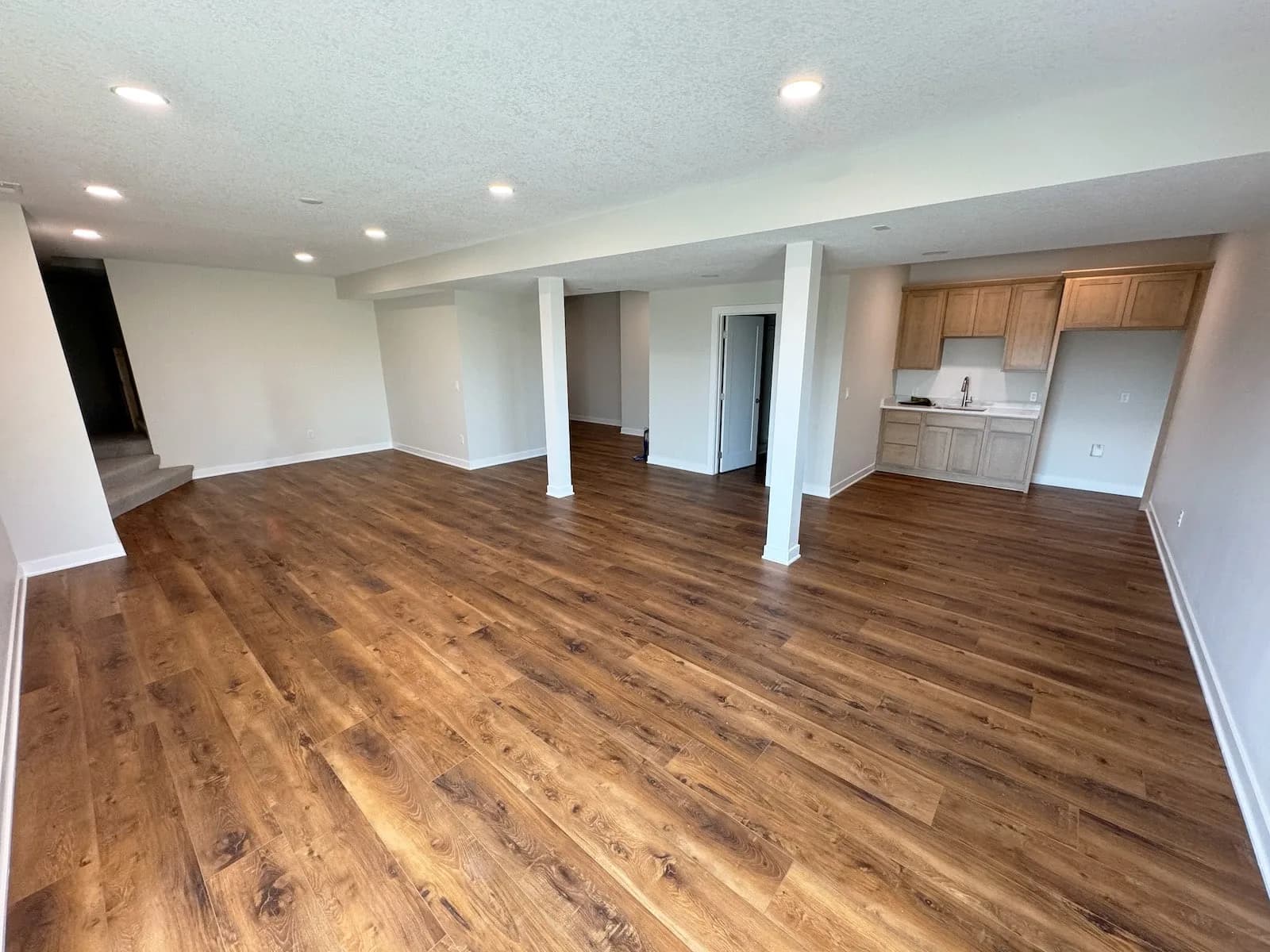
Size the job against your own square footage with the basement remodel cost calculator, then read the line items in the most expensive parts of finishing a basement before you set a budget. Structural work, a bathroom, HVAC capacity and electrical carry most of the cost, and none of them are visible once the drywall is up.
Which features move the number
Not all finished square footage is valued equally, and three additions do most of the work.
| Feature | Why it moves the number |
|---|---|
| A full bathroom | It is what separates a finished room from a usable lower level, and it is the difference between a basement a guest can stay in and one they cannot |
| A legal bedroom | Requires a compliant escape opening, so it is the feature most often claimed and least often built correctly |
| Daylight or a walkout | Real natural light is what stops a below-grade room reading as a basement, and it is the hardest thing to add later |
The bedroom deserves the detail, because a room marketed as a bedroom without a compliant opening is not one. The residential code sets the escape opening at 5.7 square feet of net clear opening, at least 24 inches high and 20 inches wide, with the sill no more than 44 inches above the finished floor. In a daylight or walkout basement you often have that already. In a fully buried corner it means cutting the foundation wall and building a window well, which is excavation and structural work rather than a finish upgrade.
Highly specific rooms move the number least. A theater or a dedicated gym is worth building if you want one, but it narrows the pool of buyers who see the space as theirs, and the next owner may value it as a room they have to undo.
The condition that takes the return to zero
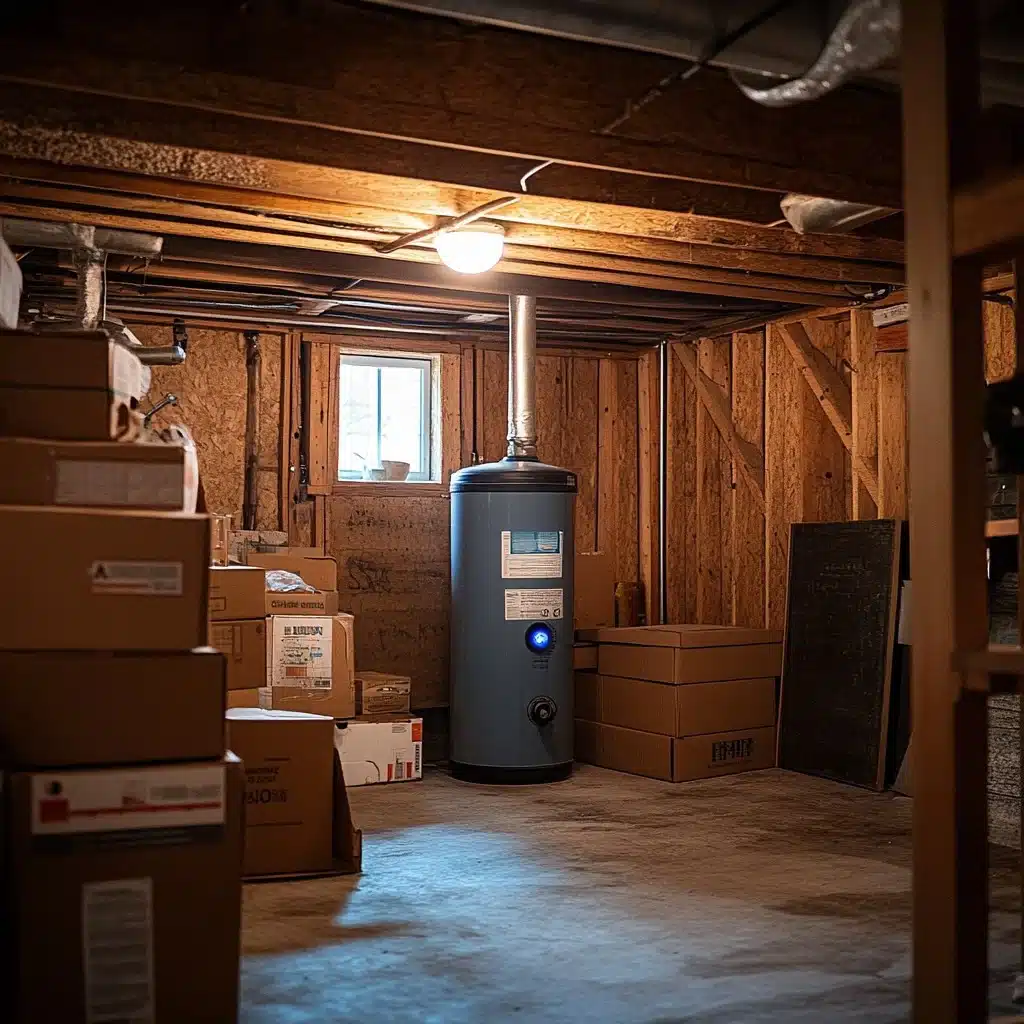
Every figure on this page assumes a dry basement. Finishing over an active water path is the one mistake that cannot be corrected without taking the work apart, and it is the reason the return on an otherwise well-built basement sometimes ends up negative.
North Georgia makes this more likely than most markets. Red clay holds water against a foundation wall instead of letting it drain through, and on the sloping lots that give this area so many walkouts, the water collects at the low corner, which is usually right where the patio door sits. A single intrusion event can destroy tens of thousands of dollars of finished work, so drainage and grading get resolved before framing, not after a problem appears. A basement that takes water is a repair project first and a finishing project second, in that order.
When finishing is not worth it
Three situations change the answer. The first is a neighborhood price ceiling: if finishing your basement puts the house well above what anything on the street has sold for, the market will not follow you there, and the money is better spent on a house that can carry it. That ceiling is higher in places like Basement Finishing in Johns Creek, GA, where many homes already have a full lower level and the work is often cheaper than adding on.
The second is unpermitted work. Space finished without a permit does not appear in the county record, which means it does not reliably count at appraisal and it becomes a negotiating point at resale, or a condition of sale. The permit is a small share of the cost of the job and the only version of the work that counts.
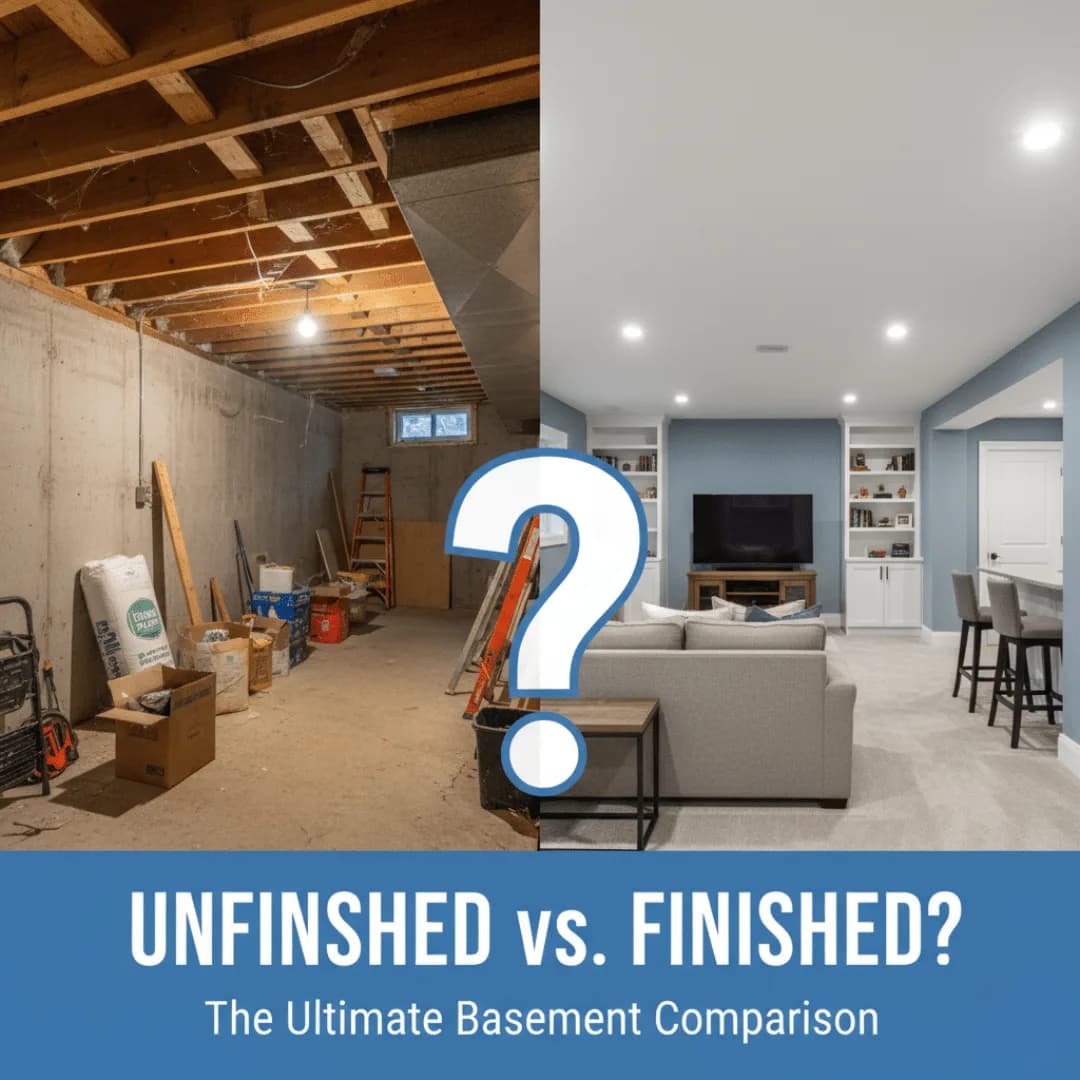
The third is ceiling height. Older in-town basements with block foundations sometimes have eight feet of clear height or less before ductwork, and buying height means underpinning the foundation, which is a different project at a different price. That gets measured before anything is promised.
Will it raise my property taxes?
Finished square footage added to a house raises its assessed value, and the county picks the change up from the permit record. We cannot tell you the figure and anyone quoting you one is guessing, because it depends on your county's millage rate and your current assessment. What is worth knowing is that the alternative, finishing without a permit to avoid the reassessment, is the version that causes real trouble at resale.
Set against that, the space is already costing you something. You heat, cool and pay tax on the shell of a basement whether it is finished or not, which is part of why the cost per square foot is lower than any other way of adding room to a house.
Basement or addition?
If the question is simply where to put the space, the basement usually wins on price. The foundation, the roof and the exterior walls already exist, so the work is framing, mechanicals and finishes instead of a new structure. A home addition costs substantially more per square foot because it starts with excavation and a footing, though it produces above-grade square footage that does count toward Gross Living Area.
That trade is the real decision: cheaper space that is reported separately, or more expensive space that counts. Households who need the room now generally take the basement. Households building for a future appraisal sometimes take the addition. Our basement finishing team prices both when a house can take either, and the financing options differ less than people expect.
Frequently asked questions
Does a finished basement count toward my home's square footage?
Not toward Gross Living Area. Under ANSI Z765-2021, the standard Fannie Mae requires for conventional appraisals, finished space below grade is reported separately from the floors above it, and a walkout does not change that. It still carries value, it is just valued on its own line rather than folded into the headline square footage.
Does a basement bedroom count as a bedroom?
Only with a compliant emergency escape opening. The residential code requires 5.7 square feet of net clear opening, at least 24 inches high and 20 inches wide, with the sill no higher than 44 inches above the floor. Without it the room is finished space, not a bedroom, whatever a listing calls it.
Is it cheaper to finish a basement or build an addition?
The basement, in almost every case, because the foundation, roof and exterior walls are already built. The addition costs more per square foot but produces above-grade square footage that counts toward Gross Living Area, so the cheaper option is not automatically the better one.
Will finishing my basement raise my property taxes?
Usually yes, because added finished square footage raises assessed value and the county learns about it from the permit record. The amount depends on your county's millage rate and current assessment, so treat any specific figure you are quoted with suspicion.
How long does finishing a basement take?
Design and permitting come first, then roughly six to eight weeks on site for a typical lower level. A kitchenette, a theater or cutting a new egress opening into a foundation wall adds to that, and the schedule should say so before you sign, not after work starts. Request a free estimate to see the sequence for your own basement.

Planning a project?
Skip the guesswork, get real numbers.
Reading is great. A clear, itemized estimate is better. Tell us what you have in mind.